The Day I Almost Gave Up on My Creative Dreams
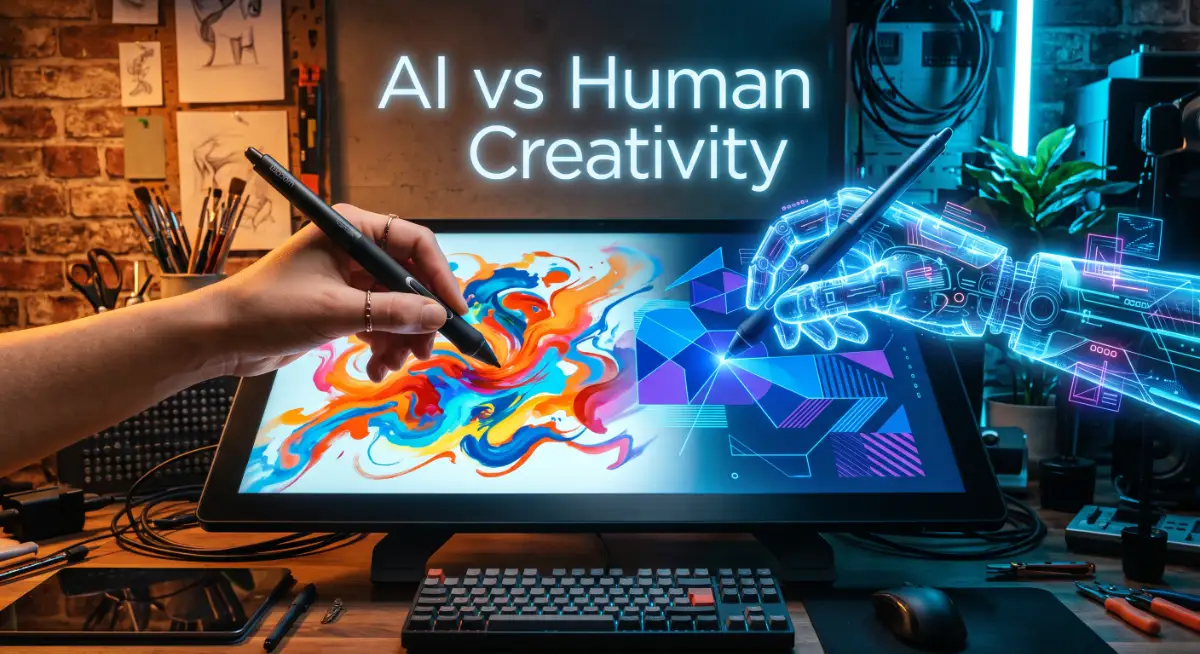
Let's be totally honest for a second—we've all had that sudden moment of panic while staring at ChatGPT. You type in a basic prompt, and three seconds later, it spits out a draft that used to take you hours to write. Ouch. I completely get why so many creators feel like they are fighting a losing battle right now. But after spending months testing these tools side-by-side with my own projects, I found out something pretty amazing. The machines aren't here to steal our creative jobs; they just want to handle the boring stuff so we can actually have fun again.
For a moment, I completely froze. The artificial intelligence had just written a deeply emotional story, a task that usually took me hours of intense thinking. I asked myself, why should anyone hire me ever again if a robot can do this practically for free?
My confidence completely crashed that afternoon. I felt like everything I had learned, all the late nights practicing my craft, and all my creative struggles were suddenly worthless. I seriously thought about packing up my things, deleting my portfolio, and finding a completely different career path.
But then, I decided to take a much closer look at what the machine actually created. At first glance, the work seemed perfectly fine, almost magical. But as I read it out loud, I noticed something completely missing.
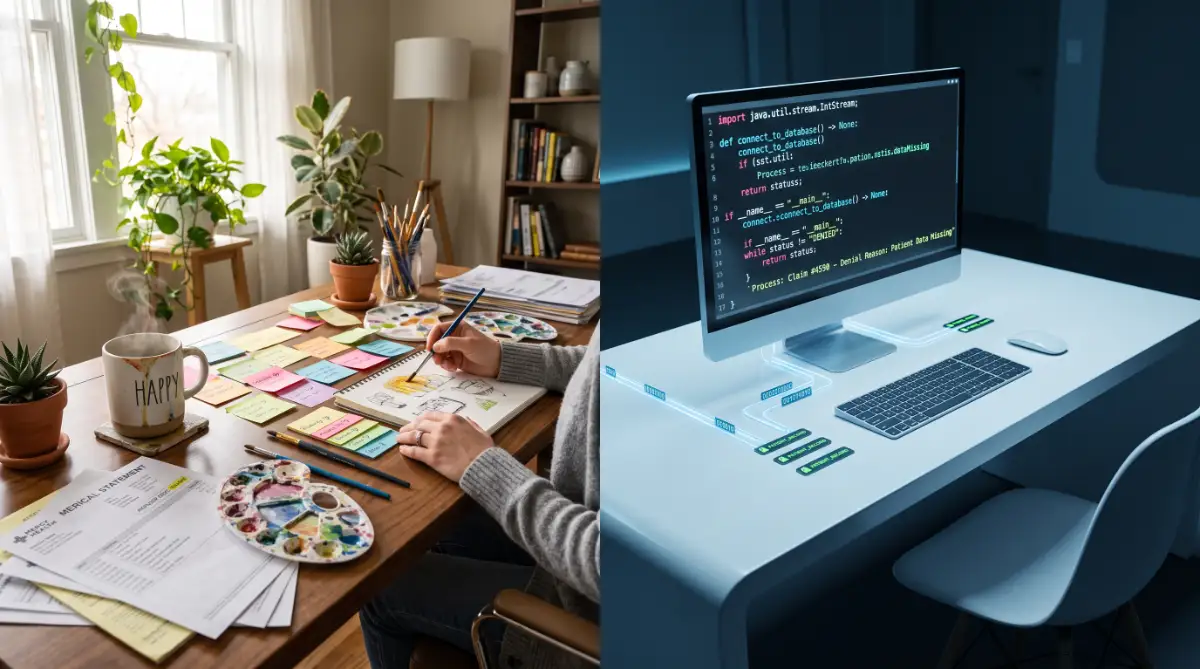
There was absolutely no heartbeat, no soul, and no actual lived experience behind those perfect words. That exact moment changed my entire perspective on technology and creativity forever. I realized I was fighting a ghost, and the monster hiding under the bed was not real at all.
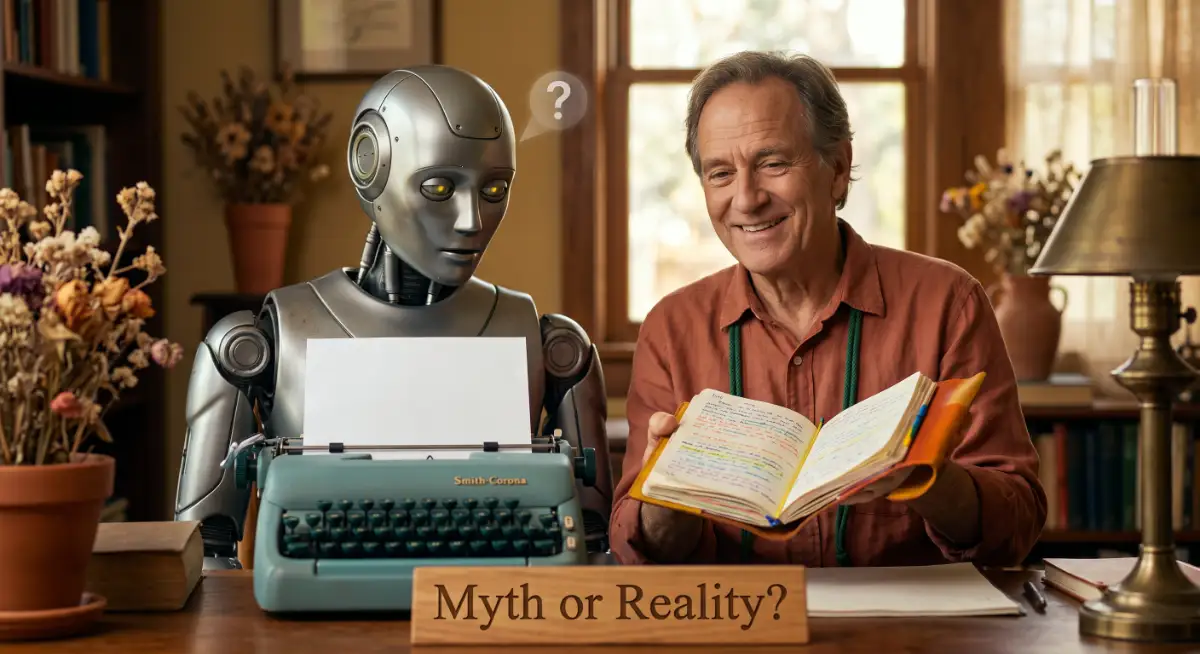
Quick Takeaways Before You Read On:
- AI tools don't actually think or feel—they just predict patterns based on stolen data.
- Your biggest career advantage right now is your unique, messy human personality.
- Stop competing on speed. Let the machine write the "ugly draft," and you act as the editor.
- Perfection is boring; human flaws make art, writing, and design feel authentic.
The Silent Anxiety Eating Away at Creative Minds
Right now, countless talented people are losing sleep over this exact same fear. People are terrified of waking up one morning to find an algorithm has made their entire profession obsolete.
You see graphic designers staring at generative art tools, wondering if their degree was a total waste of money. You see writers, marketers, and video editors silently panicking in the background of every office meeting. This widespread fear is actively destroying our mental peace and causing massive burnout across the globe.
This toxic anxiety stops everyday people from starting that blog, launching that YouTube channel, or applying for that dream job. We are literally paralyzing ourselves based on a massive misunderstanding of how smart machines actually work.
The truth is, these fears are based on science fiction movies and highly exaggerated marketing campaigns. Tech companies want you to believe their software is basically magic, but the reality is much more boring and predictable.
Myth vs Reality: Why Algorithms Cannot Replicate the Human Soul
Let us clear up the biggest lie on the internet right now. People assume that because an algorithm can generate a beautiful picture or write a solid essay, it is actually thinking.
An algorithm does not think. It simply predicts the next logical piece of data based on patterns it has seen before. It is essentially a giant, incredibly fast version of the predictive text feature on your smartphone keyboard.
Quick Reality Check: AI vs. Real Life
- The Myth: AI "reads" your prompt and truly understands what you want.
- The Fact: AI has zero comprehension. It just uses complex math to guess which word should come next, based on billions of older texts it scraped from the internet. It doesn't "know" anything; it's just really good at guessing!
When you ask a software program to create a painting of a sad dog, it does not understand sadness. It has never lost a pet, cried in the rain, or felt the heavy weight of grief. It just scrambles thousands of pixels from other pictures of dogs that were tagged with the word "sad."
Human creativity is entirely built on our shared flaws, our painful mistakes, and our weird personal memories. A machine cannot rebel against the rules of art because it only knows how to follow the rules it was programmed with.
To make this perfectly clear, let us look at exactly what makes human creativity so completely different from machine processing.
Quick Comparison: The Human Brain vs. Machine Logic
Notice how the machine always relies on what has already happened in the past. It cannot imagine a future that does not look like the data it was fed.
Therefore, if everyone only uses automated tools to create art, music, or writing, our culture will just endlessly repeat itself. We will be stuck in a permanent loop of boring, recycled ideas.
The Science of Authentic Connection
When a person reads your blog post, buys your painting, or listens to your song, they are looking for a connection. Human beings are biologically wired to seek out other human beings.
If I tell you a story about how I failed my math test in high school and cried in the bathroom, you instantly feel connected to me. You might remember a time you felt that exact same embarrassment.
A robot cannot tell you a real story about failure because it cannot fail, and it certainly cannot cry in a bathroom. People buy human stories because they want to feel less alone in the world.
When we remove the human element from creative work, the final product feels completely empty. It might be grammatically perfect or visually flawless, but it will never give someone goosebumps.
A Practical Guide to Future-Proofing Your Creative Career
Now that we know the fear is mostly built on lies, we need a plan. How do we actually survive and thrive when machines can do the boring parts of our jobs for free?
We do not fight the machine; we simply outsmart it by being more human. Here are some incredibly effective steps you can take today to make yourself entirely irreplaceable.
Step 1: Become a Master Editor of Ideas
Stop trying to compete with software on speed, because you will always lose. A computer can write one thousand words in ten seconds, which is humanly impossible.
Instead, you must shift your focus from simply creating raw material to acting as a director. Let the automated tools generate the messy, boring first drafts, and then use your human taste to fix them.
Your unique taste—what you think is funny, sad, or beautiful—is your greatest asset. An algorithm has no taste; it only has math.
Pro Tip: I completely stopped staring at blank pages last month, and my stress levels dropped instantly. My secret is asking the software to give me ten terrible ideas for a project, which immediately sparks my own brain to find the one brilliant human idea hidden in the garbage.
Step 2: Double Down on Your Personal Weirdness
The weird, messy parts of your personality are exactly what machines cannot copy. If you have a strange sense of humor, use it in your professional work.
If you are obsessed with a specific obscure hobby, tie that hobby into your business presentations. The goal is to leave a very distinct human fingerprint on every single thing you publish online.
When a client hires you, they should be hiring your specific point of view, not just your ability to push buttons. If you write exactly like a dry corporate textbook, you are basically asking a machine to take your job.
Step 3: Share Your Actual Process and Struggles
People love to see how the sausage is made. They want to see the behind-the-scenes chaos of your creative process.
Share your messy sketches, talk about the ideas that completely failed, and show the human effort behind your final product. Machines do not have a "struggle" phase; they just spit out the answer instantly.
When you show your audience the actual human labor involved, they value the final product significantly more. This creates extreme loyalty that no cheap software alternative can ever break.
Want to see a perfect example of how combining human emotion with automated tools actually creates magic? Check out this incredible breakdown below.
Stop Fighting the Wrong Enemy
We waste so much energy hating the tools that were actually built to help us. Imagine a carpenter getting angry at a brand-new electric saw because it cuts wood faster than a hand saw.
The electric saw does not build the house; the carpenter does. The tool simply takes away the hardest, most physically draining part of the job so the human can focus on the design.

Artificial intelligence is just a digital power tool for your brain. It handles the heavy lifting of spelling, formatting, and generating basic ideas so you can focus on the emotional impact.
If you embrace the technology as your personal assistant, you will suddenly find yourself with more free time. You can use that extra time to dream bigger, connect deeper with your clients, and create work that actually matters.
The Ultimate Comforting Truth About Your Value
You have to remember that human history is entirely filled with moments like this. When the camera was invented, painters thought their entire profession was completely destroyed.
Why would anyone pay for a painted portrait when a camera could capture reality instantly? But painting did not die; it just changed. Painters stopped trying to copy reality and started exploring emotions, leading to some of the greatest art movements in history.
This forces us to step up and do the deeply human work that requires actual empathy, moral judgment, and genuine love. Your value is not tied to how fast you can type or how cleanly you can draw a circle.
Your value is tied strictly to your humanity. As long as you have a beating heart, a unique perspective, and a desire to connect with others, your creativity will never be replaced.
Mastering Your Craft Alongside Smart Algorithms
To truly thrive as a creative professional today, you must completely change how you view your daily workflow. You are no longer just a writer, a designer, or a video editor. You have essentially become a high-level creative director.
When you accept this massive shift in perspective, the fear disappears entirely. You start looking at software not as a competitor, but as a tireless intern who works for free.
However, managing an intern requires a very specific set of skills. Let us explore some powerful, dynamic strategies to keep your human edge sharp while taking full advantage of modern automation.
The "Ugly Draft" Strategy
One of the hardest parts of any creative project is simply getting started. Staring at a completely blank screen is terrifying for most people.
This is where you should let the machine do the heavy lifting. Ask your automated assistant to generate a very rough, ugly first draft of your project.
Give it basic instructions and let it spit out a generic, predictable response. Do not use this draft as your final product. Instead, use it as a foundation to react against.
It is always much easier for the human brain to fix something bad than to create something out of thin air. You will instantly see what the machine missed, which sparks your own original ideas to make it much better.
Injecting Extreme Personal Opinions
Algorithms are specifically programmed to be safe, neutral, and completely inoffensive. They will never take a strong, controversial stance on any topic.
This is your absolute biggest advantage in the market. As a human, you are allowed to have strong opinions, strange preferences, and bold predictions.
If you are writing an article, insert your actual personal beliefs. If you are designing a logo, use a weird color combination that breaks traditional design rules just because you love it.
A great discussion published by MIT Technology Review highlights that true innovation only happens when humans deliberately break established rules. Machines simply do not know how to rebel.
Where You Win vs. Where AI Wins (My Cheat Sheet):
| Task Type | Who Does It Better? | Why? |
| First Drafts & Outlines | AI | Saves you hours of staring at a blank screen. |
| Injecting Emotion & Humor | You | AI jokes are awkward. Only humans know real timing.|
| Formatting & Grammar | AI | Perfect for catching those sneaky typos instantly.|
| Breaking Design Rules | You | Algorithms play it safe; humans create fresh trends.|
Building a Personality-Driven Brand
If clients only hire you because you are cheap and fast, you will eventually lose your job to a computer. A computer will always be cheaper and faster than you.
You must give people a reason to work specifically with you as a living person. Share your hobbies, talk about your pets on social media, and let your clients see your actual face.
People naturally want to give their money to people they actually like and trust. Relying entirely on a single client who wants cheap automated work is highly risky. It easily exposes you to the hidden dangers of one paycheck if they suddenly decide to cut costs.
Build genuine friendships with your audience. When they feel connected to your unique story, they will completely ignore the cheaper, robotic alternatives.
Conducting the "Coffee Shop Emotion Test"
Before you publish any piece of content, put it through a simple emotional filter. I call this the Coffee Shop Test.
Imagine you are sitting in a loud coffee shop with a good friend. Would you ever speak the words you just wrote out loud to them?
If the text sounds like a robotic corporate brochure, rewrite it immediately. Use casual language, local slang, and completely natural sentence structures.
Experts in behavioral science from the American Psychological Association note that readers physically react differently to stories written by humans. They look for rhythm, emotion, and conversational warmth.
Diversifying Your Skill Set
Automation tools make learning new skills incredibly easy. If you are a writer, use smart software to help you learn basic graphic design.
If you are a designer, use these tools to help you write better proposals and emails. By diversifying your creative skills, you are doing the career equivalent of finding the easiest way to build an emergency fund fast.
You become a multi-talented powerhouse that no single software program can replace. You are suddenly offering a complete, human-led package to your clients.
The Dangerous Traps That Will Actually Destroy Your Career
While the machines themselves are not the enemy, human laziness certainly is. When things get too easy, we tend to stop trying, and that is where the real danger hides.
Many talented professionals are completely ruining their own reputations right now. They are making massive mistakes with automation that will take them years to recover from.
If you ignore the quality of your work, your client base will shrink rapidly. This is a massive red flag, similar to ignoring warning signs that your credit card balance is growing—the problem only gets worse the longer you ignore it.
The Fatal "Copy-Paste" Syndrome
The absolute worst thing you can do is generate something with a machine and immediately publish it without any editing. This is professional suicide.
Your readers and clients are not stupid. They can instantly spot the repetitive words, the boring sentence structures, and the complete lack of soul in raw automated text.
Falling into the trap of lazy copy-pasting is just like developing secret habits draining your bank account—you might not notice the massive damage to your brand until it is way too late.
Always remember that your name is attached to the final product. Never put your personal signature on something a computer made in three seconds.
Hiding Your Process from Clients
Many freelancers try to secretly use automation tools and pretend they did all the hard work manually. This creates a terrible sense of guilt and completely ruins client trust.
Instead of hiding it, be completely transparent. Tell your clients that you use premium software to speed up your research phase, saving them time and money.
Design leaders over at Adobe's Creative Journal constantly remind us that software is meant to assist human vision, not replace it. When you explain this properly, clients respect your honesty.
It allows you to focus purely on the fun parts of creating, similar to discovering secrets to enjoying your hard-earned cash without feeling guilty about it.
Losing Your Physical Connection to Art
When everything becomes digital, we often forget how good it feels to work with our physical hands. Do not let screens completely take over your creative life.
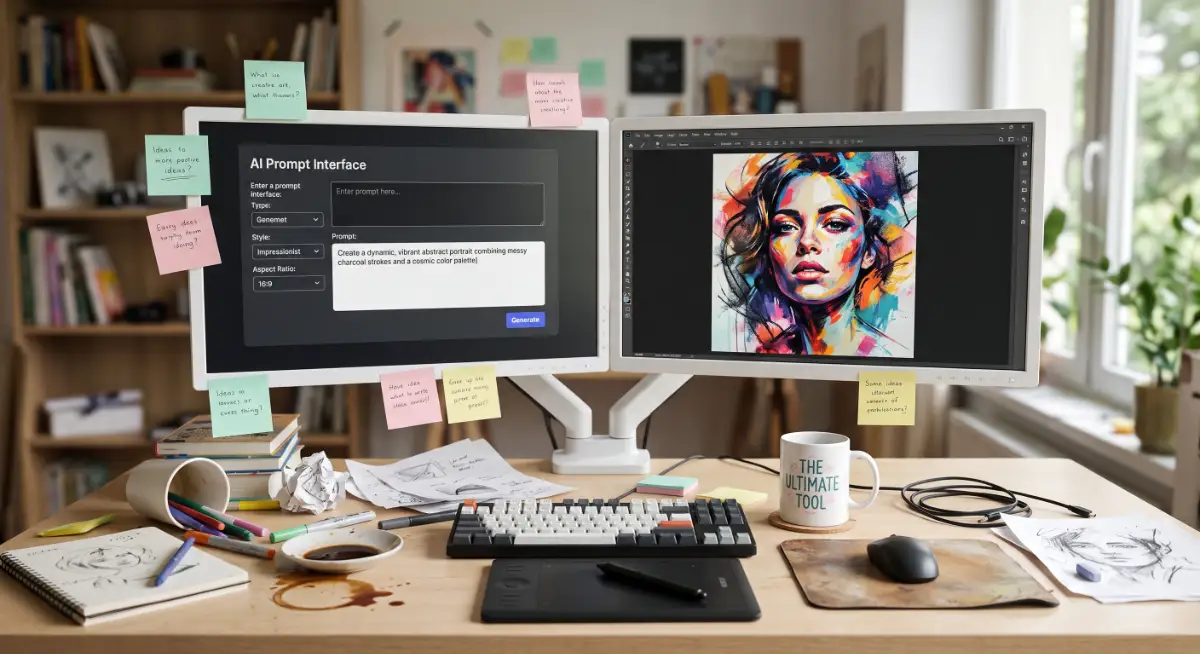
Keep a messy paper notebook on your desk. Doodle with an actual pen, scribble bad ideas on sticky notes, and physically write out your thoughts before typing them.
This physical connection keeps your human brain active and prevents you from thinking like a machine. It reminds you that creativity is a beautifully messy human experience, not just a mathematical output.
Chasing Perfect Grammar Over Raw Emotion
Smart editing tools will constantly tell you to fix your sentences to make them grammatically perfect. Sometimes, you need to ignore them completely.
Perfect grammar is often incredibly boring. People speak with strange pauses, sentence fragments, and intense emotion.
If you polish your work until it is completely flawless, you strip away the exact humanity that makes it special. Keep the raw, weird edges in your writing and design because that is what makes people stop scrolling.
Your Next Moves in a Machine-Driven World
The creative world is changing rapidly, but it is certainly not ending. We are simply entering a completely new era where basic technical execution is no longer the main goal.
The machines will handle the boring details, leaving you free to focus entirely on human connection. Your weirdness, your empathy, and your personal stories are about to become more valuable than ever before.
According to a recent study by the Stanford University AI Index Report, machine learning models still completely fail at tasks requiring deep emotional reasoning and social understanding. That emotional gap is exactly where you will build your entire future.
Once you master these new automation tools, your freelance income and career opportunities might actually jump significantly. When that happens, you will definitely need to learn secret money habits as your salary increases to manage your new success properly.
Do not run away from the future, and do not let fear paralyze your dreams. Step forward confidently, knowing that your human touch is the one thing a computer can never replicate.
I honestly used to be so afraid of these new tools, completely terrified they would replace my unique voice. But once I stopped running and started treating them like my personal assistants, I finally found the true freedom to create the best work of my entire life.
Most Common Questions About Machines Taking Over Art
Will artificial intelligence eventually learn how to feel actual emotions?
No, machines do not have a nervous system, hormones, or personal life experiences. They can only mimic emotional words based on data patterns, but they will never truly feel joy, pain, or heartbreak like a human being.
Should I completely stop learning basic skills like drawing or coding?
Absolutely not! You still need a deep understanding of the basics to know if the machine is doing a good job. A chef still needs to know how to chop an onion, even if they have an automatic food processor in the kitchen.
How do I prove to my clients that my work is human-made?
The easiest way is to show your messy process. Share your early sketches, explain the personal logic behind your creative choices, and communicate with them on a highly personal, friendly level.
Is it considered cheating to use automated tools for brainstorming ideas?
Not at all. Brainstorming with software is exactly like bouncing ideas off a friend in a coffee shop. It simply helps you break through writer's block so your real human creativity can finally take over.
Why does computer-generated content often feel so repetitive and boring?
Because algorithms are mathematically designed to find the most common, average answer from their training data. They naturally remove all the weird, surprising human elements that make art actually interesting to consume.
Disclaimer: The information provided in this article is for educational and informational purposes only. It should not be considered as formal career, financial, or legal advice. Software tools and automation trends change rapidly, and individual results will always vary based on personal effort and market conditions. Always conduct your own research before making major professional decisions or investing in premium software subscriptions.
![The Secret To Preventing Unconscious Data Bias [Step-by-Step Blueprint]](https://fintiq24.com/storage/uploads/blogs/1787735139_the-secret-to-preventing-unconscious-data-bias-step-by-step-blueprint.webp)
![The Secret Email Management Blueprint [Step-by-Step]](https://fintiq24.com/storage/uploads/blogs/1787691875_the-secret-email-management-blueprint-step-by-step.webp)