The Day the Credit Card Statements Took Over My Mind
Quick Summary: What You Need to Know
- Spot the trap: Making only minimum monthly payments is the fastest way to get stuck in debt for years.
- Stop the bleeding: Pause your card usage immediately—you can't dig yourself out if you keep swiping for small things.
- Pick a strategy: Use the "Debt Snowball" method to attack your small balances first and build powerful momentum.
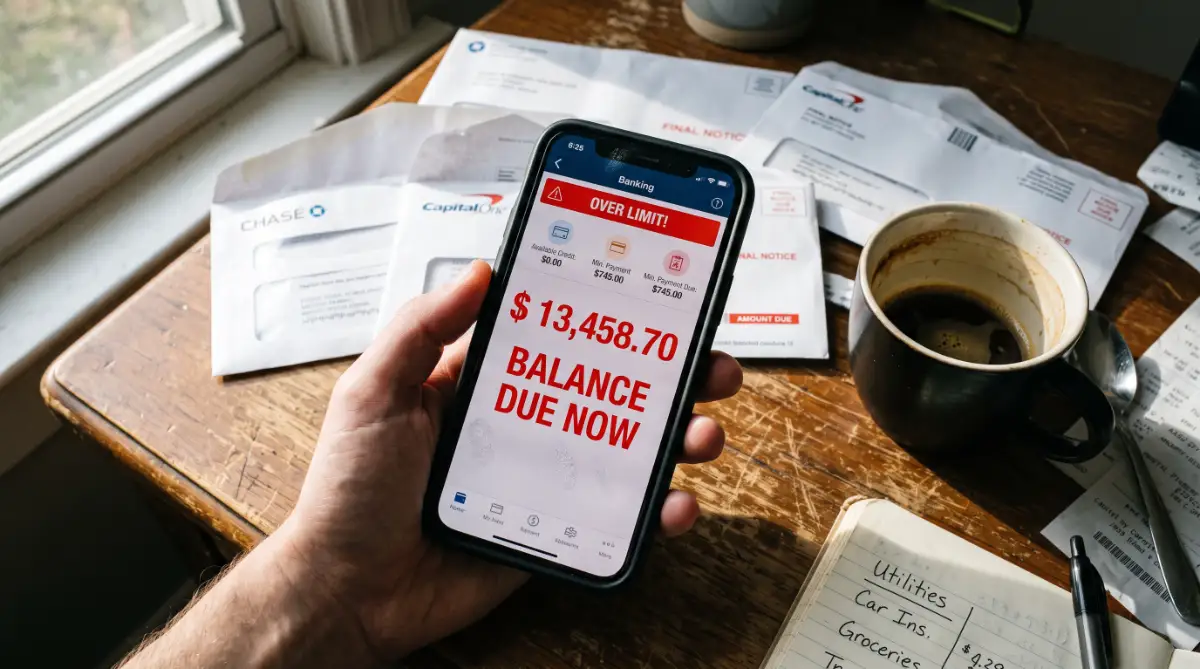
Let’s be honest—nobody actually plans to max out their credit cards. It usually starts with a random car repair here, a weekend trip there, and covering a few emergency groceries. Next thing you know, you're logging into your banking app and staring at a balance that feels completely out of control. If you’re constantly stressing over those climbing numbers, you aren't alone. Today, I'm going to show you exactly how to stop that balance from growing and finally clear it for good.
Every single morning, I would wake up with a quiet sense of panic. My relationships started to suffer because I was always stressed about money. I snapped at my family over small things, purely because my mind was constantly calculating interest rates in the background. Sleep became a luxury I could barely afford. I would lie awake staring at the ceiling, wondering how I let my finances get so out of control.
You might be feeling this exact same way right now. The constant pressure of owing money changes how you view your entire life. It drains your energy and makes you feel completely trapped. But I am here to tell you that this dark cloud does not have to hang over you forever.
I finally found a way out, and it changed my life completely. I discovered a very simple approach that shifted my mindset and rescued my bank account. It is not magic, but the results I got felt pretty close to it.
Escaping the Minimum Payment Trap
Most people completely misunderstand how credit card companies make their money. They want you to pay only the absolute minimum amount every single month. When you do this, you are mostly just paying off the interest, not the actual money you borrowed.
Myth vs. Fact: The Minimum Payment Trap
- The Myth: Making the minimum payment on time means you are managing your debt responsibly.
- The Fact: Minimum payments are a clever trick designed by banks to keep you in debt longer. If you only pay the minimum on a $5,000 balance at 20% interest, it will take you over 15 years to pay it off, and you'll hand the bank thousands in extra interest fees! Always aim to pay a little extra, even if it's just $20.
This is a dangerous trap. If you have a large balance with a high interest rate, making only the minimum payment means you could be paying off that single card for decades. That is a terrifying thought. You end up paying back double or triple what you originally spent on everyday items.
I realized I needed a completely new game plan to attack these balances. I needed a strategy that gave me hope and showed me real progress. That is when I learned about the snowball method. It is a powerful psychological tool designed to help everyday people win with their money.
Quick Comparison: Snowball vs. Avalanche Method
| Strategy | How It Works | Why You Should Use It |
| The Debt Snowball | You pay off the smallest balance first, then roll that exact payment amount into the next smallest. | You get fast, early wins that keep you highly motivated to push forward. |
| The Debt Avalanche | You focus completely on the card with the highest interest rate first. | You save the absolute most money on interest fees in the long run. |
(My tip: If you get easily frustrated and need to see fast progress, go with the Snowball method. Quick wins feel amazing!
Why Math Isn't Everything When Paying Off Balances
Many financial experts will tell you to pay off the card with the highest interest rate first. On a spreadsheet, this makes perfect mathematical sense. But humans are not spreadsheets, and we are highly emotional creatures.
When you try to pay off a massive balance just because it has the highest interest rate, it takes forever to see the balance hit zero. You get bored, you get tired, and you eventually give up. You lose the motivation to keep fighting.
The snowball strategy flips this idea completely upside down. It focuses entirely on your behavior and your motivation. Instead of worrying about interest rates, you focus on scoring quick, easy wins to build your confidence.

Here is a quick look at how the real world works vs. what we believe:
Organizing Your Attack Plan
The very first thing you have to do is confront the monster in the closet. You need to know exactly who you owe and how much you owe them. Grab a plain piece of paper and a pen.
Write down every single credit card balance you currently have. You are going to list them in order from the smallest dollar amount to the largest dollar amount. Ignore the interest rates completely for this step.
For example, let us say you have a store card with a $300 balance, a medical bill card with a $1,000 balance, and a main travel card with a $4,000 balance. You will write them down exactly in that order. The $300 balance becomes your absolute number one target.
This simple list is your new roadmap to financial peace. Having it written down on paper removes the chaos from your brain. You no longer have to guess what your next move is.
Pro Tip: My Early Mistake with Tracking
I remember making the mistake of trying to keep track of my card balances entirely in my head. I thought I knew my numbers, but I kept missing small fees and exact due dates. My biggest advice is to physically write your balances down on paper and tape it to your bedroom mirror. Seeing those numbers every single day gave me an incredible push to keep paying them down aggressively.
Creating the Snowball Effect
Now that you have your list, the real action begins. You are going to continue making the minimum payments on all of your larger balances. Do not miss a single payment on those, or you will get hit with nasty late fees.
Take every single extra dollar you can find and throw it at that smallest balance. Sell old clothes, skip the expensive coffee, or take on a side hustle for a few weeks. Throw all that extra cash at the $300 store card.
Because the balance is so small, you will pay it off very quickly. When you see that balance hit zero, something amazing happens in your brain. You feel a massive rush of accomplishment and pride. You proved to yourself that you can actually do this.
Are you ready to see exactly how to keep this momentum going? Watch this incredible breakdown to visualize your next steps.
Rolling the Money Forward
Once that first small balance is completely gone, you take a moment to celebrate. But you do not stop there. You take the money you were paying on that first card, and you add it to the minimum payment of the second card on your list.
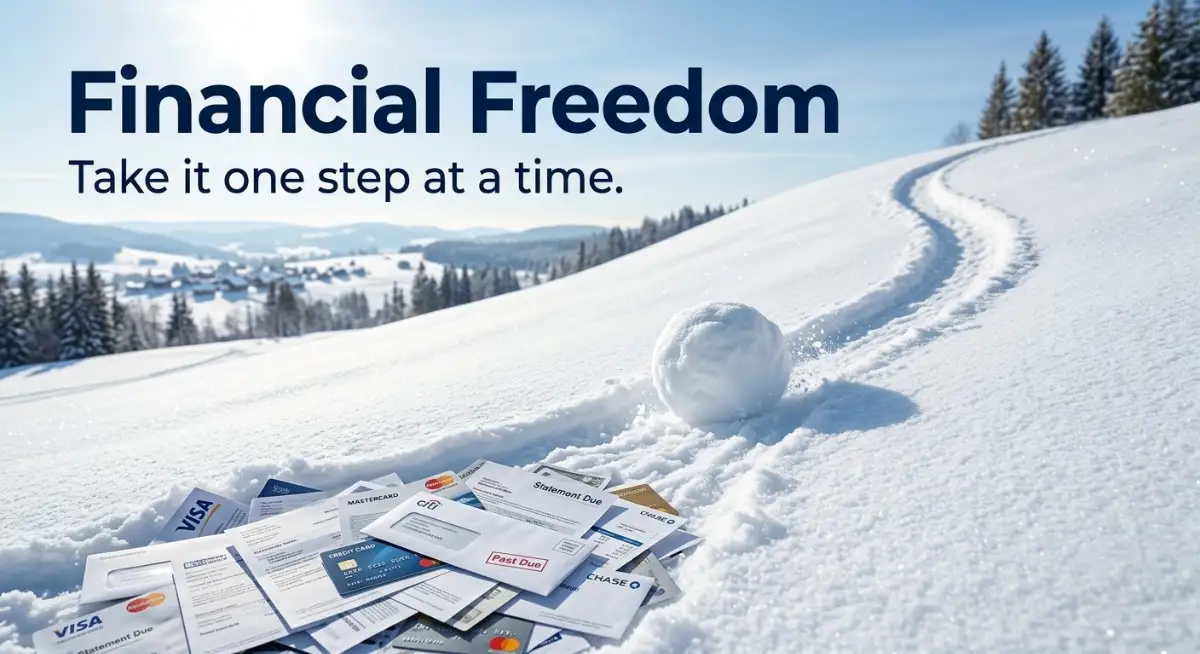
This is exactly how a snowball rolling down a snowy hill works. It starts out small, fitting right in the palm of your hand. But as it rolls, it picks up more snow, becoming larger and moving much faster.
Your payments do the exact same thing. Let us go back to our earlier example. If you were paying $50 a month on the small card, and the minimum for the second card was $75, you now combine them. You are now attacking the second card with $125 every single month.
Suddenly, that $1,000 balance starts dropping much faster than you expected. You are hitting it with a bigger shovel. The momentum is now entirely on your side.

Overcoming the Mid-Journey Slump
There will be moments when you feel tired of the process. Paying off debt is a marathon, not a quick sprint. You might have a month where an unexpected expense pops up, like a flat tire or a broken phone.
When this happens, do not beat yourself up. The worst thing you can do is let one bad week ruin your entire strategy. Just pay the minimums for that month to survive, and get right back on the plan the next month.
I found that rewarding myself for small victories kept me going. When I paid off my second card, I treated myself to a nice homemade dinner with a cheap movie rental. You have to find free or very cheap ways to celebrate your hard work.
Consistency is the name of the game. Even if you can only put an extra $10 toward your target card this week, do it. That $10 is one step further away from financial stress.
Dealing with Family and Friends During the Process
One of the hardest parts of this journey is dealing with social pressure. Your friends will invite you out for expensive dinners or weekend trips. It is very hard to look them in the eye and say no.
You do not have to explain your entire financial situation to everyone. Simply tell them you are working on a massive personal goal right now. Most good friends will respect your boundary and support your decision.
Suggest cheaper alternatives instead of just saying no. Invite them over for a potluck dinner or suggest a walk in the local park. You can still maintain your social life without swiping your credit card.
I actually found out who my real friends were during my payoff journey. The people who truly cared about me cheered me on. The ones who judged me were not the kind of people I needed in my life anyway.
Staying Focused on Your Big 'Why'
To make this method work, you need a very strong reason why you are doing it. We call this your 'Why.' If your only reason is "I want less debt," you will probably quit when things get hard.
Your reason needs to be highly emotional and personal to you. Maybe you want to finally buy a house with a nice yard for your dog. Maybe you want to travel without bringing a heavy cloud of stress in your suitcase.
My 'Why' was simple: I wanted to sleep peacefully through the night without waking up in a cold sweat. Write your reason down on a sticky note. Place that note directly on your wallet or the back of your phone.
Every time you are tempted to buy something you do not actually need, look at that note. Ask yourself if this random purchase is more important than your big goal. Most of the time, the answer will be a very clear no.
Understanding Your Spending Triggers
To stop creating new debt, you have to understand why you swipe your card in the first place. We all have specific emotional triggers that make us want to spend money. For some people, it is stress from a hard day at work.
For others, it might be boredom on a lazy Sunday afternoon. I used to go online shopping whenever I felt lonely. I would buy random gadgets just to feel a brief moment of excitement when the package arrived.
Take a few days to track your moods. When you feel the sudden urge to buy something, write down how you are feeling in that exact moment. Are you tired? Are you hungry? Are you sad?
Once you identify your specific triggers, you can build a defense against them. If you know you spend money when you are stressed, find a different way to relax. Go for a run, read a book, or call a supportive family member.
The Hidden Power of Cash Budgets
When I was deeply committed to the snowball method, I actually stopped carrying my credit cards altogether. I took them out of my wallet and locked them inside a drawer at home. If they were not in my pocket, I could not use them on an impulse.
I switched to using a cash budget for my daily expenses like groceries and gas. There is a deep psychological connection to handing over physical cash. When you hand over a crisp bill, your brain registers the loss of that money immediately.
When you swipe a piece of plastic or tap your phone, it does not feel real. It just feels like magic internet money. Using cash forces you to be highly intentional with every single purchase you make.
If you give yourself exactly $100 for groceries for the week, you will naturally pay closer attention to the prices. You will put the expensive name-brand items back on the shelf. This simple habit frees up more cash to throw at your debt snowball.
Automating the Boring Parts
Willpower is a limited resource. If you have to rely on your willpower to make extra payments every single month, you will eventually slip up. You need to make the right choice automatic.
Log into your banking app and set up automatic transfers. Have your minimum payments automatically deducted a few days before they are due. This completely eliminates the risk of missing a payment and getting charged a late fee.
When it comes to your extra snowball payment, try to automate that too. If you get paid every second Friday, set up an automatic payment to your target card for that exact same day.
If the money leaves your checking account before you even have a chance to look at it, you will never miss it. You learn to live on the money that is left over. Automation removes the emotion and hesitation from the process.
Celebrating the Final Push
As your snowball rolls down the hill, you will eventually reach your largest balance. By this time, you will have a massive amount of cash freed up from your previous victories. You might be throwing $500 or even $800 extra at this final account every month.
This is the most exciting phase of the entire journey. You have built incredible financial discipline over the last few months. You are no longer the same person who stressed over minimum payments.
When you finally submit that very last payment to bring your total to zero, the feeling of relief is indescribable. A massive weight is physically lifted off your chest. The money you earn now actually belongs to you, not the banks.
You have successfully used psychology, patience, and consistency to take back your life. The snowball method is not just about paying off balances; it is about completely changing how you view your future. It gives you the power to dream without limits again.
Next-Level Strategies to Accelerate Your Payoff Journey
Once you master the basics of the snowball method, you can start using some powerful advanced tactics to speed up the entire process. You do not have to settle for the standard timeline. There are always creative ways to throw more weight behind your monthly payments.
The first massive secret is learning how to negotiate with the banks directly. Most people are terrified to call their credit card companies. They think the interest rate printed on their monthly statement is carved in stone.
This is simply not true at all. If you have a decent payment history, you hold a lot of power in your hands. You can literally call the customer service number on the back of your card and ask for a lower rate.
I know picking up the phone sounds intimidating, but a simple five-minute conversation can save you hundreds of dollars in interest. The Consumer Financial Protection Bureau offers great guidance on how to speak with lenders and request better terms for your accounts.
The Five-Minute Phone Script That Saves Money
When you get a representative on the phone, stay completely calm and polite. You are simply asking a business for a better deal.
You can say something like this: "Hello, I have been a loyal customer for a long time. However, I am currently looking at other cards with much lower interest rates. Can you lower my current rate to help me stay with your company?"
Sometimes they will say no, and that is completely fine. You just say thank you and hang up. But very often, they will drop your rate by a few percentage points just to keep your business.
Every single dollar they cut from your interest charge is an extra dollar you can push into your snowball. This trick alone can shave months off your total payoff timeline.
Redirecting Unplanned Windfalls
Another highly effective strategy is managing the random money that enters your life unexpectedly. We all experience small financial windfalls throughout the year. This could be a tax refund, a bonus at work, or even a birthday check from your grandmother.
Our natural instinct is to take that extra money and buy something fun immediately. We see it as free money that does not belong in our regular budget. But if you want to eliminate your balances fast, you have to change how you view these surprises.
Take 90 percent of every single windfall and dump it directly onto your target balance. You can use the remaining 10 percent to treat yourself to a nice dinner or a small gift. This approach satisfies your desire for a reward while making a massive dent in your debt.
If you rely entirely on a single stream of income to pay everything down, the journey will take much longer. Learning about the hidden dangers of one paycheck can help you find creative ways to bring extra money into your household.
The Power of the Micro-Payment Habit
You do not have to wait until the end of the month to make a payment on your card. One of the best psychological tricks I ever learned is making micro-payments every single week.
Instead of making one large payment of $200 on the due date, break it down. Pay $50 every Friday when you get your paycheck.
This does two amazing things for your brain. First, it keeps your focus locked completely on your financial goals every few days. Second, it physically drains your checking account faster, so you are less tempted to waste that money on weekend entertainment.
You can even take it a step further. If you skip a $5 coffee in the morning, immediately open your banking app and transfer that exact $5 to your credit card. These tiny actions build incredible financial discipline over time.
Restructuring Your Daily Environment
Your environment plays a massive role in how you spend your money. If you are constantly surrounded by temptation, you will eventually break your good habits. You have to actively protect your mind from aggressive marketing.
Start by unsubscribing from every single retail email newsletter sitting in your inbox. When a store sends you a 50% off coupon, it is not a saving opportunity. It is a highly calculated trigger designed to make you spend money you do not have.
Delete shopping apps from your phone so you cannot browse items when you are bored. If you want to understand why these simple changes matter so much, the National Endowment for Financial Education highlights how behavioral changes directly impact our long-term financial health.
You must also identify the secret habits draining your bank account on a daily basis. Once you remove these small leaks, you will suddenly find extra cash to push your snowball forward.
Silent Traps That Can Ruin Your Hard Work
Even with a perfect plan on paper, human emotion can easily derail your progress. The road to zero balances is filled with hidden potholes. I fell into a few of these traps myself, and they cost me a lot of wasted time and heavy frustration.
One of the most dangerous mistakes is trying to pay off your accounts while having absolutely zero cash in the bank. Many people throw every single penny they have at their cards. They think keeping cash in a savings account is a waste of time.
Then, real life happens. Your car breaks down on the highway, or you have a sudden medical emergency. Because you have no cash saved, you are forced to put that emergency right back onto the credit card you just worked so hard to pay down.
This creates a devastating emotional blow. You feel like a complete failure, even though the emergency was not your fault. You must learn the easiest way to build an emergency fund fast before you get too aggressive with your extra payments. Even a tiny safety net of $1,000 will protect your hard work from unexpected disasters.
The Danger of Extreme Deprivation
Another massive mistake is cutting out every single source of joy in your life. Some people decide they will not eat out, buy new socks, or go to the movies until everything is paid in full.
This extreme mindset is just like a crash diet. You might lose weight quickly in the first two weeks, but eventually, you will crack under the pressure. You will end up binge-eating junk food because the restriction was too severe.
Financial diets work the exact same way. If you squeeze your budget too tight, you will eventually experience severe budgeting burnout. You will get so frustrated that you might abandon the entire plan and go on a massive shopping spree.
You have to leave a small amount of "fun money" in your plan every single month. It does not have to be a lot. Even $20 a week for a guilt-free lunch or a cheap hobby will keep your spirit alive during the long journey.
Closing Accounts Out of Spite
When you finally pay off a stubborn card, your first instinct might be to cancel the account completely. You want to cut the plastic into tiny pieces and call the bank to close it forever. While cutting the physical card is a great idea, closing the actual account can hurt you.
Your credit score is heavily based on something called your credit utilization ratio. This is the amount of money you owe compared to the total amount of credit you have available.
When you close an old account, you instantly lower your total available credit. This makes it look like you are using a higher percentage of your remaining credit, which drops your score. The Federal Trade Commission explains how managing these open accounts carefully is necessary for maintaining a healthy credit profile over time.
Unless the card has an insanely high annual fee, it is usually better to leave the account open with a zero balance. Just hide the physical card in a drawer so you do not use it.
Hiding the Truth from Your Partner
Money is one of the hardest topics to discuss in any relationship. Many people feel deep shame about their balances, so they try to hide the exact numbers from their spouse or partner. They try to execute this entire payoff strategy in complete secret.
This is a recipe for disaster. You cannot make massive changes to your household spending without your partner noticing. When they find out you have been hiding financial details, it completely destroys the trust in the relationship.
The psychological weight of keeping financial secrets is incredibly heavy. The American Psychological Association frequently reports that money is a leading cause of extreme stress in relationships.
Sit down and have an honest conversation with your partner. Show them the exact numbers on paper and explain the snowball strategy. When you attack the problem as a unified team, the entire process becomes much easier and less lonely.
It is also important to understand the secret psychology of borrowing money together. When both of you understand why the problem started, you can prevent it from ever happening again.
Your Blueprint for a Debt-Free Future
Eliminating your balances using the snowball method is not just about changing your bank account. It is about fundamentally changing who you are as a person. The discipline you build during this process will completely transform how you view the world.
When you no longer have huge payments stealing your paycheck every month, your options in life multiply. You can finally start investing for your future or saving for a dream vacation. You get to decide exactly where your hard-earned cash goes.
This journey requires immense patience. As you transition into this new phase of life, you will need a solid foundation for managing your growing wealth. You can always explore more resources on fintiq24.com to keep your financial education sharp.
Keep your head down, celebrate those small victories, and protect your momentum at all costs. The peace of mind waiting for you on the other side is worth every single sacrifice you are making today.
Real Answers to Your Biggest Payoff Questions
What happens if two of my balances are exactly the same amount?
If you have two cards with the exact same balance, look at the interest rates for a tie-breaker. Attack the one with the higher interest rate first while paying the minimum on the other. This gives you a tiny mathematical advantage while keeping your momentum going.
Should I stop investing for retirement while using the snowball method?
If your employer offers a company match on your retirement account, you should generally keep investing enough to get that free money. However, any extra investing outside of that match should be paused temporarily. Throw all your extra energy at the heavy balances first so you can invest more aggressively later.
Does paying off cards quickly hurt my credit score?
No, paying down your balances will actually improve your credit score significantly over time. It lowers your credit utilization, which makes you look highly responsible to lenders. Just remember to keep the actual accounts open after they hit zero.
What if I lose my motivation halfway through the process?
This is completely normal and happens to almost everyone. When you feel tired, go back and look at the very first list you made. Seeing how far you have already come is usually enough to spark your motivation again.
Can I still use my credit cards for daily expenses if I pay them off immediately?
While you are in the middle of this specific payoff phase, it is highly recommended to stop using credit cards entirely. Mixing new daily purchases with old balances makes the math confusing and slows down your progress. Switch to cash or a debit card until your slate is completely clean.
I remember the exact moment my very last balance hit zero, and I literally cried happy tears at my kitchen table. You have the exact same power to rewrite your financial story starting today, so take a deep breath and take that very first step.
Disclaimer: The information provided in this article is for educational and informational purposes only and does not constitute professional financial advice. Everyone's financial situation is entirely unique. Please consult with a certified financial planner or qualified professional before making major financial decisions or drastically changing your payoff strategies.