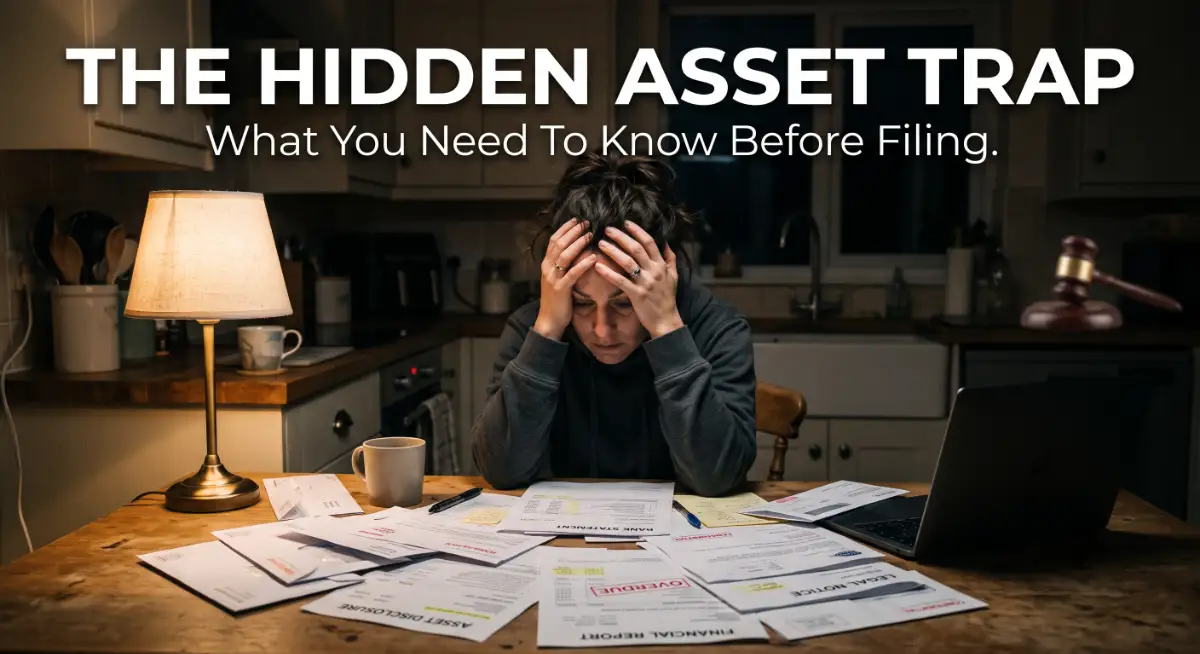
The Crushing Weight of Financial Secrets
What You Need to Know Right Now (Quick Summary)
- The System Sees Everything: Trustees use advanced databases to track bank drops, crypto buys, and even your digital cash apps.
- Transferring Property is a Trap: "Selling" your car to a relative for a dollar is illegal and will easily drag your family into a messy court battle.
- Exemptions Are Your Best Friend: The law actually wants you to keep your retirement, home, and basic items. Use exemptions smartly; don't hide things.
- Stop Using Credit: Racking up more debt right before seeking relief looks exactly like fraud. Switch to a cash-only budget today.
Look, we’ve all been in that terrifying spot where the bills keep piling up, and hiding a little cash from creditors feels like the only way to survive. But I'll shoot straight with you—keeping secret accounts or secretly transferring a car to your brother is the fastest way to turn a tough situation into a massive legal disaster. Today, I am going to show you exactly how the system tracks your money and share the 100% legal ways to protect the things you worked so hard for.
Every single time the phone rang, my heart pounded right out of my chest. I was completely terrified that a debt collector or an aggressive lawyer had finally figured out my secret. I felt trapped between losing everything I had worked for and committing a serious legal mistake that could ruin my life.
When you are drowning in debt, panic easily takes over your logic and reasoning. You might think that hiding your grandmother’s jewelry, transferring your car to your brother, or keeping cash in a safe is a smart survival tactic. The reality is that this desperate mindset destroys your peace of mind and ruins your sleep.
Instead of feeling relief from the idea of debt forgiveness, you carry a heavy burden of guilt and intense anxiety. People hiding property often pull away from their friends and family because they are so consumed by the fear of making a wrong move. The truth is, keeping financial secrets during legal proceedings does not protect you; it actually puts a massive target on your back.
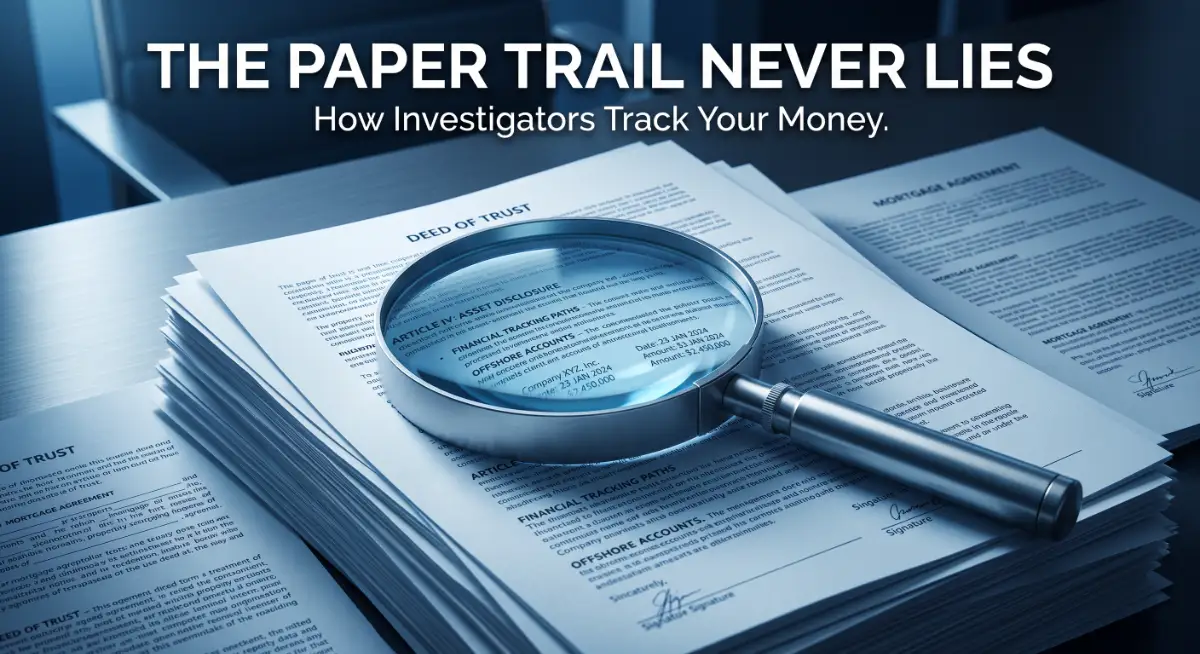
How The Legal System Actually Tracks Your Money
When you file for financial relief, you are assigned a legal official known as a trustee. Think of this person as a highly trained financial detective with an X-ray machine for your bank accounts. Their main job is to find any available money to pay back the people you owe.

Many ordinary folks mistakenly believe that if an account is not linked to their main bank, no one will ever find it. This is a massive misunderstanding of how modern financial tracking works. Trustees have access to powerful databases that track almost every financial move you make.
They will carefully look through your tax returns, bank statements, and property records from the past few years. If you sold a boat to your cousin for ten dollars, the paper trail will clearly show up in public vehicle registration databases. They are experts at spotting sudden drops in your bank balances or missing assets that you previously claimed to own.
The Silent Witnesses Against You
You might be surprised to learn how often ex-spouses, disgruntled business partners, or angry former friends act as informants. People love to talk, especially when money is involved. If someone knows you are keeping a stash of cash hidden away, they can easily submit an anonymous tip to the court.
Social media is another massive trap that catches people completely off guard. You cannot claim to be entirely broke while posting pictures of a brand new jet ski on Facebook. Investigators actively monitor online profiles to see if your lifestyle matches the financial documents you submitted to the court.
Even simple digital transactions leave a permanent footprint. Sending money through cash apps, buying cryptocurrency, or making large online purchases are all recorded permanently. Once the investigator finds a single inconsistency, they will dig much deeper into every aspect of your life.
The Severe Consequences of Financial Deception
Lying on federal legal documents is not just a tiny mistake; it is considered perjury and fraud. When you sign your filing papers, you are swearing under penalty of perjury that everything listed is completely true and accurate. If the court discovers you intentionally left something out, the consequences are incredibly harsh.
First, your entire case can be completely thrown out. This means you will still owe all of your original debt, but now you have a permanent mark of fraud attached to your name. Your creditors will immediately resume their aggressive collection tactics, including freezing your accounts and taking portions of your paycheck.
In the worst scenarios, criminal charges are entirely possible. The government actively prosecutes individuals who try to cheat the system by hiding significant wealth. You could face massive financial penalties and even time in federal prison for trying to conceal your property.
Pro Tip: I made the massive mistake of thinking my mobile payment apps didn't count as "real" bank accounts, so I almost left them off my paperwork. Thankfully, I realized just in time that every single digital wallet, Venmo balance, and PayPal account is considered a legal asset that you absolutely must disclose.
Understanding the True Power of Exemptions
Here is the most amazing secret that most people do not know about the debt relief process. You do not actually have to lose all of your belongings to get a fresh start. The law actually wants you to keep enough property to maintain your basic living standards and continue working.
These legal protections are called exemptions, and they are incredibly powerful tools when used correctly. Instead of illegally hiding your car, you can simply apply a vehicle exemption to protect its equity legally. Every single state has its own specific set of rules regarding what you can keep safe from creditors.
Quick Look: What's Safe vs. What's At Risk
| Asset Type | Typical Court Status | What You Should Do |
| Your Primary Home (Equity limits apply) | Usually Protected | Claim your state's homestead exemption. |
| 401(k)s & IRAs | Fully Protected | Leave the money exactly where it is! |
| Extra Cash & Second Cars | At Risk | Use legal exemption planning. |
Protecting Your Home and Retirement
The most significant protection available is often the homestead exemption. This specific rule allows you to protect a certain amount of equity in the house you currently live in. In some regions, this protection is so strong that creditors cannot touch your family home under any circumstances.
Retirement accounts are usually given the highest level of protection by the legal system. The courts understand that taking away your future retirement savings would only create more financial dependency later in life. Pensions, 401(k)s, and most IRAs are almost always completely safe during this process.
Do not panic and drain your retirement accounts to pay off credit cards before filing. Withdrawing that money not only creates a massive tax penalty, but it turns protected funds into unprotected cash. Keep your retirement money exactly where it belongs, safely tucked away in its protected account.
The Magic of the Wildcard Protection
Many states offer a flexible tool known as a wildcard exemption. This is a specific dollar amount that you can apply to absolutely any item you want to keep. If you have an expensive family heirloom or a valuable piece of musical equipment, you can use the wildcard to shield it completely.
The key is absolute transparency and working within the legal framework. When you list every single item you own honestly, your legal representative can apply these exemptions strategically. It is like playing a game of financial chess, but you have to keep all your pieces visible on the board.
Watch this incredibly helpful breakdown on how to keep your most valuable property entirely safe during the process without breaking any rules!
The Right Way to Handle Unprotected Wealth
Sometimes you might have property that simply does not fit into any legal protection category. A common reaction is to panic and try to give it away to a friend right before filing. Transferring property to friends or family members right before your case begins is one of the most dangerous moves you can make.

The court considers these actions to be "fraudulent transfers," even if your intentions were genuinely good. The investigator has the legal authority to sue your friend or family member to get that property back. You certainly do not want to drag your loved ones into a messy legal battle over a used vehicle or a piece of jewelry.
Pre-Filing Financial Planning Strategy
There are completely legal ways to rearrange your finances before you file, but it must be done carefully. This is often called exemption planning, and it involves converting unprotected items into protected items. For example, you might legally sell an unprotected second car at fair market value.
You can then take the cash from that sale and use it for essential living expenses like groceries, rent, or necessary medical treatments. As long as you document the sale properly and spend the money on allowable living expenses, you are following the rules. The most important rule is that every transaction must be fair, transparent, and completely documented.
Myth vs. Reality in Asset Disclosure
There is so much terrible advice floating around the internet regarding how to handle your money during tough times. Let us clear up some of the most common misunderstandings right now.
- Myth: If an account only has fifty dollars in it, I do not need to bother reporting it.
- Reality: Every single account, regardless of the balance, must be completely disclosed on your legal paperwork.
- Myth: My spouse’s name is the only one on the deed, so my creditors cannot touch it.
- Reality: Depending on where you live, marital property laws might still consider that house a shared asset that must be reported.
- Myth: I can just close my secret account the week before I file, and no one will know.
- Reality: Investigators look at your financial history going back several years; a recently closed account is a massive red flag.
Walking Away With a Clean Conscience
The ultimate goal of this entire legal process is to give you a true, clean slate. You cannot build a solid financial future if your foundation is made of lies and hidden secrets. Walking into the courtroom with absolute honesty gives you a sense of confidence and peace that money simply cannot buy.
When you fully disclose everything, the worst thing that happens is you might lose an item you could not protect. While that might sting initially, it is completely temporary compared to the permanent damage of a fraud conviction. You are trading material items for the ultimate freedom of walking away entirely debt-free.
If you are currently sitting on a secret account, it is not too late to fix the situation. The courts are incredibly forgiving to people who come forward and correct their mistakes before they are discovered. Speak with a qualified professional, amend your paperwork, and lift that heavy burden off your shoulders today.
Smart Wealth Protection Strategies You Actually Need
Now that we have covered the massive risks of keeping financial secrets, let us talk about what you should do instead. You might feel entirely powerless right now, but you actually have several completely legal strategies at your disposal. The key to coming out of this process safely is proactive, transparent planning before you even file your paperwork.
Most people think of asset protection as something only wealthy business owners do with offshore accounts. In reality, everyday folks use these exact same legal strategies to keep their cars, homes, and retirement savings safe. You just need to know the specific rules of the game and play them exactly by the book.
The Art of Exemption Planning
This is where the magic really happens for ordinary people trying to save their property. Exemption planning simply means converting money that the court can take into property that the court cannot touch. You are taking your unprotected cash and using it for entirely legal, necessary expenses before your case begins.
Let us look at a real-life scenario to make this concept crystal clear. Imagine you have five thousand dollars in a savings account that does not qualify for any legal protection. If you just leave it there or try to hide it, the investigator will take it to pay your credit cards.
Instead of panicking, you can legally spend that money on allowable living expenses right now. You might use it to fix the transmission on your primary vehicle or repair a leaky roof on your house. You could even use it to catch up on late mortgage payments or prepay a few months of your apartment rent.
Because vehicle repairs and housing are considered necessary living expenses, the court generally allows these transactions. You are not hiding the money; you are simply spending it on essential needs while leaving a perfect paper trail. This strategy ensures your money goes toward your actual survival rather than disappearing into a creditor's pocket.
Mastering the Paper Trail
When you are preparing for a massive financial reset, your documentation needs to be absolutely flawless. Many people fail simply because they cannot prove where their money went during the months leading up to their case. You want to make the investigator's job as boring and straightforward as possible.
Start keeping every single receipt for anything over fifty dollars. If you sell a piece of furniture on an online marketplace, write out a simple bill of sale and keep a copy. If you use cash to buy groceries, save the supermarket receipt in a dedicated folder.
My 3-Step Paper Trail Rule:
- Save the Big Stuff: Keep a physical receipt for any single transaction over 50 bucks.
- Write It Down: If you sell that old sofa on Facebook, write a simple one-page bill of sale.
- Snap a Picture: Use your phone to take a quick photo of paper receipts so you never lose them.
When you learn the secret rules of health insurance documents, you realize that the fine print matters, and the exact same logic applies to legal filings. The court wants to see a clear, logical story of your financial life. When you can hand over an organized stack of receipts, the trustee immediately knows you are an honest person who has nothing to hide.
Getting Accurate Appraisals
One of the smartest things you can do is get professional appraisals for your unique items. You might think your grandmother's old diamond ring is worth ten thousand dollars based on pure emotion. A professional jeweler might evaluate it and tell you it is only worth five hundred dollars due to damage.
This difference in value changes everything about how you handle the asset on your legal paperwork. If an item is worth significantly less than you thought, it might easily fit under your state's wildcard exemption limit. Never guess the value of your property, because guessing usually leads to unnecessary panic and poor decisions.
There are plenty of official resources on the U.S. Courts website that explain exactly how property valuation works during legal proceedings. By getting a written appraisal from an independent expert, you remove all the guesswork. You can confidently list the item, prove its low value, and walk away with your property totally safe.

The Most Dangerous Pitfalls That Will Wreck Your Case
It breaks my heart to see honest people make terrible mistakes simply because they listened to bad advice from a friend. When you are drowning in debt, your survival instincts often push you to make incredibly irrational choices. Let us break down the absolute worst moves you can make so you can avoid these devastating traps completely.
The consequences of these mistakes go far beyond just losing a piece of property. They can trigger federal investigations, permanently ruin your credit, and destroy relationships with your family members. If you recognize any of these behaviors in your own life, you need to stop them immediately.
The "Family Transfer" Disaster
This is easily the most common and destructive mistake people make before filing for relief. You realize your second car is not protected, so you quickly "sell" it to your sister for one dollar. You figure she can hold onto it for a few months until your legal case is completely finished.
The legal system sees right through this incredibly basic trick, and they call it a "fraudulent conveyance." Investigators are trained specifically to look for any property that changed hands right before you filed your paperwork. They will simply undo the transaction, take the car back, and possibly penalize you for trying to cheat the system.
Even worse, you have now dragged your completely innocent sister into a stressful federal legal situation. She might have to hire her own lawyer or appear in court just to answer questions about the transaction. Never transfer your property to loved ones; it is a guaranteed way to ruin Thanksgiving dinner for years to come.
The Luxury Spending Spree Trap
Sometimes people completely give up on their budget right before they seek legal help. They assume that since their debts are going to be wiped out anyway, they might as well max out their remaining credit. They go on a massive shopping spree, booking expensive vacations or buying new electronics on their credit cards.
This behavior will trigger an immediate and aggressive response from your credit card companies. If you run up significant charges right before filing, the court legally presumes you committed fraud. The judge will likely rule that those specific luxury purchases cannot be forgiven, meaning you will still owe that money.
Understanding the secret psychology of borrowing money reveals why we sometimes self-sabotage when we feel cornered financially. You must resist the urge to use your credit cards once you decide to seek legal debt relief. Stop using the cards entirely, cut them up, and focus on paying for your essential living needs with cash.
The Myth of the Safe Deposit Box
Many older folks still believe that a bank safe deposit box is entirely off-limits to government investigators. They quietly pull cash out of their checking account over several months and stuff it into a metal box at the bank. They assume that because there is no digital trail, the money is completely invisible.
This is a terrible strategy for multiple reasons. First, the bank keeps a strict digital log of every single time you visit that specific branch to access your box. If an investigator sees you visiting the bank vault twice a week, they are going to demand to know what is inside.
Furthermore, you are legally required to list the contents of any safe deposit box on your official paperwork. Federal perjury laws are incredibly strict, and lying about what is in that box is a serious criminal offense. Hiding cash in a physical box is just as illegal as hiding it in a digital account, and it is not worth the risk.
Ignoring Small Digital Assets
We live in an era where our money is scattered across dozens of different digital platforms. You might have a hundred dollars sitting in a sports betting app or a few fractions of a Bitcoin on a crypto exchange. Because these amounts seem small, people often forget to mention them to their legal representative.
Even if you genuinely just forgot, the court might view this as intentional deception. When you understand the warning signs of smart technology, you realize that every digital platform reports to the same tax databases. The investigator will eventually see that crypto account, and then they will wonder what else you might be forgetting.
Before you file anything, sit down and make a massive list of every app on your phone that holds value. Check Venmo, CashApp, PayPal, Robinhood, and even your Starbucks reward card if it holds cash balances. Being incredibly thorough with these small digital details builds massive trust with the court officials reviewing your case.
Your Blueprint For A Completely Honest Financial Reset
Going through a massive legal debt reset is one of the most stressful things a human being can endure. But it is also a powerful opportunity to finally fix the hidden dangers of living paycheck to paycheck. When you approach this process with absolute honesty and transparency, you guarantee that your future will be built on a solid foundation.
You no longer have to jump every single time your phone rings from an unknown number. You do not have to check your rearview mirror wondering if a repo truck is following you home. Complete honesty is the only key that officially unlocks your path to true financial freedom.
The "Day One" Action Plan
If you are feeling overwhelmed right now, take a deep breath and start with these simple, immediate steps. First, stop moving your money around immediately; just freeze your current financial activity. Do not close any bank accounts, do not sell any cars, and do not pay back that personal loan to your uncle.
Next, gather every single financial document you can find from the past two years. Throw your bank statements, tax returns, and property deeds into a big physical box if you have to. Having all your paperwork in one place makes it much easier to assess your true financial reality.
Finally, schedule a free consultation with a highly reviewed local professional who specializes in these legal cases. Walk into their office, put your box of documents on their desk, and tell them the absolute unvarnished truth. They cannot protect your property if they do not know it exists, so you must lay all your cards on the table.
Once your case is successfully finished, you can finally stop your budgeting guilt and start enjoying life again. You can begin taking the simple steps to build a secure emergency fund fast without the fear of it being seized. A clean slate gives you the incredible power to rewrite your entire financial story on your own terms.
I remember the exact moment I finally told the complete truth about my secret savings, and the immediate relief I felt was absolutely indescribable. My legal team was able to apply the right exemptions, protect my cash legally, and help me sleep through the night again. I promise you that coming entirely clean is the absolute best decision you will ever make for your future.
Burning Questions About Asset Disclosure Answered
What happens if I genuinely forget to list a small bank account?
If you make an honest mistake and forget a small account, you should contact your representative immediately to amend your paperwork. The court is usually very forgiving of genuine oversights as long as you are the one who brings it to their attention. The problems only begin when the investigator finds it before you tell them about it.
Can creditors check my spouse's bank accounts if we file individually?
Yes, depending on the marital property laws in your specific state, investigators often look at your spouse's accounts. They need to ensure you are not funneling your personal money into their separate accounts to hide it. It is always best to provide full transparency for both you and your spouse to avoid any legal suspicions.
Does the court monitor my bank accounts after my case is officially closed?
Once your final discharge is granted and the case is legally closed, the court stops monitoring your daily financial activity. You are completely free to open new accounts, save money, and rebuild your life without constant surveillance. Just make sure you read up on safe debt collection practices to ensure old creditors do not illegally bother you again.
Can I keep my tax refund during this legal process?
Your tax refund is considered a financial asset, and whether you keep it depends entirely on your state's exemption laws. Some states have specific protections designed just for earned income credits or standard tax refunds. You should always discuss upcoming tax refunds with your professional representative before you file your official case.
Is it legal to pay my mortgage before filing my paperwork?
Yes, paying your regular monthly mortgage or rent is considered a standard and necessary living expense. The court actually expects you to maintain your basic housing and utility payments leading up to your case. Just avoid making massive lump-sum payments to your mortgage without getting professional legal advice first.
Disclaimer: The information provided in this article is for educational and informational purposes only and does not constitute official legal or financial advice. The laws regarding financial disclosure and property exemptions vary significantly by state and jurisdiction. Always consult with a licensed attorney or certified financial planner in your local area before making any major financial or legal decisions.
![The Secret to Winning Your Minor Car Accident Claim [Step-by-Step]](https://fintiq24.com/storage/uploads/blogs/1787855377_the-secret-to-winning-your-minor-car-accident-claim-step-by-step.webp)
![Hidden Secrets of Intellectual Property Law [Step-by-Step]](https://fintiq24.com/storage/uploads/blogs/1787850988_hidden-secrets-of-intellectual-property-law-step-by-step.webp)