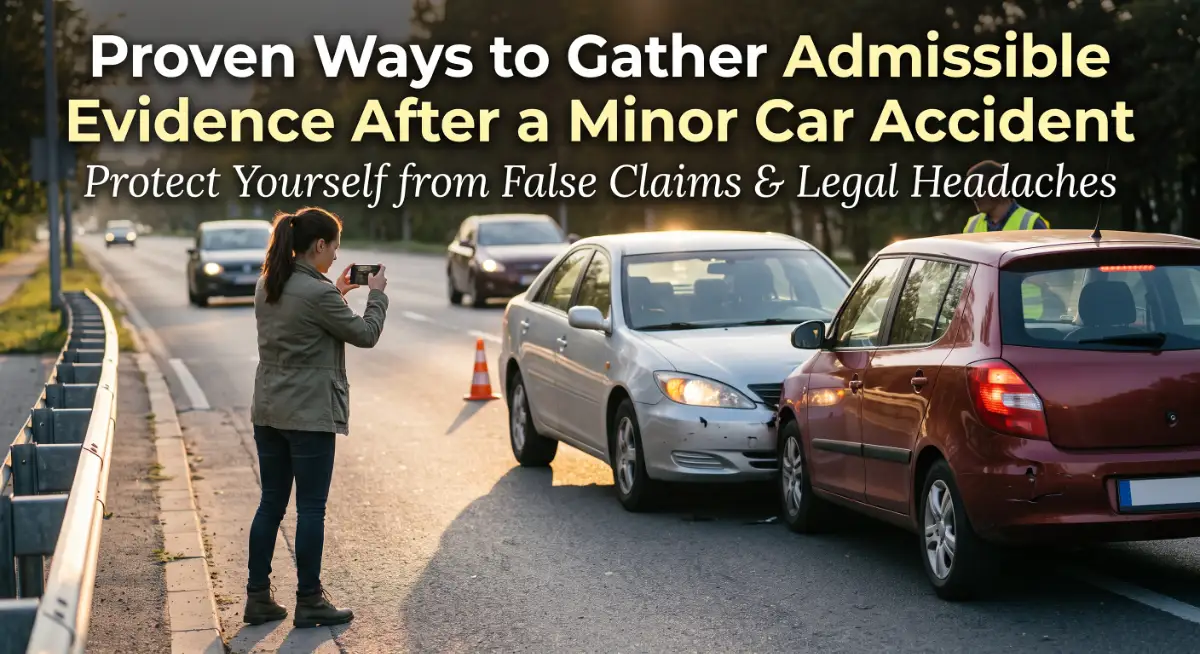
The Shocking Reality of a "Simple" Fender Bender
Quick Summary: How to Protect Your Wallet After a Crash
- Take Wide Photos: Close-up pictures of a dent do not show the whole story. Capture the street signs, lanes, and both cars before moving them out of traffic.
- Get Neutral Witnesses: Always ask bystanders for their phone numbers before they walk away from the scene.
- Stay Silent on Guilt: Never say "I am sorry" to the other driver. Let the police and your photos do the talking.
- Skip Handshake Deals: Always file an official police report to stop the other driver from lying about the damage later.
Getting bumped at a stoplight completely ruined my Tuesday last month. Nobody wants to deal with a dented bumper, long insurance phone calls, or a driver who suddenly changes their story when the police show up. But here is the hard truth: what you do in the first ten minutes after a minor crash completely decides who pays the final bill. Let me show you how to lock down your proof right on the spot so you never end up paying for another person's mistake.
Most people think a minor accident is just a tiny bump on the road of life. You assume your insurance company will simply handle the paperwork and everything will go back to normal. But the reality is completely different, and it often feels incredibly unfair.
You start worrying about the repair bills, your insurance premiums going up, and the heavy burden of dealing with annoying paperwork. The worst part is the uncertainty. You suddenly realize that if you cannot prove exactly what happened, you might end up paying for someone else's mistake.
They trust that the other driver will remain honest when they report the incident to their insurance provider. Sadly, honesty often disappears the moment money gets involved. People panic, they lie, and they try to protect their own wallets at your expense.
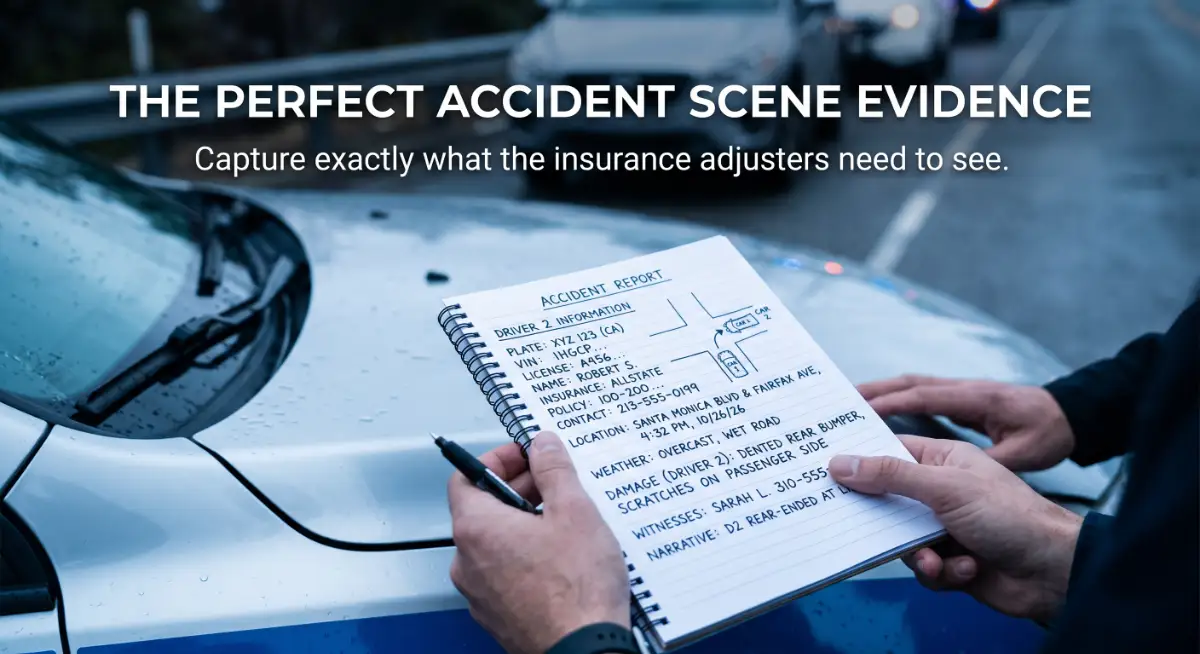
How to Lock Down Bulletproof Proof Right on the Spot
You do not need to be a professional lawyer to build a completely solid case. You just need to act smart and stay extremely calm while everyone else is panicking. Gathering the right proof is basically like putting together a very simple puzzle. If you collect all the right pieces before you leave the street, nobody can twist the truth later on.
Master the Art of Contextual Photography
Taking pictures is the most obvious thing to do, but most people do it completely wrong. They just take one close-up picture of a scratched bumper and think they are totally protected. A close-up shot of a dent tells the insurance company absolutely nothing about how the crash actually happened.
You need to tell a complete story with your camera phone. Start by taking wide shots of the entire intersection or the street where the bump happened. Make sure you capture the specific positions of both cars before anyone moves them to the side of the road.
These wide shots show the weather conditions, the road markings, and any traffic signs around you. Context is everything when it comes to admissible proof. If there is a stop sign hidden behind a big tree, you want that tree in your photograph.
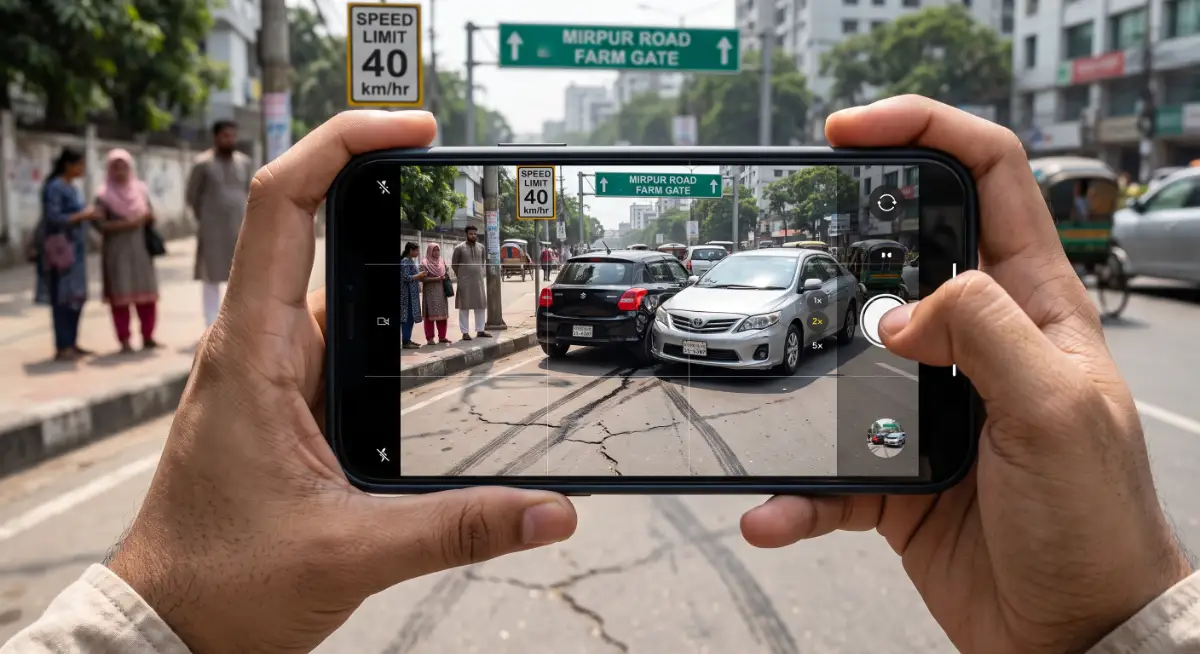
After you get the wide angles, slowly move closer to the cars. Take clear pictures of the license plates, the damage on both vehicles, and even the damage on the surrounding property. If there are skid marks on the pavement, take pictures of those too. Skid marks can prove exactly who slammed on their brakes and who did not even try to stop.
The 60-Second Crash Photo Checklist:
If you feel panicked, just look at this quick table to know exactly what to photograph before moving your car:
Understanding the Myth vs. Reality of Accident Photos
Let us clear up a huge misunderstanding about accident documentation. There is a lot of bad advice floating around on the internet.
Myth: You should only photograph the specific damage on your own car.
Reality: You must photograph the damage on the other person's car as well. If their car has old rust in the exact spot of the new dent, that proves the damage is not totally new.
Myth: Videos are completely useless if they do not show the actual impact happening.
Reality: Walking around the scene while recording a video captures background details you might miss. It also records the tone of voice and behavior of the other driver right after the crash.
Secure Unbiased Witness Testimony Before They Leave
Metal and plastic tell one part of the story, but human beings tell the rest. People who see the crash happen are incredibly valuable because they do not care who wins the argument. They have no financial interest in your insurance claim.
However, witnesses are usually very busy people. They will stop to make sure nobody is bleeding, but they will leave extremely fast once they realize it is just a minor bump. You must talk to them immediately.
Walk up to them politely, thank them for stopping, and ask if they saw the other driver run the red light or text on their phone. Ask them if they would be willing to share their name and phone number just in case the insurance companies need a quick statement.
Do not force them to write down a massive essay right there on the sidewalk. Just get their basic contact information and let them go. A neutral third-party statement is often the single detail that forces the other driver's insurance to accept full responsibility.
I made a huge mistake during my own accident a few years ago. I remember seeing a woman walking her dog who perfectly witnessed the other driver hit me. Instead of just asking for her phone number, I assumed the police would talk to her. By the time the officer arrived, she had walked away, and I completely lost my only independent witness. Always grab their phone number first, even before you call your insurance agent.
Quick Q&A: Talking to Witnesses
Q: What if the witness says they are in a huge hurry to leave?
A: Try using this simple script: "I totally understand you are busy. Can I just grab your first name and phone number? My insurance might need a 60-second phone call from a neutral person to confirm what happened." It works like a charm almost every time and keeps them from feeling pressured!
Before diving into the digital footprints you leave behind, watch this quick breakdown from legal experts on what exact phrases you should avoid saying at the scene.
Keep Your Words Guarded and Let the Data Speak
When you are feeling stressed, it is very natural to want to talk a lot. You might feel the urge to say "I am so sorry" just to be polite, even if the crash was not your fault. Insurance companies love polite people because they use those apologies against you.
Saying sorry can easily be twisted into a legal admission of guilt. You must remain completely calm, ask if everyone is safe, and then stop talking about the crash. Do not discuss the weather, do not discuss how tired you are, and never admit that you were slightly distracted.
Save your breath and let the hard facts do the talking. One of the best ways to let the facts speak is by looking for hidden security cameras. Take a quick walk down the block and look up at the nearby buildings.
Are there any gas stations, banks, or fast-food restaurants nearby? Many of these small businesses have outdoor security cameras pointing straight at the street. If you spot a camera, walk inside and politely speak to the manager.
Explain that you just had a small accident outside and ask if they can save the footage for you. Most video systems automatically delete old footage after a few days, so you must act very fast. Having a clear video of the other driver completely ignoring a yield sign will shut down their false story immediately.
The Secret Power of Dashcams and Digital Footprints
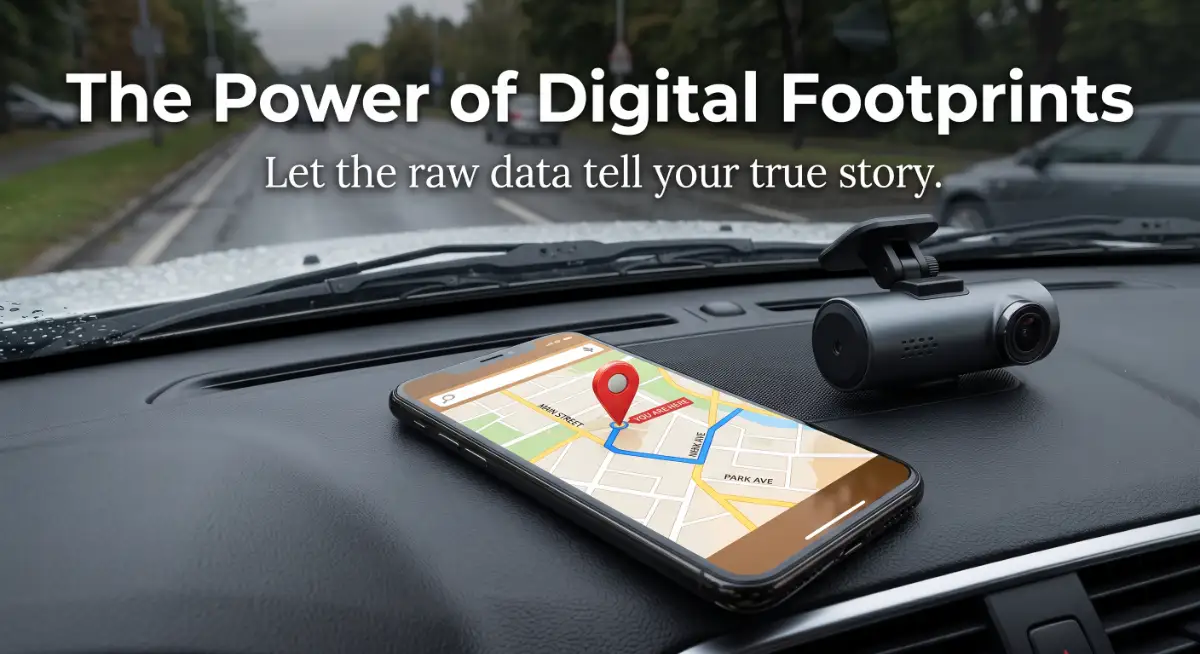
We live in an incredibly connected era, and your car is probably tracking more data than you realize. Dashcams are becoming extremely popular, and for a very good reason. A forty-dollar dashcam can literally save you thousands of dollars in unfair repair bills.
If you have a dashcam, safely pop the memory card out of the device as soon as you get home. Save that raw video file in at least three different places on your computer. Do not edit the video, do not add music to it, and do not trim the edges.
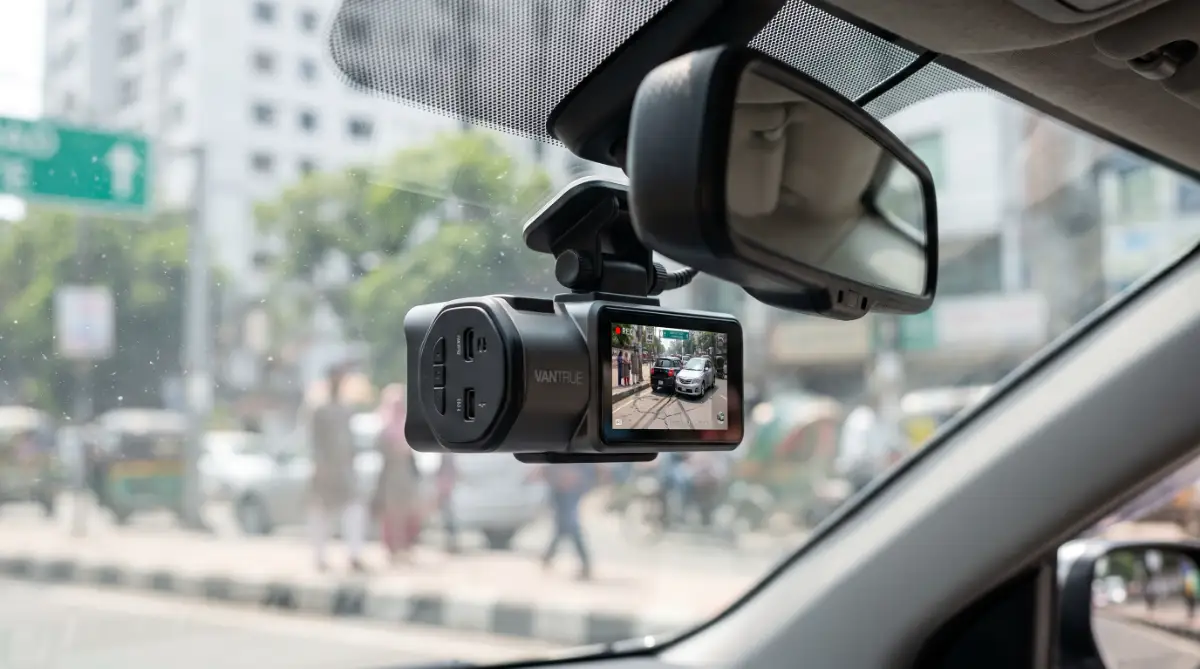
Insurance companies need the raw, unedited file to consider it admissible. But what if you do not own a dashcam? You still have a massive amount of digital proof sitting right in your pocket.
Your smartphone tracks your location history constantly. If the other driver claims you were speeding down the highway at eighty miles per hour, your phone's GPS data can prove you were stuck in slow traffic. Some modern cars also have built-in event data recorders, which act exactly like the black boxes on airplanes.
These tiny computers record your exact speed, whether your seatbelt was buckled, and when you pressed the brakes. If things get heavily disputed, a professional can pull this data to prove you were driving safely.
Recognize What Actually Counts as Good Proof
You might gather fifty different pieces of proof, but not all of them will hold up in a formal dispute. You must understand the clear difference between strong facts and weak opinions.
As you can see, objective data will always beat emotional stories. You want things that a machine or a completely random stranger can verify.
Why the Police Report is Your Best Friend
Even if the damage is extremely minor, you should always try to get the police involved. Many people feel bad about calling the authorities for a tiny scratch. They think they are wasting the officer's time.
Do not fall into this trap. The other driver might seem very friendly right now, promising to pay you out of their own pocket. But a few days later, they will stop answering your phone calls entirely.
When you call the non-emergency line, clearly explain that there are no injuries but you need a formal report for your insurance. When the officer arrives, they will take control of the situation. They will look at the driver's licenses, check the insurance cards, and write down an unbiased summary.
This official document is incredibly powerful. It clearly establishes the basic facts: who was driving, what time it happened, and exactly where it took place. If the other person tries to lie later and say they were not even there, the official report instantly shuts them down.
Always ask the responding officer for the exact report number before they leave. You will need to hand this number directly to your insurance adjuster.
Creating a Safe Zone for Evidence Collection
While you are busy gathering all these details, you must remember that you are still standing near moving traffic. Your personal safety is much more important than taking a picture of a broken headlight.
If the cars are still drivable, take your wide photographs as quickly as possible and then move the vehicles to a safe parking lot. Do not stand in the middle of a busy highway just to argue about who caused the dent.
Set up your emergency flares or reflective triangles to warn other people on the road. Once you are safely out of the traffic flow, you can calmly continue collecting your details. Take deep breaths. Drink some water if you have it.
Keeping your heart rate down will help you think clearly. You are essentially acting as your own private investigator, and investigators do not do their jobs well when they are panicking.
Documenting the Unseen Physical Details
We already talked about wide photos and close-ups, but there are tiny physical details that most people completely ignore. Look closely at the ground. When two cars hit each other, things fall off.
Look for broken glass, pieces of plastic reflectors, or even dirt that fell from the bottom of the cars upon impact. Photographing this debris field helps experts understand the exact point of impact. If the broken glass is entirely in your lane, it proves the other driver crossed over the line and hit you.
Also, pay attention to the fluids leaking onto the road. If the other car is suddenly leaking bright green coolant, take a picture of the puddle. This proves their car suffered internal damage, which might contradict their claim that it was just a tiny tap.
Every single detail you notice is a powerful weapon you can use to protect your financial future. You are building a wall of truth that nobody can knock down. The more bricks you add to that wall, the safer you will be from fraudulent claims and expensive legal headaches.
Advanced Strategies to Outsmart Tricky Insurance Adjusters
Now that you have the basic physical proof secured from the street, we need to take things to the next level. Gathering the proof is only the first part of the battle. Protecting that proof and using it correctly is where most everyday people completely fail.
You are about to learn the hidden tactics that legal experts use to make a claim completely undeniable. These are not complicated legal tricks. They are simply smart, highly organized habits that keep you in total control of the situation.
Think of your evidence like a fragile piece of glass. If you do not handle it properly, it will completely shatter before the insurance company even looks at it. I want to show you how to wrap that evidence in iron so nobody can break it.
Create an Unbreakable Digital Paper Trail
One of the biggest mistakes you can make is relying on your memory. Human memory is highly flawed, especially after a highly stressful event like a car crash. By the time the insurance adjuster calls you three days later, your brain will start forgetting the tiny details.
You must lock in your memory while it is still fresh. The best way to do this is by sending a highly detailed email directly to yourself. Open your phone the minute you get safely home and start typing everything you remember.
Write down the exact weather conditions, the direction you were driving, and the specific behavior of the other driver. Include exact quotes if the other driver said anything suspicious or aggressive. Because emails are automatically time-stamped by the server, this becomes an incredibly powerful piece of independent documentation.
If you ever find yourself sitting across the table during a formal dispute, this email proves you did not just make up the story a week later. In fact, if the situation escalates, you might want to brush up on what to expect and read this before your first mediation session to ensure you are totally prepared.
The Hidden Medical Evidence You Are Ignoring
People usually assume that evidence only involves bent metal and broken plastic. They completely forget that their own physical body is the most important piece of the puzzle. Adrenaline is a powerful chemical that completely hides physical pain right after an impact.
You might tell the police officer that you feel totally fine. Two mornings later, you might wake up unable to turn your neck. This is exactly why you must seek immediate medical attention, even for a very minor fender bender.
Visiting an urgent care clinic creates a formal medical record that is linked directly to the date of the crash. The doctors will document your baseline health condition. If you delay going to the doctor, the insurance company will argue that you got hurt somewhere else.
They will try to say you injured your back while lifting a heavy box at work, not during the accident. To understand why delayed symptoms are so common, you can review the medical explanations provided by the Mayo Clinic on delayed whiplash symptoms. Medical records are the ultimate form of physical evidence.
I know medical bills are scary, but skipping the doctor can ruin your entire claim. If you are worried about covering these sudden upfront costs, it is a great time to learn the easiest way to build an emergency fund fast so you are never caught off guard again.
Backing Up Your Digital Files Instantly
Phones get lost, stolen, or broken all the time. If your only copy of the accident photos lives inside your current smartphone, you are taking a massive risk. You need to create immediate redundancy.
As soon as your internet connection is stable, upload all your pictures and videos to a secure cloud service like Google Drive or Dropbox. Do not compress the files. You want to keep the original file sizes so the metadata remains completely intact.
Metadata is the hidden digital footprint inside a photo that proves the exact GPS coordinates and the exact minute the picture was taken. If the other party tries to claim the accident happened on a completely different street, your unedited metadata will expose their lie instantly.
The Most Dangerous Pitfalls That Will Ruin Your Claim
Even with the best evidence in the world, you can still lose your case if you fall into common psychological traps. The hours and days following a minor collision are filled with massive financial risks. You must navigate this period with extreme caution.
Many drivers accidentally destroy their own solid cases by making innocent, avoidable mistakes. Let us break down the exact actions you must absolutely refuse to do.
The Deadly Trap of the Handshake Deal
This is perhaps the most common and devastating mistake people make. The other driver gets out of their car, looks at the small dent, and begs you not to call the police. They promise to go to an ATM and hand you cash right on the spot.
They might act incredibly friendly and explain that they cannot afford another strike on their insurance record. It is human nature to want to help someone out, but this is a massive financial trap. Never accept a handshake deal under any circumstances.
What happens when you drive away and realize your car frame is actually bent? That friendly stranger will block your phone number and completely disappear. Because you have no police report and no formal documentation, you are now completely responsible for the repairs.
You must always follow the formal system to protect your assets legally. Do not let a stranger's sob story guilt you into making a terrible financial decision. If they are truly a safe driver, their insurance company will handle the process smoothly.
Falling for the "Recorded Statement" Trick
A few days after the crash, the other driver's insurance adjuster will probably call your phone. They will sound incredibly polite and professional. They will casually ask if you have a few minutes to give a quick recorded statement about what happened.
Say no, hang up the phone, and let your own insurance handle it. These adjusters are highly trained professionals who know exactly how to ask confusing questions. They will try to get you to admit partial fault without you even realizing it.
They might ask something simple like, "You were probably a little distracted by the traffic, right?" If you say "I guess so" just to be polite, they will use that audio recording to deny your entire claim. You have zero legal obligation to give a recorded statement to the opposing insurance company without a lawyer present.
For a deeper understanding of how these corporate policies work to protect their own profits, you can check the guidelines from the Insurance Information Institute. Always let the companies talk to each other instead of letting them interrogate you.
Sabotaging Your Case on Social Media
We live in a world where everyone shares every minor detail of their day online. When you get into a crash, your first instinct might be to post a picture of your smashed bumper on Facebook or Instagram. You might want to complain about your bad luck or tell your friends you are feeling sore.
This is the fastest way to completely destroy your credibility. Insurance investigators love social media. They will immediately search your name on every single platform to see what you are posting.
If you claim you have severe back pain from the crash, but you post a picture of yourself playing basketball two days later, they will print that picture and use it to deny your medical coverage. Even innocent comments can be twisted against you.
If a friend comments, "I am glad you are okay!" and you reply, "Thanks, it was totally my fault for not looking," you just handed the insurance company a written confession. Keep your accident completely off the internet. Silence is your best friend during an active investigation.
Waiting Too Long to Contact Your Provider
Sometimes people delay calling their own insurance because they are afraid their monthly rates will skyrocket. They wait a few weeks, hoping the other driver will just pay up quietly. This delay is a massive red flag to the investigators.
Most insurance policies have a strict time limit for reporting incidents. If you wait too long, they can legally refuse to cover the damages simply because you broke the rules of the contract. Call your provider the very same day, even if you are just giving them a simple heads-up.
Reporting the incident protects your rights and officially starts the clock on your claim. If you find yourself in a tight spot financially because of a delayed payout, make sure you understand the risks involved before taking out a loan by reading about the secret psychology of borrowing money. Financial desperation often forces people to accept lowball settlement offers.
If you want to stay completely safe on the road, you should always review the official guidelines provided by the National Highway Traffic Safety Administration for dealing with roadside emergencies. Being prepared before the crash is just as important as how you react after it.
Your Ultimate Roadmap to Peace of Mind
Handling the aftermath of a collision does not have to be a terrifying nightmare. You now have the exact knowledge you need to take control of the situation and protect yourself from dishonest people. You are no longer just a helpless driver; you are a smart, prepared individual.
Let us quickly recap your action plan. Stay completely calm, take wide contextual photographs, grab independent witness numbers, and never accept a shady cash deal. Let the physical data and the official police report tell your story for you.
Do not let the insurance adjusters push you around or twist your words over the phone. Stand your ground, keep your medical records organized, and stay completely silent on social media until the check is fully cleared. You have the power to force the system to work in your favor.
For more tips on keeping your personal finances and daily life protected from unexpected disasters, you can always visit our main resource hub for expert guidance. You deserve to keep the money you work so hard to earn.
I know how scary it feels to stand on the side of the road with a damaged car and a racing heart. But taking these exact steps saved me from a massive financial disaster, and I am highly confident they will protect you too. Stay sharp, trust the process, and always advocate for yourself because nobody else will do it for you.
Common Questions About Car Accident Evidence
Do I really need to call the police for a tiny bumper scratch?
Yes, you absolutely should call the non-emergency police line for any collision. A police report provides an official, unbiased record of the event that prevents the other driver from changing their story later. Without it, the dispute simply becomes your word against theirs.
Can my own dashcam video be used against me?
If you are at fault for the accident, your dashcam footage can technically be requested by the opposing party during a formal legal dispute. However, if you are driving safely and following the rules, your dashcam is the strongest piece of unbiased proof you can possibly own.
How long do I have to submit my photos to the insurance company?
Most insurance policies require you to report the incident and submit your initial proof within a very short window, often 24 to 72 hours. You should always upload your photos to their portal the very same day to lock in your version of the events immediately.
What should I do if the other driver refuses to give me their insurance details?
Do not argue or fight with them on the street. Simply stay in your locked car, take a clear picture of their license plate, and wait for the police to arrive. The responding officer has the legal authority to force them to hand over their insurance documents.
Does the insurance adjuster actually care about witness statements?
Independent witness statements are incredibly powerful because they come from people with no financial stake in the outcome. An adjuster will almost always side with the driver who has a neutral third party backing up their exact story.
Disclaimer: The information provided in this blog post is for educational and informational purposes only and does not constitute formal legal or financial advice. Every accident and insurance claim is unique. Please consult with a licensed attorney or a certified insurance professional in your specific jurisdiction for professional advice regarding your personal situation.
![Hidden Secrets of Intellectual Property Law [Step-by-Step]](https://fintiq24.com/storage/uploads/blogs/1787850988_hidden-secrets-of-intellectual-property-law-step-by-step.webp)

![Warning: Read This Before Your First Mediation Session [Expert Advice]](https://fintiq24.com/storage/uploads/blogs/1787821498_warning-read-this-before-your-first-mediation-session-expert-advice.webp)