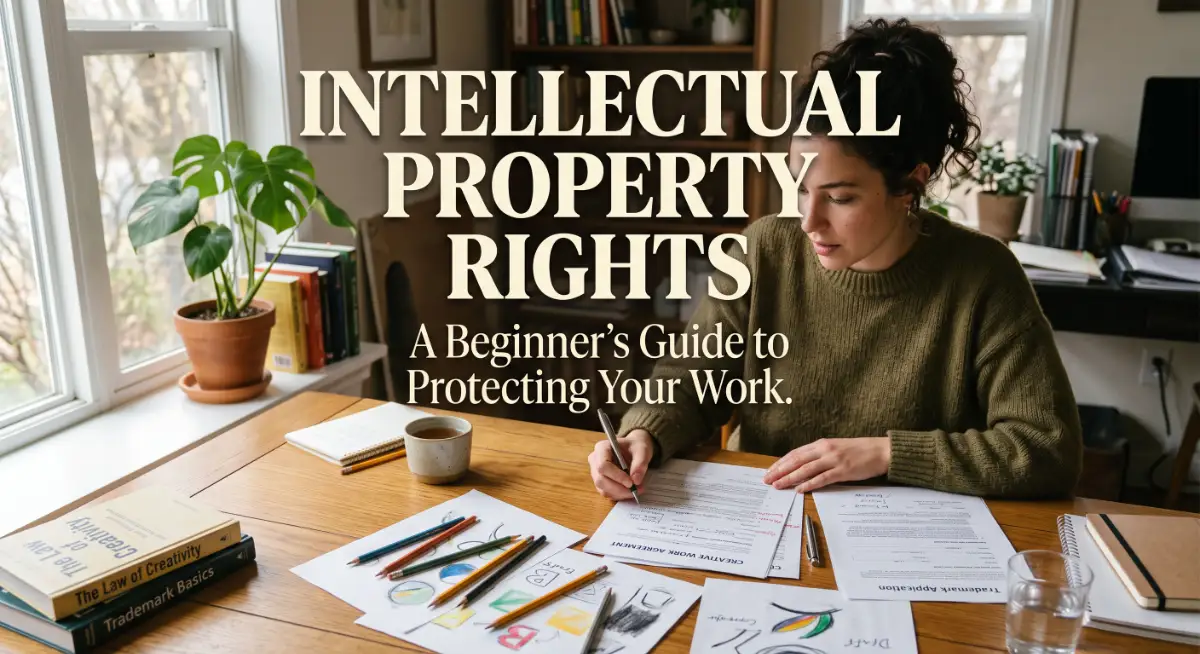
The Nightmare of Stolen Ideas: Why We Ignore Legal Defense Until It Hurts
What You’ll Learn in This Guide (At a Glance):
- The 4 Protection Pillars: How Copyrights, Trademarks, Patents, and Trade Secrets actually work for normal people.
- The AI Loophole: Why you don't legally own the raw images or text you generate with AI tools.
- The Freelancer Trap: Why paying someone for a logo doesn't mean you automatically own the rights.
- Zero-Cost Defense: Simple daily habits you can start right now to protect your digital assets before spending a dime on lawyers.
I've seen too many creators pour months of sweat into a brilliant idea, only to watch someone else steal it and take all the credit. It’s absolutely heartbreaking. But here’s the truth: intellectual property law isn’t just for giant corporations with expensive lawyers. It’s the basic lock on your digital front door. Let’s skip the confusing legal jargon and talk about how you can easily protect your hard work today, before someone else cashes in on it.
That single oversight nearly cost me my entire business identity and brand reputation. It was a harsh wake-up call that forced me to figure out how to defend my own hard work. The truth is, I am not alone in this frustrating experience.
Every single day, countless small business owners, freelancers, and creative minds lose their hard-earned assets because they do not understand the rules of ownership. We spend thousands of hours building products, writing articles, and designing brands, yet we spend zero minutes protecting them. This creates a massive gap in our security.
When your work gets stolen, the impact goes far beyond just losing a bit of money. It completely destroys your mental peace and leaves you feeling robbed of your own identity. You wake up constantly checking competitor websites, wondering who is going to copy your newest idea next.
This constant anxiety ruins the joy of creating anything new. Ordinary people are forced into expensive, stressful battles simply because they skipped the basics of legal protection. We think bad things will only happen to massive corporations, but the reality is much more personal and damaging.
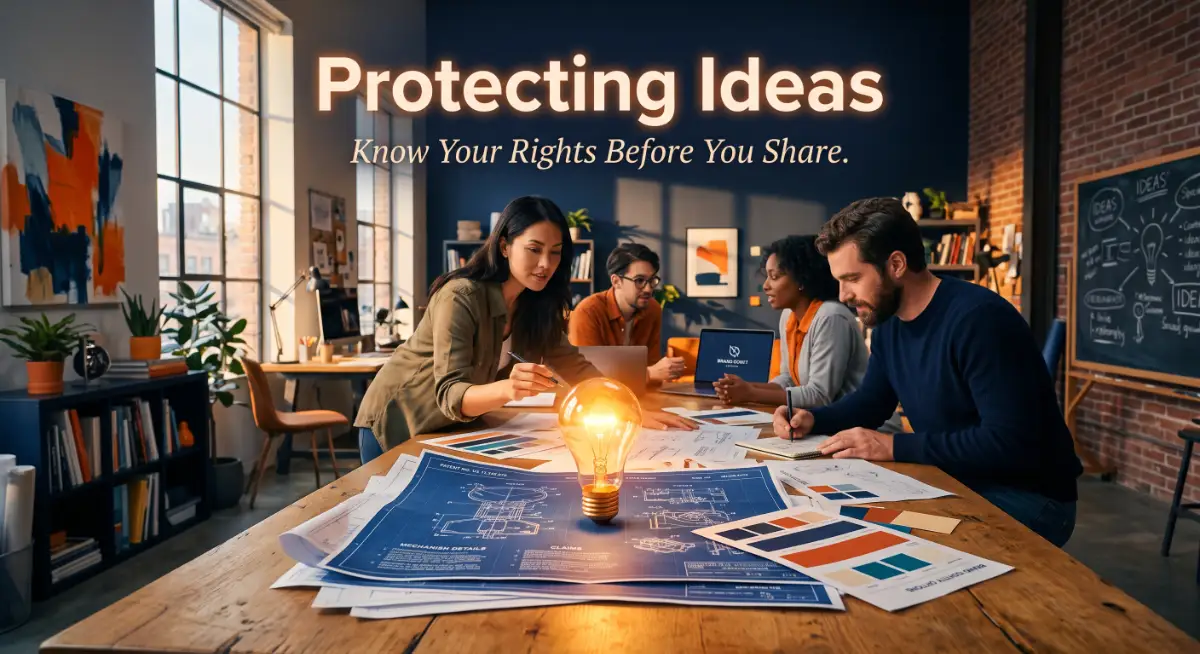
Your Legal Shield: Breaking Down the Core Pillars of Creative Ownership
Think of your ideas like a brand new house you just built with your own hands. You would never dream of leaving the front door wide open while you go to sleep at night. Yet, when it comes to our digital creations and business assets, we leave the doors unlocked every single day.
Legal protection is simply the lock on your front door. It gives you the specific right to decide who gets to enter your property and who gets kicked out. To build this security system, you need to understand the different types of locks available to you.
Understanding the Digital Real Estate Rule
Before you can defend your work, you have to know exactly what you own. You cannot legally protect a simple idea floating around inside your head. The law requires your idea to exist in the real physical world before it gets a shield.
For example, simply thinking about a great story for a book gives you zero ownership over that concept. However, the moment you type that story onto a document or write it on a napkin, the law steps in to help you. This is the first and most essential rule you must remember.
We often get confused and think one single legal document covers everything we do. In reality, different parts of your business require entirely different tools for safety. Let's look at the exact categories you need to master.
Pillar 1: Defending Your Brand Identity (Trademarks)
Your brand is how the world recognizes you in a crowded market. It is your unique name, your custom logo, and even your catchy slogan. A trademark is the specific tool that stops competitors from confusing your customers.
Imagine you open a highly successful coffee shop named "Morning Brew Mastery." You build a loyal customer base who loves your specific taste and friendly service. Suddenly, a new shop opens down the street called "Morning Brew Masters" with a similar green logo.
Without a trademark, your customers might accidentally go to the fake shop, resulting in you losing money and your reputation. With a registered trademark, you have the immediate power to force them to change their name. It protects the trust you have built with your audience.
Watch This Quick Explanation Before Moving Forward:
Here is a brilliant breakdown of how easily you can secure your brand name before someone else snatches it away from you.
Pillar 2: Guarding Your Original Expression (Copyrights)
While trademarks protect your brand name, copyrights protect the actual things you create. This includes your blog posts, your original photographs, your software code, and your marketing videos. Copyright law is fascinating because it actually begins the exact second you create the work.
You do not necessarily have to register a copyright to own it, but registering it gives you massive power in a courtroom. Let's say you are a freelance graphic designer who creates beautiful custom planners. You wake up one morning to find an online store selling your exact planner design for half the price.
If you have a registered copyright, you can quickly force the website hosting that store to remove the stolen item. You can even demand financial compensation for the sales they stole from you. It acts as a heavy hammer against internet thieves.
Pro Tip from Personal Experience
I used to think that mailing a sealed copy of my own work to myself was a smart way to prove ownership. I quickly realized this old trick, often called a "poor man's copyright," is basically useless in a real legal dispute. Taking the time to officially register my work online gave me a million times more confidence and actual legal backing.
Pillar 3: Securing Your Inventions (Patents)
Patents are slightly more complex but absolutely essential if you invent physical products or unique processes. A patent gives you a temporary monopoly over your invention. It tells the whole world that nobody else can make, use, or sell your product without paying you first.
Getting a patent requires you to prove that your invention is completely new and not just an obvious upgrade to something else. For example, if you invent a brand new type of vacuum cleaner that runs on solar power, a patent is your best friend.
However, patents are not secrets. To get this protection, you have to publicly share exactly how your invention works with the government. In exchange for sharing your knowledge, they give you the exclusive right to profit from it for a set amount of time.
A Quick Comparison for Maximum Clarity
To make this completely clear, let us look at a simple breakdown of these three main tools. Knowing the difference will save you a massive amount of headache.
Pillar 4: The Power of Complete Silence (Trade Secrets)
Sometimes, the best legal defense is simply keeping your mouth completely shut. A trade secret is valuable business information that gives you an edge over competitors, specifically because nobody else knows it. The most famous example in the world is the exact recipe for Coca-Cola.
You do not register a trade secret with any government office. Instead, you protect it by using strict internal security and strong contracts. If you force your employees to sign a Non-Disclosure Agreement (NDA), you are legally protecting your trade secret.
If an employee breaks that contract and shares your secret recipe with a rival company, you can take severe legal action against them. Trade secrets can last forever, as long as you successfully keep the information hidden from the public.
Myth vs. Reality: Lies We Tell Ourselves
There is a huge amount of terrible legal advice floating around the internet. One massive myth is that changing a stolen design by 20% makes it completely legal to use. This is entirely false and will easily land you in deep legal trouble.
Another dangerous myth is that everything found on Google Images is totally free to use for your business. The reality is that almost every single image online is owned by someone who can demand payment. Ignorance of the law is never an accepted excuse when you get caught using someone else's property.
We also tend to believe that securing these rights is only for millionaires with huge legal teams. Today, the internet has made it incredibly easy and affordable for a beginner to file their own basic applications. You just need to know exactly which form to fill out.
Recognizing the Warning Signs of Theft
How do you even know if someone is quietly stealing your assets? You have to become proactive instead of just reacting when things go wrong. Start by setting up simple digital alerts for your exact brand name and product titles.
If you write highly original content, make it a habit to copy a unique sentence and search for it in quotes on search engines. You will be shocked at how quickly automated websites scrape and steal good writing. Finding these thieves early makes it much easier to stop them before they gain traction.
Many beginners also ignore the confusing feedback they get from their own customers. If a client messages you asking about a weird promotion or a product you do not actually sell, pay close attention. This is often the very first sign that a scammer is impersonating your brand online.
The Financial Cost of Doing Nothing
You might be thinking that paying registration fees is too expensive for your current budget. I want you to completely shift your mindset on this topic. Think of these fees as cheap business insurance, rather than an annoying expense.
Hiring a professional attorney to fight a copycat in court will cost you thousands of dollars almost instantly. Rebranding your entire company because someone else claimed your name first will cost you even more. Compared to those massive losses, paying a small fee to the government today is an incredible bargain.
When you secure your assets properly, you actually increase the total financial value of your business. If you ever want to sell your company or get investors, they will immediately ask to see your legal ownership documents. Without them, your business is basically considered worthless to serious buyers.
Taking Action Without Overwhelm
Look at that list and ask yourself which single item brings in the most money or has the highest future potential. That specific item is exactly where you should focus your first protection efforts. Do not try to secure every single thing at once; just secure the main money-maker.
Once you have identified your most valuable asset, take one hour this weekend to read about the specific application process for that item. The official government websites for intellectual property are surprisingly helpful and designed for regular citizens to understand. Taking that first tiny step will instantly make you feel more in control of your future.
Next-Level Defense Strategies to Bulletproof Your Ideas
Now that you understand the basic locks on your digital doors, it is time to upgrade to a complete security system. Securing your creative assets is not a one-time event that you just cross off your to-do list. It requires ongoing attention and smart habits to ensure nobody sneaks past your defenses.
Many creators assume that simply registering a name is enough to keep thieves away forever. The reality is that the government will not actively hunt down copycats for you. It is entirely your responsibility to monitor the market and enforce your own rights.
Let us explore some highly effective, expert-level habits you can start using today. These simple actions will save you from massive headaches and help you build a solid financial safety net for your business future.
Automate Your Brand Monitoring
You cannot stop a thief if you do not even know they exist. Checking every single corner of the internet manually is impossible for a busy business owner. Instead, you should rely on free automated tools to do the heavy lifting for you.
Set up basic web alerts for your exact brand name, your unique product titles, and even your own personal name. Whenever a new website mentions your exact keywords, you will receive an immediate email notification. This allows you to catch suspicious activity the exact day it happens.
For more advanced security, you should regularly use reverse image search tools. Simply upload your custom logo or your most popular product photos into a search engine. You will quickly see if any unauthorized stores are using your basic legal rights for creators without paying you a single dime.
The Magic of Licensing Your Hard Work
Here is a secret that many successful entrepreneurs use to make passive income. You do not always have to fight people who want to use your ideas. Sometimes, you can actually rent your ideas to them for a steady profit.
This process is called licensing, and it is a brilliant way to expand your business without doing extra physical work. Imagine you design an incredibly popular digital planner. Instead of just selling it on your own website, you can give a major retail company legal permission to print and sell it.
In return, they pay you a percentage of every single sale they make. You keep full ownership of the original design, but you allow someone else to do the marketing and distribution. It is a fantastic strategy to protect your assets legally while actively making money from them.
Navigating the AI Generation Trap
We are seeing a massive shift in how ordinary people create content and design graphics today. Artificial intelligence tools are incredibly helpful, but they create a messy gray area for legal ownership. This is a very slippery slope that catches many beginners completely off guard.
In most places, the law states that only a human being can actually own a copyright. If you type a simple prompt into an image generator, you might not legally own the final picture it spits out. Someone else could take that exact AI image and use it on their own products, and you might not have the power to stop them.
Real-Life Example: Think about the famous AI-generated comic book "Zarya of the Dawn." The US Copyright Office ruled that while the human-written story was protected, the Midjourney-generated images were not. If you use AI tools to generate your brand logo or core product assets, you must heavily modify them yourself in software like Photoshop to claim true legal ownership.
To stay out of trouble, use AI for brainstorming and initial outlines, but do the heavy lifting yourself. Adding your own unique human touch and personal modifications is the best way to secure your rights. Understanding the exact boundaries between AI and human creativity will keep your future projects completely safe from unexpected legal challenges.
Thinking Beyond Your Local Borders
When your business lives on the internet, your customers can come from anywhere in the world. This also means your copycats can sit in entirely different countries while stealing your work. A standard local registration only protects you within your own specific country.
If you plan to sell physical products internationally, you need to think about a global defense strategy. There are specific treaties and international intellectual property standards that allow you to extend your protection across multiple borders at once.
You do not need to register in every single country on earth right away. Just focus on the top three locations where your biggest target audience lives. Securing those primary markets first will give you the most financial stability and peace of mind.

Costly Blunders That Destroy Creative Empires
We all make honest mistakes when we are trying to build something new from scratch. However, in the business world, certain legal mistakes can completely wipe out years of your hard work in a single afternoon. I want to share the most painful traps I have seen, so you never have to fall into them yourself.
Ignoring these specific dangers does not just lead to a slap on the wrist. It leads to stolen bank accounts, hijacked brand names, and the complete loss of your business identity.
The "Work-for-Hire" Nightmare Scenario
This is easily the most common and devastating mistake small business owners make. Let us say you hire a talented freelance graphic designer to create your new company logo. You pay them their full requested fee, and they hand over the beautiful final files.
You might naturally assume that because you paid for it, you completely own the logo. The scary truth is that without a specific written contract, the freelancer often retains the original copyright. They could legally turn around and license that exact same logo to your biggest competitor.
Always demand a signed "Work-for-Hire" agreement or a complete copyright transfer before paying a freelancer. This simple piece of paper officially transfers the ownership from their hands into yours. If you ever need to heavily review your job offer or contracts with employees, make sure this ownership clause is clearly stated in bold letters.
Public Bragging Before Patenting
Inventors are naturally excited people who love to share their amazing breakthroughs with the world. You might build a brilliant new physical product in your garage and immediately post a video of it on social media. Unfortunately, that innocent video could destroy your chances of ever making money from it.
If you publicly reveal exactly how an invention works before filing a formal application, you often lose the right to protect it. You essentially donate your hard work to the public domain. Big manufacturing companies scan social media every day looking for free ideas they can mass-produce.

Keep your mouth completely shut and your blueprints hidden until you have officially submitted your paperwork. If you must show the product to potential investors, force them to sign a strict Non-Disclosure Agreement (NDA) first. Your silence is your strongest initial shield.
Quick Fact Check: NDAs in the Real World
- The Myth: You need to hire a pricey lawyer to draft a valid NDA for your meetings.
- The Fact: You can actually use standard, legally binding NDA templates online (like those from LegalZoom or RocketLawyer) for everyday investor pitches. Just make sure the document clearly defines exactly what your "Confidential Information" is!
Confusing a Business License with a Trademark
I have spoken to so many devastated beginners who fell for this exact misunderstanding. When you register a limited liability company (LLC) or get a local city business license, you are just getting permission to pay taxes. The government is not giving you exclusive rights to that specific name.
Just because your local state approved "Sunshine Bakery LLC" does not mean a national brand cannot crush you. If another company already owns the federal trademark for "Sunshine Bakery," they can force you to throw away your signs, packaging, and website domain.
Before you spend a single penny on custom boxes or expensive web design, you must search the official government trademark database to ensure the name is actually available. Skipping this simple ten-minute search is like playing Russian roulette with your entire brand identity.
Trying to Intimidate Without Actual Proof
If you falsely accuse a larger company of theft without having your registration documents in order, they might sue you for harassment. You always want to act like a calm, silent professional when dealing with thieves.
Instead of screaming on social media, you should send a formal, politely worded "Cease and Desist" letter. If they ignore your warnings and the situation escalates, you might find yourself preparing for a mediation session to settle the dispute out of court. Always gather your concrete proof before you ever show your teeth.
Your Blueprint for a Secure and Profitable Future
Building a business or creating art takes massive amounts of courage, late nights, and endless cups of coffee. You deserve to own the rewards of your own sacrifices. Understanding these ownership rules is not about becoming a boring corporate lawyer; it is about respecting your own talent.
When you take the time to build a strong legal foundation, you completely eliminate the daily anxiety of being copied. You can finally focus all your energy on what you do best—creating amazing things that help people. A protected brand is a confident brand, and customers can easily feel that confidence.
Tomorrow morning, I want you to pick just one asset that matters most to you. It could be your favorite blog post, your newest logo, or your main product name. Take twenty minutes to read about how to properly secure that specific item, and take the very first step toward total ownership.
My Personal Promise to You:
I know all this legal talk feels heavy and overwhelming at first glance. But I promise you, the peace of mind you will feel once your work is officially protected is absolutely priceless. Take a deep breath, trust your own value, and start building your safety net today.
Common Questions About Protecting Your Ideas
Does an LLC automatically give me trademark protection?
No, it absolutely does not. Registering an LLC only registers your business entity for tax and liability purposes in your specific state. To legally stop others from using your brand name nationwide, you must apply for a completely separate federal trademark.
How much does it actually cost to secure a basic copyright?
Filing a standard application online is surprisingly affordable for regular creators. In most regions, the official government filing fee is usually between $45 and $65 for a single work. It is a tiny investment that gives you massive leverage against online content thieves.
Do I need to hire an expensive lawyer to file these forms?
You are entirely allowed to fill out and submit the basic applications completely by yourself. The official government portals provide excellent step-by-step instructions for beginners. However, if your situation is highly complex or you are dealing with an invention, paying for professional advice is a very smart move.
What should I do if someone ignores my formal warning letter?
If a copycat ignores your polite cease and desist letter, you must escalate the situation to the platform hosting their content. You can file a formal takedown notice directly with their website host, social media platform, or search engine. These platforms are legally required by creator rights and copyright policies to remove stolen material quickly to avoid getting sued themselves.
Can I legally protect a brilliant app idea before I build it?
Unfortunately, pure concepts and raw ideas cannot be protected by standard ownership laws. The law requires you to actually build the app, write the code, or draw the interface first. The closest thing to protecting an unbuilt idea is forcing everyone you discuss it with to sign a strict confidentiality agreement.
Disclaimer: The information provided in this article is for educational and informational purposes only and does not constitute formal legal advice. Laws regarding business ownership and creative rights vary heavily by location and individual circumstances. Please consult with a licensed attorney or legal professional in your jurisdiction before making any major decisions regarding your personal business assets.
![The Secret to Winning Your Minor Car Accident Claim [Step-by-Step]](https://fintiq24.com/storage/uploads/blogs/1787855377_the-secret-to-winning-your-minor-car-accident-claim-step-by-step.webp)
![Warning: Read This Before Your First Mediation Session [Expert Advice]](https://fintiq24.com/storage/uploads/blogs/1787821498_warning-read-this-before-your-first-mediation-session-expert-advice.webp)