
The Emotional Rollercoaster of Buying a Home with Strings Attached
Quick Takeaways for the Busy Buyer:
- Safety First: Contingencies are basically legal exit doors. They let you walk away with your deposit money if something goes wrong.
- The Big Four: Always try to protect yourself with home sale, financing, appraisal, and inspection conditions.
- The 48-Hour Warning: Be ready for the 'kick-out clause. 'If the seller gets a better offer, you will have to make a fast choice to stay or leave.
- Communication is Key: Keep the seller’s agent updated weekly so they do not panic and try to cancel the deal.
Picture this: you finally spotted the perfect house, but all your cash is locked up in the one you are currently living in. It feels like you are stuck, right? Buying a new place before selling your old one sounds terrifying, but it does not have to be a blind gamble. Let's walk through how you can lock down that dream home without throwing your hard-earned deposit out the window.
My hands were literally shaking as I signed the paperwork to make an offer with a home sale condition attached to it. I felt incredibly vulnerable, knowing the seller might just laugh at my proposal and choose someone with straight cash. My mind kept racing with worst-case scenarios about losing my earnest money and ending up completely homeless.
This is the exact same nightmare so many families face when trying to move up the property ladder. You find a place that makes your heart skip a beat, but your finances are entirely tied up in the bricks and mortar of your current living room. The stress of trying to time everything perfectly can easily destroy your mental peace.
But the good news is that you do not have to let this fear control your next big move. Once you actually understand the basic mechanics behind these protective clauses, you gain complete control over the entire situation. You can confidently place bids on new properties while keeping your hard-earned savings completely safe.

Decoding the Process: How to Master Your Home Buying Strategy
When you hear the term "contingent offer," it simply means your promise to buy a house depends on a specific event happening first. Think of it like ordering a custom birthday cake. You agree to pay the bakery, but only if they actually deliver the cake on the right day and spell your name correctly.
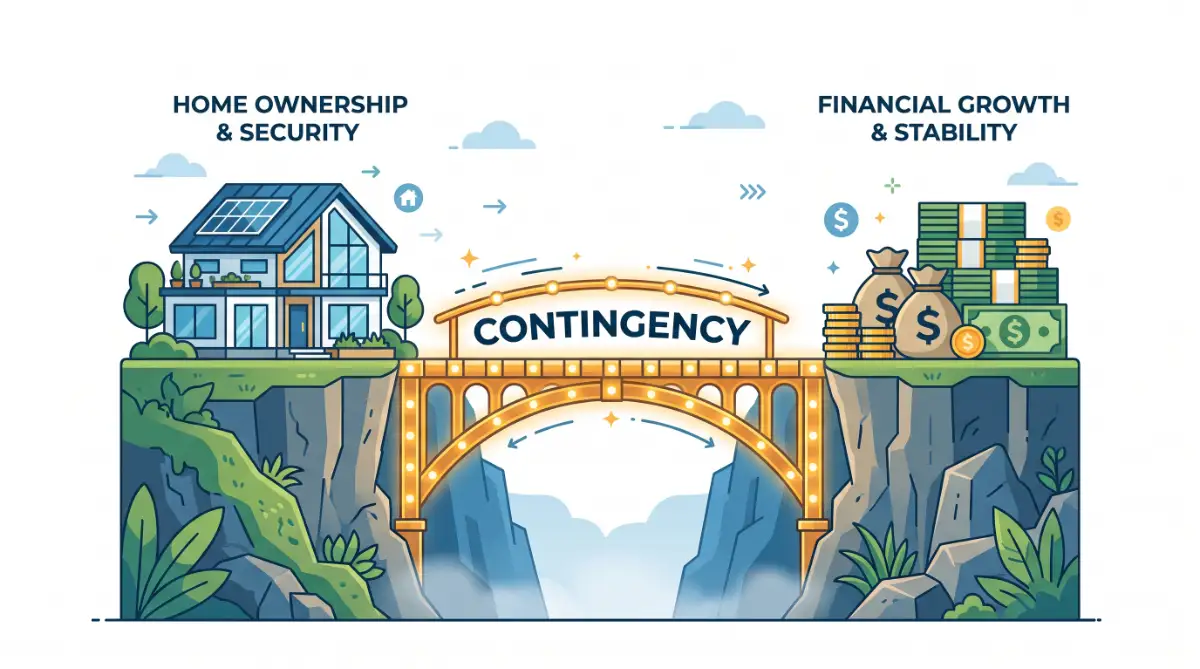
In real estate, these conditions act as your personal safety net. If things go wrong, you can walk away with your deposit money safely in your pocket. Without these safety nets, buying a property becomes a massive gamble that you simply cannot afford to take.
The Big Four Protective Nets You Need to Know
You might be surprised to learn that there is not just one single type of condition you can place on a home. Depending on your unique situation, you will likely use a combination of different protective clauses. Let us break down the most common ones you will encounter.
The Home Sale Condition
This is the big one that keeps most buyers awake at night. This clause clearly states that you will only buy the new property if your current home sells by a specific date. If your old place sits empty with no buyers, you are legally allowed to back out of the new purchase.
The Financing Protection
Even if you are pre-approved by a bank, things can randomly fall apart at the very last minute. A financing condition gives you a specific window of time to secure your official mortgage approval. If the bank suddenly changes their mind about lending you money, you will not be forced to buy a house you cannot afford.
The Appraisal Safety Valve
Banks will never lend you more money than a house is actually worth. An appraisal clause requires an independent expert to visit the property and confirm its true market value. If the expert says the house is worth far less than your agreed purchase price, you can ask the seller to lower the cost or you can simply walk away.
The Deep-Dive Inspection
Never buy a property without having a professional poke around in the attic and basement. The inspection condition gives you the right to hire an expert to check for hidden damage, bad wiring, or leaky roofs. If they find a massive termite problem, you can demand repairs or cancel the entire deal immediately.
Quick Reality Check:
Did you know that skipping a home inspection can cost you around $10,000 on average in unexpected repairs during your first year? Yep, I have seen buyers waive their inspection just to win a bidding war, only to find out the HVAC system is totally fried after moving in. Never drop this condition just to make your offer look prettier to the seller!
Why Sellers Get Nervous (And How to Calm Them Down)
You must remember that real estate is a two-way street. While these safety nets protect you, they make the seller incredibly nervous. From their perspective, your offer is full of "what-ifs" and potential roadblocks.
A seller wants a guaranteed closing date so they can plan their own life and move to their next destination. When you attach conditions to your bid, the seller is taking a massive leap of faith on you. They are essentially pulling their home off the open market while waiting for your specific problems to be solved.
To make your bid stand out, you need to show the seller that you are a serious and capable buyer. You can do this by offering a slightly higher purchase price to offset the risk they are taking. You can also provide proof that your current home is already under contract with another buyer, which drastically reduces their anxiety.
Want to see exactly how these clauses work in action before signing on the dotted line? Watch this quick breakdown to master the art of protecting your deposit and keeping your dream home secure.
The Dreaded Kick-Out Clause Explained
If you are trying to buy a place before selling your old one, you will probably run into the infamous kick-out clause. Sellers use this specific rule to protect themselves from waiting around forever. It allows the seller to keep marketing their home to other people while you try to sell yours.
If the seller receives a better, condition-free offer from a new buyer, they will officially notify you. You will then have a very short window of time, usually 24 to 48 hours, to remove your safety nets and buy the house anyway. If you cannot remove your conditions in time, the seller is allowed to kick you out of the contract and sell to the new person.

This is an incredibly stressful position to be in, but it is completely normal in the real estate world. You have to decide if you are willing to take on the massive financial risk of moving forward without selling your old place.
I learned the hard way that missing a deadline by just one hour can completely ruin the whole deal and leave you devastated. My best advice is to set multiple loud alarms on your phone for every single inspection, appraisal, and financing deadline. I even write these dates on a physical calendar on my fridge so my whole family knows exactly what is happening.
Myth vs. Reality: Clearing Up The Confusion
There is so much terrible advice floating around the internet about buying homes. Let us clear up some of the biggest misunderstandings right now.
Myth: Sellers will never accept an offer with strings attached.
Reality: In a balanced or slower market, sellers are highly motivated and will happily accept conditional offers to secure a serious buyer.
Myth: You lose your deposit if the deal falls through.
Reality: As long as you cancel the contract within the specific timeframes written in your agreement, your earnest money is completely returned to you.
Myth: You do not need a professional agent to handle this.
Reality: The paperwork required to manage deadlines, kick-out clauses, and legal notices is incredibly complex. A great agent is your best defense against making a very expensive mistake.
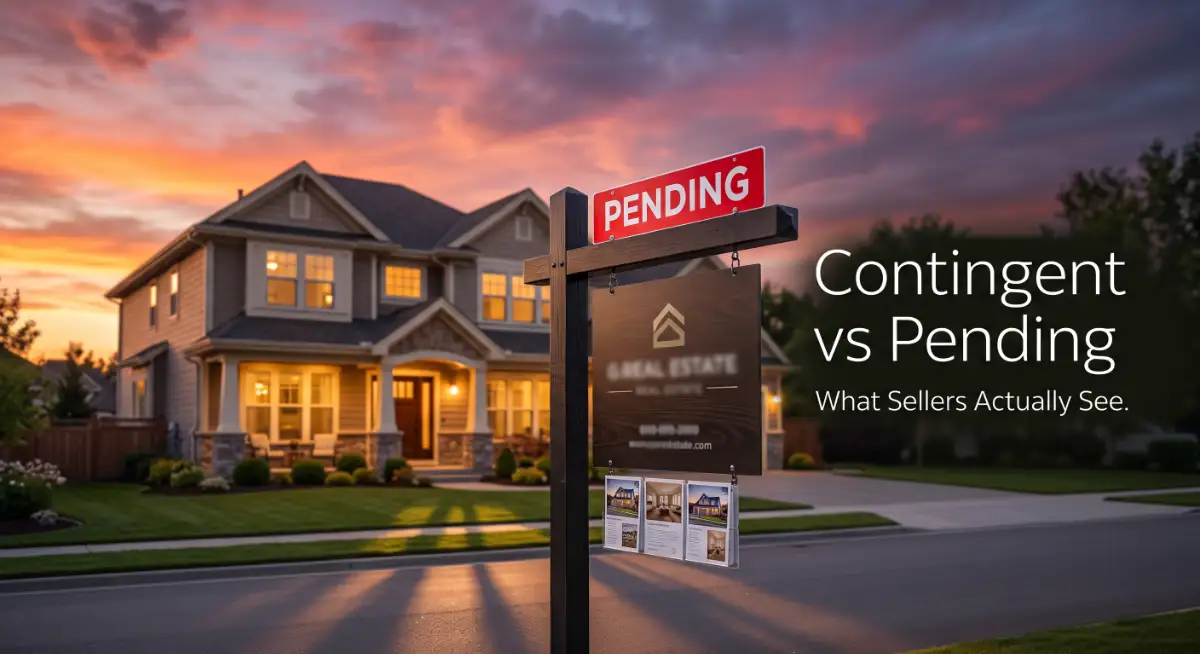
Contingent vs. Pending: What is the Difference?
When you drive around neighborhoods, you often see different riders attached to "For Sale" signs. It is easy to get confused by the terminology used by agents. Here is a very simple breakdown of what these words actually mean to a normal person on the street.
Real-Life Scenario: The Power of Negotiation
Let us imagine you find a beautiful four-bedroom house, but you need an inspection condition because the roof looks a bit old. You submit your paperwork, and the seller accepts it. Two days later, your hired expert climbs onto the roof and discovers a massive leak that will cost thousands to fix.
Because you have this specific condition written into your paperwork, you now hold all the power. You can go back to the seller and demand they pay for a completely new roof before you buy the place. If the seller refuses, you simply shake your head, cancel the contract, and get your deposit money back.
Now, imagine if you had skipped that condition just to make your bid look more attractive to the seller. You would be legally forced to buy a house with a broken roof. You would have to empty your own savings account to fix someone else's neglected maintenance problems.
This is exactly why you must never let anyone pressure you into dropping your basic protections. Your real estate agent might suggest dropping conditions to win a bidding war, but they are not the ones paying the mortgage. You have to sleep in that house every night, so you must protect your own financial future.
Keeping Your Emotions in Check
The hardest part of this entire journey is managing your own emotional expectations. It is so easy to start mentally placing your furniture in a house that you do not technically own yet. You start picking out paint colors and planning backyard barbecues before the ink is even dry on the contract.
When a conditional deal falls apart, the heartbreak is incredibly real. You have to pack up your dreams and start scrolling through property listings all over again. The disappointment can make you want to give up entirely on finding a new place.
To protect your heart, you must treat the process strictly like a business transaction until the final closing day. Keep reminding yourself that a contingent status means the house is not yours yet. Keep an open mind, keep looking at backup options, and stay totally focused on your main goal.
By approaching the situation with logic instead of just pure emotion, you will make much smarter financial choices. You will know exactly when to push forward and exactly when to walk away from a bad deal. Ultimately, understanding how to use these protective clauses gives you the ultimate superpower in the real estate market.
Winning the Negotiation Game: Pro Secrets for Buyers and Sellers
Once you understand the basic safety nets, it is time to look at the board like a grandmaster playing chess. The main reason people lose out on their dream home is not a lack of money but a complete lack of creative negotiation skills. You have to think completely outside the box to make your conditional offer look incredibly attractive.
Most buyers simply hand over a standard contract and hope for the best. Instead, you need to actively solve the seller's biggest fear, which is losing time and money while waiting for your old home to sell. If you can make the seller feel completely safe, they will eagerly sign your paperwork.
One of the smartest ways to do this is by strategically increasing your upfront earnest money deposit. When you offer a much larger sum of cash right out of the gate, it tells the seller you are extremely serious and confident about the deal. They immediately view you as a highly committed buyer rather than a risky gamble.
Why a Bridge Loan Might Be Your Best Secret Weapon
Sometimes, the market is simply too hot, and sellers absolutely refuse to accept any conditional offers. In this specific scenario, a bridge loan can literally save the day and completely change your buying strategy. This is a special type of temporary financing that covers the gap between buying your new place and selling your old one.
A bridge loan essentially lets you borrow against the equity you have already built up in your current property. You can use this temporary cash to buy your dream home outright, removing the dreaded home sale condition completely. Once your old place finally sells, you simply pay off the temporary loan in one lump sum.
Of course, these loans do come with higher interest rates and specific bank fees. You have to sit down and figure out exactly how understanding secret mortgage pre-approval rules can help you qualify for this temporary funding. For many families, paying a few extra fees is completely worth the peace of mind of securing their perfect property.
Bridge Loan vs. HELOC: What is the Better Pick?
If you are wondering how to fund your gap without a contingency, here is a simple breakdown of your top two options:
| Feature | Bridge Loan | HELOC (Home Equity Line) |
| How you get the money | You get a single lump sum upfront | You draw money slowly as you need it |
| Interest Rates | Usually higher | Generally lower, but can change over time |
| Best For... | Buyers who need fast cash to close today | Planners who set it up months before buying |
Real-Life Scenario: The Power of a Personal Connection
Let me share a quick story about how human emotion completely overrides strict financial logic in real estate. A young family wanted to buy a beautiful older home, but they desperately needed to sell their current townhouse first. They were competing against an investor who offered straight cash with zero strings attached.
Instead of just submitting sterile legal documents, the family wrote a deeply personal letter to the seller. They complimented the beautiful garden, mentioned how perfect the backyard would be for their toddler, and explained exactly why they needed a few extra weeks to sell their townhouse.
The seller, an older gentleman who had raised his own kids in that house, completely ignored the investor's cash. He chose the young family's conditional offer because he wanted his beloved home to go to someone who truly appreciated it. Never underestimate the incredible power of basic human kindness and direct communication.
Mastering the Art of Constant Communication
When you are trapped in a pending status, silence is your absolute worst enemy. If the seller does not hear from you or your agent for a whole week, they will automatically assume your old house is never going to sell. Their anxiety will skyrocket, and they might start actively looking for ways to break the contract.
To prevent this panic, you must demand that your agent provide weekly, detailed updates to the seller's team. Even if you just tell them that three people came to look at your old house over the weekend, that small update provides massive comfort. It proves you are actively working hard to finalize the deal.
You also need to make sure your paperwork strictly follows the legal guidelines set by reliable sources. For example, the contract structures outlined by the Legal Information Institute at Cornell Law School show exactly how these conditional agreements are legally bound. Following exact legal protocols keeps everyone perfectly aligned and completely honest.
The Most Expensive Traps to Avoid During a Pending Sale
Navigating this complicated transition is like walking through a minefield blindfolded. A single poor decision can completely blow up your entire transaction and leave you homeless. I have seen incredibly smart people make terrible emotional choices simply because they were stressed out.
When the pressure starts mounting, human beings naturally look for the easiest way out. This desperation leads to massive financial mistakes that can completely ruin your savings account. Let us look at the most dangerous traps you must actively avoid.
Trap 1: Letting Fear Push You Into Waiving Your Protections
In a highly competitive market, your agent might gently suggest that you drop your inspection condition to beat another buyer. This is arguably the most dangerous financial advice you will ever receive in your entire life. You are essentially agreeing to buy a massive mystery box that could hide tens of thousands of dollars in hidden damage.
If you skip the inspection and later discover a cracked foundation, you are entirely responsible for the repair bills. It is incredibly important to understand the hidden dangers of waiving a home inspection before you sign away your basic rights. No house is ever worth risking your family's long-term financial security.
Trap 2: Making Massive Financial Changes Mid-Deal
Here is a massive secret that most buyers completely forget during the waiting period. Just because a bank gave you a pre-approval letter does not mean the money is guaranteed forever. The bank will do one final, deep dive into your credit report just days before the official closing date.
If you suddenly decide to finance a brand-new truck for your new driveway, your debt numbers will instantly change. The bank might completely revoke your mortgage approval on the spot, causing your conditional offer to immediately collapse. During the waiting period, you must absolutely freeze all your spending and avoid opening any new credit cards.
If you want to maintain good standing with your lender, follow the strict closing guidelines provided by the Consumer Financial Protection Bureau. They clearly state that your financial profile must remain completely identical from the day you apply until the day you get your house keys.
Trap 3: Ignoring the Kick-Out Clock
When a seller activates a kick-out clause against you, a massive invisible timer instantly starts ticking. You usually have just 24 to 48 hours to make a massive, life-altering decision about your future. You either drop your conditions and buy the house right now, or you walk away and lose it to someone else.
The biggest mistake buyers make is burying their heads in the sand and ignoring the deadline. If you miss that exact legal cutoff by even a single minute, the seller has the legal right to completely cancel your agreement. You must treat these deadlines with the same respect you would give a major medical emergency.
To prepare for this terrifying moment, you should proactively build an emergency fund fast so you have extra cash ready to cover the gap. Having cash on hand gives you the extreme confidence to remove a condition if you are forced into a corner.
Trap 4: Forgetting About the Local Legal Rules
Sometimes buyers are so focused on selling their old place that they completely ignore the legal realities of their new neighborhood. You might buy a property with big dreams of building a massive rental unit in the backyard to cover your mortgage. However, you completely forgot to check if the local city council actually allows that type of construction.
This oversight can instantly destroy your long-term financial plans. If you are unsure about property boundaries or local laws, checking resources like HUD's official home buying guides can give you a solid baseline of what to look for. Furthermore, you should strongly consider how to legally protect your personal assets before you sign the final title documents.
Your Blueprint for a Stress-Free Property Transition
Buying a house with strings attached does not have to be a miserable, anxiety-inducing nightmare. It is simply a highly structured legal process that requires patience, extreme organization, and emotional control. When you finally understand how these protective clauses work, you shift from being a terrified victim to a completely empowered buyer.
You now know exactly how to use an inspection clause to protect your savings and how a financing condition shields you from bank errors. You also understand the heavy responsibility of keeping the seller informed and perfectly comfortable during the waiting period. This knowledge alone puts you miles ahead of the average homebuyer.
Your Immediate Action Plan for Tomorrow
If you are planning to enter the housing market soon, your work actually begins right now. Tomorrow morning, you need to sit down and deeply organize all your current financial documents into one secure folder. You must know your exact home equity, your current credit score, and your maximum monthly budget before you even look at a property listing.
Next, you must find an aggressively proactive real estate agent who is a master negotiator. Interview at least three different agents and specifically ask them how they handle complicated conditional offers and kick-out clauses. If they stumble over their words or tell you to just drop your conditions, immediately walk out the door and find someone else.
Also, look closely at local market data provided by organizations like the National Association of Realtors. Understanding whether you are in a buyer's or seller's market will heavily dictate exactly how aggressive your conditions can be.
Keeping Your Mindset Positive
It is extremely easy to get frustrated when a seller rejects your careful proposal or demands changes. You might feel like the universe is actively working against your family's happiness. However, you must remember that every single rejection simply brings you one step closer to the exact property you are actually meant to own.
Do not let the heavy stress of contract negotiations steal your joy. Once you safely cross the finish line and get those new keys, you will be able to enjoy your hard-earned cash without any budgeting guilt. All the late nights, the confusing paperwork, and the temporary anxiety will completely fade away the moment you step into your new living room.
I know exactly how overwhelming it feels when your entire life is packed into cardboard boxes while you wait for a stranger to approve a bank loan. Just remember to breathe deeply, trust the legal protections you have put in place, and never let anyone pressure you into a bad deal. You hold the power in this transaction, and you are absolutely going to master this process.
Common Questions About Home Buying Protective Clauses
What happens to my deposit if my current home does not sell in time?
If your contract includes a specific home sale condition, your deposit is completely safe. As long as your agent officially cancels the deal before the deadline expires, the seller must legally return your earnest money in full.
Can a seller randomly back out of a contingent offer?
A seller cannot just randomly change their mind because they woke up in a bad mood. However, if they have an active kick-out clause and receive a much better offer from someone else, they can force you to make a final decision within 48 hours.
Is it possible to put multiple conditions on one single house?
Yes, it is entirely normal to stack several different protections on a single purchase. A standard contract almost always includes a financing, appraisal, and inspection condition all working together at the exact same time.
Why does a house stay listed online after an offer is accepted?
Agents leave the property listed online as "active under contract" to continue collecting backup offers. If your specific deal falls apart because of a bad inspection or a rejected loan, the seller wants a fresh list of eager buyers ready to step in immediately.
Should I just sell my house first and rent an apartment?
Selling your old place first completely removes all the stress of a conditional offer and makes you a powerful cash buyer. While moving twice is annoying and requires paying temporary rent, it gives you massive negotiating power when you finally find your dream home.
Disclaimer: The information provided in this article is for educational and informational purposes only. It does not constitute legal, financial, or real estate advice. Real estate laws and market conditions vary widely by location. Always consult with a licensed real estate professional, financial advisor, or real estate attorney before making any major financial decisions or signing legally binding contracts.
![Secret Mortgage Pre-Approval Rules the Banks Never Tell You[Step-by-Step]](https://fintiq24.com/storage/uploads/blogs/1788379410_secret-mortgage-pre-approval-rules-the-banks-never-tell-youstep-by-step.webp)
![Proven Strategies to Master Property Zoning Rules [The Easy Way]](https://fintiq24.com/storage/uploads/blogs/1788036354_proven-strategies-to-master-property-zoning-rules-the-easy-way.webp)