The Hidden Real Estate Trap I Almost Fell Into
Quick Summary: Why Walkability Equals Wealth
- Ditching the Car Keys: Homes located near daily essentials (like groceries and cafes) sell a lot faster and for significantly more money.
- The "Gas Savings" Effect: Families living in walkable areas save hundreds of dollars a month on car expenses, which allows them to afford a higher mortgage.
- Hidden Safety Perks: More people walking outside means more "eyes on the street," naturally lowering local crime rates.
- Future-Proof Investment: Younger home buyers are actively avoiding heavy commuting, making walkable properties the safest long-term bet for your money.
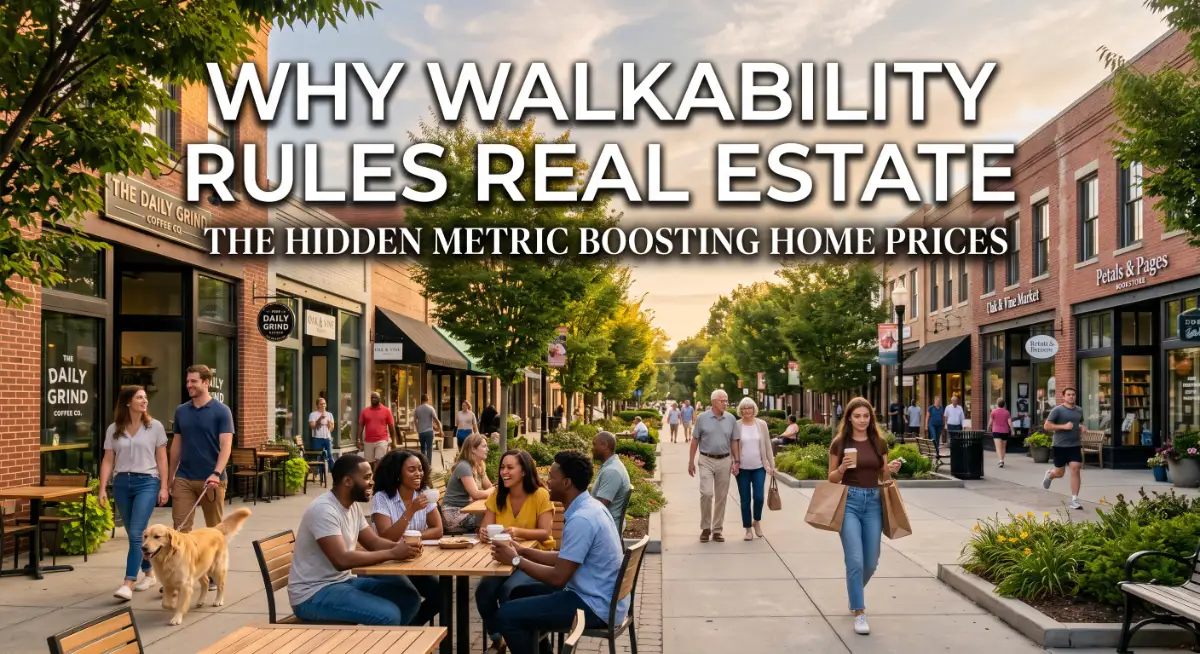
Let's be honest, we all get blinded by shiny hardwood floors and oversized kitchen islands when house hunting. But here's the harsh truth I learned the hard way: if you have to drive 20 minutes just to grab a cup of coffee, your "dream home" quickly turns into a very expensive, isolated prison. Today, smart buyers care way more about what's outside the front door than what's inside—and this simple shift in thinking is completely reshaping property values.
The nearest coffee shop was a twenty-minute drive away, and the streets had absolutely no sidewalks. I suddenly realized that my dream home was actually an isolated island, completely cut off from the real world. Buying that house would have been the biggest financial and emotional mistake of my life.
That realization hit me extremely hard. I started thinking about the sheer amount of time I would waste trapped behind the steering wheel. We often look at the shiny floors and fresh paint inside a house, but we completely forget about what happens the moment we step outside the front door.
This simple oversight causes immense daily frustration for millions of normal people everywhere. When you cannot simply walk to grab a carton of milk, your mental peace takes a massive hit. You are constantly planning your entire life around car keys, traffic jams, and parking spaces.
This heavy reliance on driving slowly eats away at your daily happiness. Parents spend hours worrying because their children cannot safely ride a bicycle down the street. Elderly neighbors feel completely isolated because they cannot walk to a nearby grocery store or park.
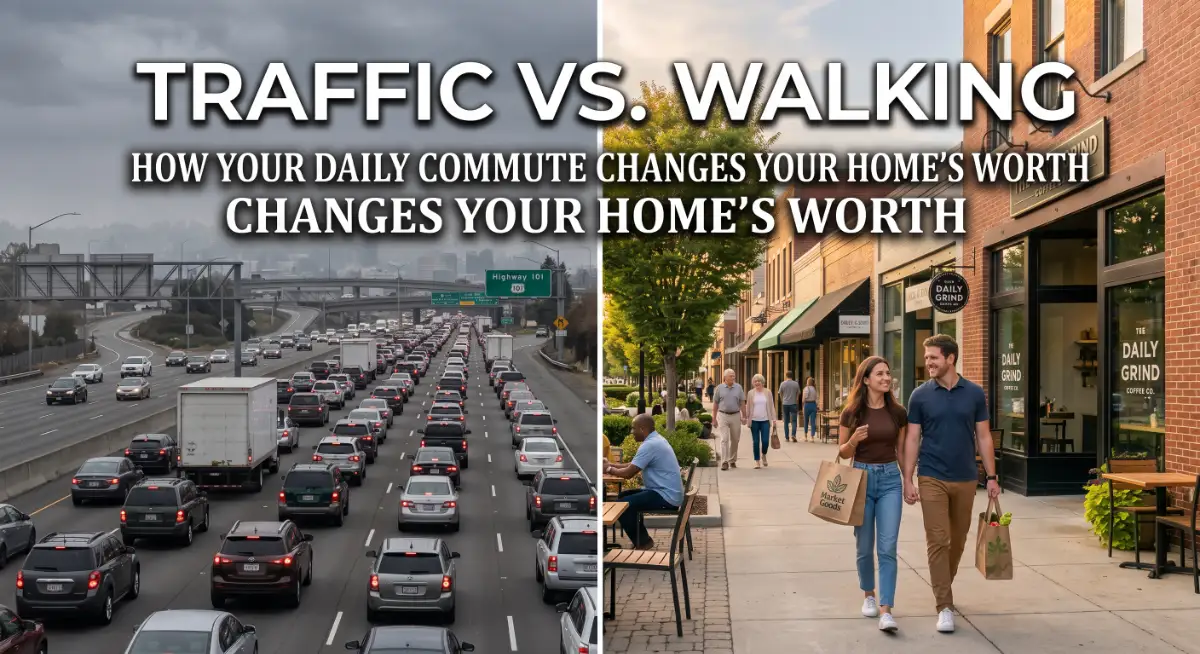
People are becoming increasingly exhausted by this disconnected way of living. We crave connection, convenience, and fresh air, but our poorly designed streets often deny us these simple human needs. This is exactly why the real estate market is changing so rapidly right before our eyes.
Buyers are finally waking up to the massive emotional and financial toll of car dependency. They are willing to pay top dollar for a home where life feels easier and more connected.
How A Simple Number Dictates The Housing Market
When we talk about finding the perfect home, the conversation almost always shifts to location. But "location" is a very broad word that means different things to different people. Today, the true definition of a great location is measured by how easily you can navigate it on foot.
This brings us to a highly important metric that has completely changed the way homes are priced. It is a grading system that ranks how pedestrian-friendly an area truly is. Think of it as a report card for your neighborhood's convenience and accessibility.
The Psychology of Modern Homebuyers
Human behavior has shifted dramatically over the past few decades. People are desperately searching for simplicity in their very busy lives. Nobody wants to spend their precious weekends stuck in gridlock traffic just to buy basic groceries.
When a prospective buyer tours a house, they are not just looking at the bedrooms and bathrooms. They are mentally calculating what their daily routine will look like if they move there. If they see that they can walk to a bakery, a gym, and a local park in under ten minutes, their brain releases positive emotions.
This perceived convenience is incredibly powerful. It creates an emotional attachment to the neighborhood before they even make an offer. They begin to picture themselves enjoying a leisurely Sunday morning stroll with their dog. This strong emotional connection translates directly into higher offers and bidding wars.
Real-Life Scenario: Oakwood vs. Maple Street
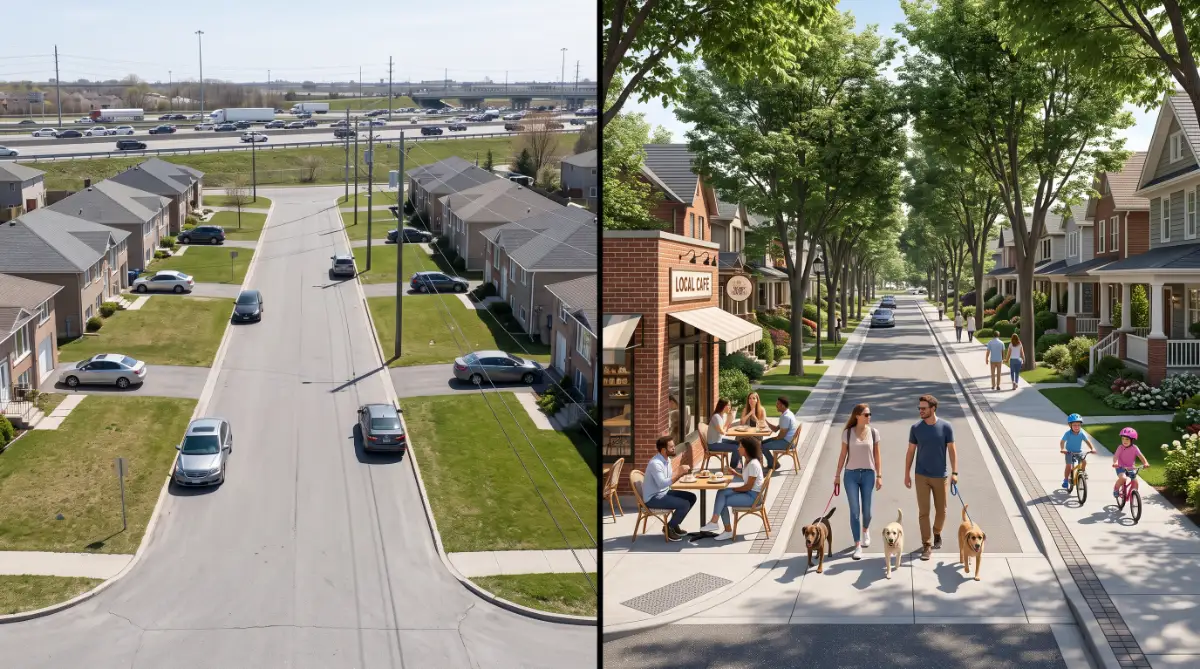
Let us look at a very practical comparison to make this concept crystal clear. Imagine two nearly identical houses located in the exact same city. We will call the first location Oakwood Drive and the second location Maple Street.
Oakwood Drive:
- Located right off a busy main highway.
- No continuous sidewalks or crosswalks.
- The closest grocery store is a 15-minute drive.
- Zero local coffee shops within a three-mile radius.
Maple Street:
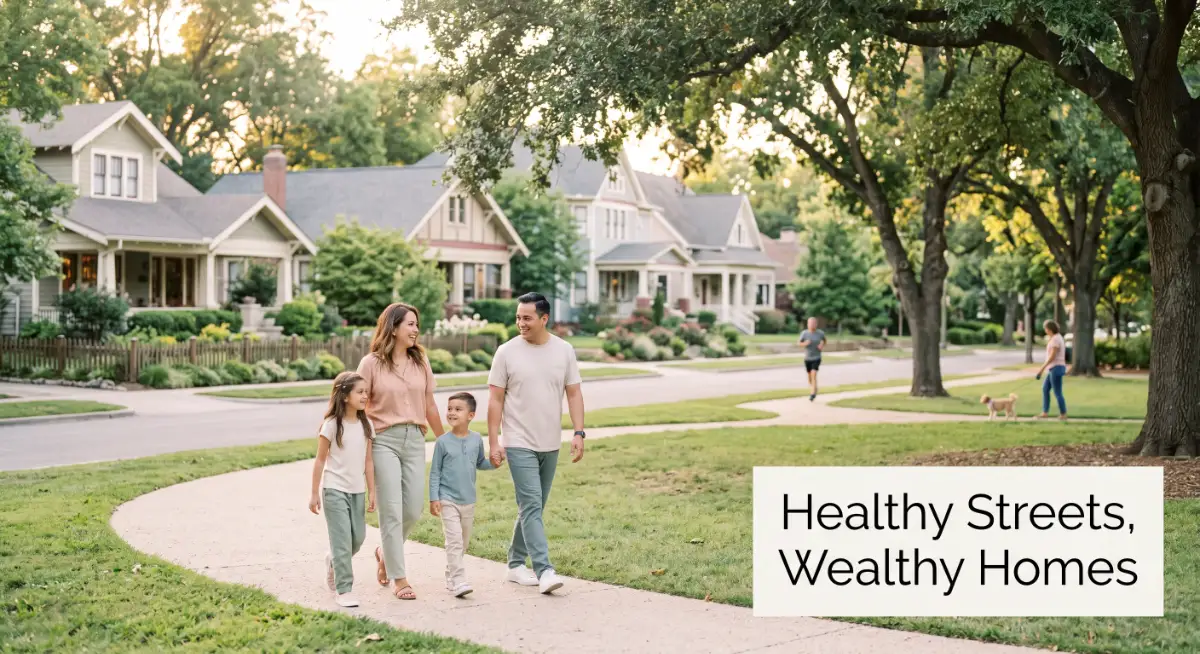
- Lined with wide, shaded pedestrian paths.
- A highly rated elementary school is three blocks away.
- A local farmer’s market and cafe are just around the corner.
- Traffic calming measures keep cars driving slowly.
Even if the house on Oakwood Drive has a nicer kitchen, the house on Maple Street will almost always sell for a significantly higher price. Buyers understand that they can easily upgrade a kitchen over time. However, they can never physically move their house closer to the town center.
The Financial Blueprint of Pedestrian-Friendly Streets
You might be wondering how walking actually puts money back into your pocket. The financial mechanics behind this real estate trend are deeply fascinating and entirely logical. It all comes down to the concept of hidden transportation costs.
Owning, maintaining, and fueling a vehicle is incredibly expensive. When a family lives in an area where they must drive everywhere, they often need two or even three cars just to function. This means double the insurance payments, double the gas bills, and double the repair costs.
Gas Savings Translating to Mortgage Power
When you move into a highly accessible community, your reliance on a vehicle drops instantly. Many families find that they can easily downsize from two cars to just one. The amount of money saved every single month is truly staggering.
Smart buyers realize that the hundreds of dollars they save on transportation can be redirected. They can use that exact same money to afford a higher monthly mortgage payment. This means they can bid more aggressively on homes in pedestrian-friendly zones.
Want to see a deep dive into how neighborhoods are literally designed for maximum property wealth? Watch this amazing breakdown below!
The Local Business Boom Effect
There is a brilliant economic cycle that happens when people walk instead of drive. Foot traffic is the absolute lifeblood of small, independent businesses. When residents stroll through their community, they are far more likely to stop and spend money locally.
They might grab a quick pastry, pick up some flowers, or sit down for a spontaneous lunch. This constant flow of pedestrians helps local shops thrive and expand. A thriving local business scene makes the neighborhood incredibly desirable for outside buyers.
As more exciting restaurants and boutiques open up, the demand to live near them skyrockets. This drives up the property values of every single home within a one-mile radius. It is a beautiful, self-sustaining ecosystem of wealth and community growth.
Myth vs. Fact: The Noise Concern
- The Myth: Living near shops and cafes means you will never get a good night's sleep because of the constant street noise.
- The Fact: Modern town zoning laws usually separate late-night bars from quiet residential blocks. A neighborhood with a high walkability score simply means you are a short 5 to 10-minute stroll from the action, not that the action is happening right on your front lawn. You still get the peaceful nights, but with the added bonus of zero driving on Saturday mornings.
Demystifying the Pedestrian Grading Algorithm
You do not need to be a math genius to understand how these scores are calculated. The system looks at a few very specific, logical data points. It is essentially measuring the friction between your front door and your daily needs.
The less friction there is, the higher the score climbs. Let us break down the exact elements that make one street highly valuable while another street falls behind.
Distance to Daily Errands
The most heavily weighted factor is the physical distance to essential services. If you can walk to a grocery store, a pharmacy, and a bank within five minutes, you hit the jackpot. The system rewards areas that offer a mix of different amenities in close proximity.
It is not enough to just have ten restaurants nearby. You also need access to hardware stores, libraries, and medical clinics. A well-rounded community provides everything a person needs to survive without ever turning a key in an ignition.
I remember when I sold my first condo a few years ago. I thought buyers would care most about the brand new stainless steel appliances I had just installed. Instead, every single person who toured the place only asked about the shortcut walking path to the nearby train station. That single dirt path added thousands of dollars to my final sale price, teaching me a massive lesson about what buyers truly value.
Quick Breakdown: The "5-Minute Walking" Value Add
I always tell my clients to look at walkability as a tier system. Here is what actually happens to your home value when you are close to specific everyday spots:
- Coffee Shops & Bakeries: +3% to +5% bump in property value (Buyers love their easy morning routines).
- Parks & Playgrounds: +7% value increase (families will easily fight over these houses).
- Grocery Stores: +8% to +10% premium (the ultimate daily convenience factor).
- Train/Subway Stations: Up to a +15% boost (commuters will pay top dollar to avoid highway traffic jams).
Safety, Lighting, and Infrastructure
Having a grocery store nearby is totally useless if the walk is terrifying. Appraisers and buyers heavily examine the physical quality of the street itself. Are there wide, well-paved pathways to walk on safely?
Is the street well-lit at night so people feel comfortable walking their dogs after dark? Are there safe pedestrian crosswalks with visible signals? These infrastructure details completely change the vibe of an area.
When people feel safe, they spend more time outside. When more people are outside, crime rates naturally drop because there are more eyes on the street. This creates a highly secure, peaceful environment that commands premium real estate prices.
Myth vs Reality: The Quiet Street Illusion
The Myth: Many buyers believe that the most valuable homes are hidden deep inside maze-like suburban subdivisions. They think that being far away from shops equals peace and quiet.
The Reality: While extremely isolated streets might have less immediate traffic noise, they suffer from a major lack of demand. The modern buyer views extreme isolation as a major negative. They want the quiet of a residential street, but they demand it to be within a ten-minute walk of an active commercial center. The highest property values are always found in these balanced "sweet spots."
Health, Happiness, and High Appraisals
We cannot ignore the massive biological benefits of living in these specific areas. Human beings are physically designed to move, walk, and interact. The design of our immediate environment plays a massive role in our overall health.
Medical professionals constantly advise us to get more steps in every single day. If you live in a place where walking is dangerous or boring, you simply will not do it. You will naturally opt to drive, leading to a much more sedentary lifestyle.
The Silent Benefit of Active Living
When your daily errands require a brief stroll, exercise happens completely naturally. You do not need to force yourself to go to the gym to stay healthy. You burn calories and strengthen your heart just by going about your normal day.
Buyers are becoming highly aware of this health connection. Many families specifically target these active neighborhoods to improve their physical well-being. They view the higher home price as a long-term investment in their family's health and happiness.
Community Connection and Neighborhood Watch
Walking forces you to interact with the world around you. You start to recognize the people who live on your street. You wave to the local shop owners, and you naturally build a strong network of friends.
This creates an incredibly tight-knit community where neighbors actually look out for one another. If a strange car parks on the street, people notice it immediately. This organic neighborhood watch system makes the area extremely safe and highly sought after.
Real estate agents absolutely love marketing homes in these friendly, connected areas. They know that buyers will instantly feel the warm, welcoming energy when they tour the property. That feeling of belonging is priceless, and it heavily inflates the final appraisal value of the home.
Future-Proofing Your Biggest Investment
When you buy a house, you are not just thinking about tomorrow. You are thinking about the resale value ten or twenty years down the road. Understanding demographic shifts is absolutely essential if you want to protect your financial future.
Millennials and Gen Z Buying Trends
Younger home buyers heavily prioritize experiences over massive square footage. They would rather have a slightly smaller house in a vibrant, bustling area than a giant mansion in the middle of nowhere. They value their time immensely, and they refuse to spend it commuting.
Environmental concerns also play a massive role in their purchasing decisions. They want to reduce their carbon footprint by driving less. A neighborhood that allows them to live a green, sustainable lifestyle is incredibly attractive to them.
If you want to ensure your property continues to grow in value, you must appeal to these younger buyers. They are the ones who will be buying your house when you eventually decide to sell. Investing in a highly accessible area guarantees that your home will always be in high demand.
The Slow Death of Urban Sprawl
City planners and local governments have finally realized that endless highway expansion is a massive failure. It costs too much money to maintain, and it completely destroys local communities. As a result, zoning laws across the country are slowly changing.
New developments are being designed with a heavy focus on smart growth and mixed-use spaces. Cities are actively working to fix broken intersections, add bike lanes, and widen sidewalks. They know that walkable cities attract highly educated workers and massive corporate investments.
Homes located in the center of these revitalized zones are seeing their values absolutely explode. It is a massive transfer of real estate wealth from the distant outskirts back into connected local hubs. Understanding this shift gives you a massive advantage in the modern housing market.
The "Distance Decay" Concept Explained
In real estate economics, there is a very simple rule known as distance decay. It basically means that the further away you are from desirable amenities, the lower your property value drops. It is like throwing a rock into a pond; the ripples get weaker the further out they go.
If you map out the home prices in any major town, you will see a clear pattern. The houses located right on the edge of the vibrant downtown center command the highest premium. As you walk ten minutes further out, the prices dip slightly.
By the time you reach the areas where walking to town is impossible, the prices drop significantly. This creates a very predictable, highly visual map of exactly where wealth is concentrated. Smart investors use this exact logic to find undervalued properties just on the edge of these prime walking zones.
They buy homes that are a fifteen-minute walk away, knowing that as the town expands, that walk will soon feel much shorter. It is a brilliant, proven strategy for generating long-term real estate equity.
Buying a home is incredibly stressful, but understanding this one metric removes so much of the guesswork. You stop looking at just the building and start looking at the entire lifestyle the location offers. You protect your mental health, improve your physical fitness, and guarantee a strong financial return. This is exactly why the streets you can easily walk down are always paved with real estate gold.
Mastering the Art of Neighborhood Selection Like a Pro
Finding a truly exceptional location requires a bit more effort than simply glancing at a digital rating online. You need to look past the surface and investigate the underlying mechanics of a community. Professional investors use a specific set of strategies to identify neighborhoods that are on the verge of massive price appreciation.
If you want to secure a highly profitable home, you must learn to spot the early signs of positive urban development. This means paying close attention to exactly how the local government is spending its infrastructure budget.
Look for the "Coffee Shop" Indicator.
One of the most reliable methods for spotting an upward-trending neighborhood is tracking independent businesses. When local entrepreneurs start opening boutique coffee shops or small bakeries, they are doing so based on heavy market research. They know exactly where foot traffic is heavily increasing.
If you see a new, charming cafe opening up on a sleepy residential street, take immediate notice. This is a massive green light that the area is becoming significantly more pedestrian-friendly. Buyers flock to these specific locations because they offer an instant, accessible lifestyle upgrade.
These small business owners often act as early predictors for massive housing market shifts. Once the first highly successful cafe takes root, restaurants, bookstores, and grocers quickly follow suit. Buying a property right as this transition begins is a brilliant way to build immediate equity.
Investigate Local City Council Plans
You should never rely entirely on what a street looks like today. The most successful home buyers spend time digging into the future plans of the local municipality. You want to know exactly what the city intends to build over the next decade.
Many towns are actively applying for government initiatives for smart neighborhood growth to completely redesign their downtown areas. They are tearing up old parking lots to build beautiful public plazas, wider pathways, and shaded seating areas.
If you discover that your target neighborhood is slated for these massive pedestrian upgrades, you have struck absolute gold. Just like you spend time mastering property zoning rules before making an investment, checking future city development plans is mandatory. Buying a house right before these upgrades are publicly finished guarantees a massive spike in your property's value.
Evaluate the "Shade and Rest" Factor
A street with a concrete sidewalk is nice, but it is not always enough to encourage comfortable daily walking. Expert appraisers look for environmental details that make a stroll genuinely enjoyable. The biggest secret weapon a neighborhood can have is mature, towering shade trees.
Walking ten blocks under the blazing summer sun is a miserable experience that most people will actively avoid. However, walking those exact same ten blocks under a beautiful canopy of green leaves feels like a relaxing park visit. Areas with heavily shaded pathways always command significantly higher real estate prices.
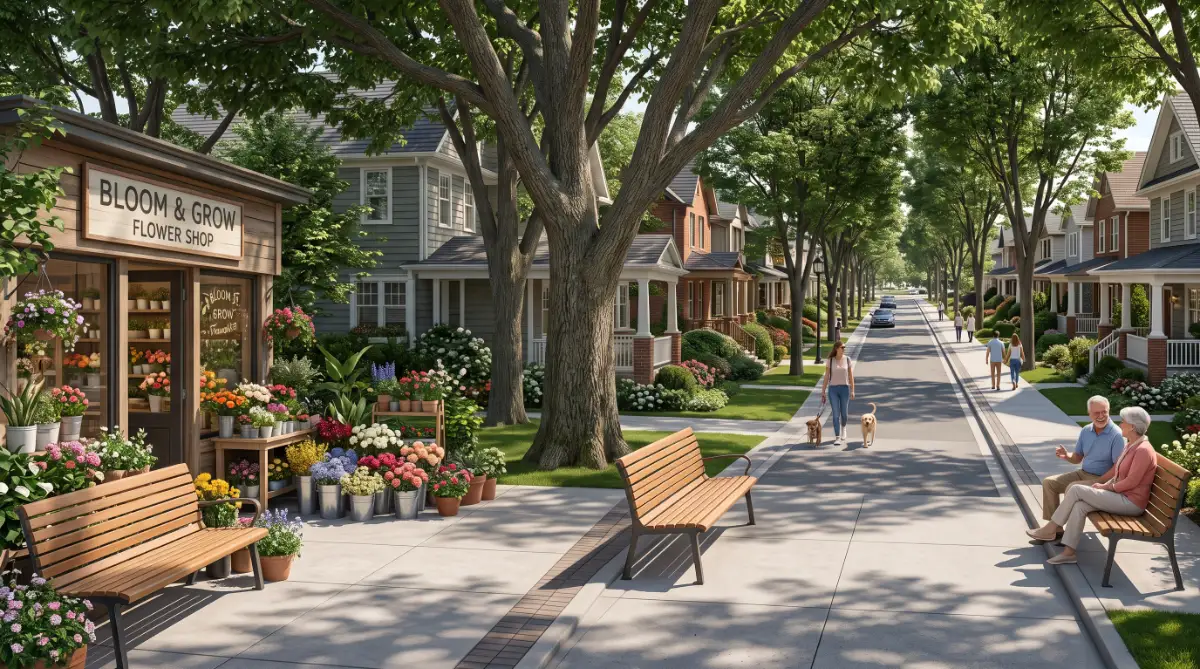
Additionally, you should look for natural resting spots along the primary walking routes. Are there public benches near the corner stores? Small details like this support designing streets that support aging residents safely and comfortably. A neighborhood that welcomes people of all ages naturally maintains an incredibly strong and resilient housing demand.
The Real-Life "Weekend Test" Strategy
Before you ever consider making a formal offer on a house, you need to run a practical field test. I always tell my clients to spend an entire Saturday morning in the area they want to buy into. Park your car at the prospective house, leave your keys behind, and attempt to run a basic morning errand on foot.
Try walking to buy a carton of eggs or a morning newspaper. Take note of how you physically feel during this journey. Are the crosswalks safe and clearly marked, or do you feel nervous crossing the street?
This hands-on experiment gives you more honest information than any real estate brochure ever could. Just as you would carefully handle evaluating massive life decisions like a new job offer, you must physically verify your future daily routine. If your test walk feels stressful, noisy, or dangerous, you should walk away from the deal immediately.
The Hidden Traps That Destroy Your Real Estate Dreams
Even the smartest home buyers can easily fall for clever marketing tricks if they are not incredibly careful. The real estate market is full of misleading information that can trap you in a highly undesirable location. Making a mistake here does not just ruin your daily routine; it heavily damages your financial future.
People often get so distracted by a beautiful backyard or a renovated kitchen that they completely ignore massive red flags outside. When you blindly trust what you see on a digital screen, you expose yourself to severe long-term consequences.
The Digital Map Illusion
One of the most dangerous things you can do is rely entirely on a digital map application to judge an area. An online map might show that your dream house is only a quarter-mile away from a massive shopping center. On a computer screen, this looks like the absolute perfect location.
However, the reality on the ground is often completely different and incredibly frustrating. That quarter-mile distance might be separated by a massive, six-lane commercial highway with absolutely no pedestrian crosswalks.
A distance that looks incredibly short online can easily be a life-threatening obstacle course in real life. If you cannot safely cross the physical barriers between your home and the store, that proximity is completely worthless. Home buyers who skip physically walking the route end up deeply regretting their purchase when they realize they still have to drive everywhere.
Ignoring the Nighttime Reality Check
A street can look incredibly peaceful, safe, and welcoming at two o'clock on a sunny Tuesday afternoon. But a truly valuable neighborhood must maintain that exact same feeling of safety long after the sun goes down. A major mistake buyers make is only touring their potential new neighborhood during daylight hours.
If the streetlights are broken, the pathways are hidden in deep shadows, and local stores close extremely early, the area instantly loses its appeal. Nobody wants to feel anxious simply taking their dog out for an evening bathroom break.
Poor nighttime infrastructure severely limits how often residents actually use their local amenities. This lack of evening foot traffic hurts local businesses and drives overall property values straight down. You must visit the neighborhood at night to ensure the environment remains comfortable, visible, and highly active.
The Hazard of Incomplete Pathways
Sometimes you will find a neighborhood that looks like it is highly accessible, but the infrastructure is incredibly broken. You might start walking down a beautiful, wide paved path only to have it suddenly end in a muddy ditch. These "sidewalks to nowhere" are a massive problem in poorly planned suburban expansions.
Mothers pushing baby strollers and people using wheelchairs find these broken routes completely unusable. When the local government fails to connect the entire walking grid, the whole system collapses.
Just like skipping a standard home inspection leaves you blind to hidden plumbing disasters, ignoring the actual quality of the pavement is a huge risk. Recent real estate buyer preference surveys consistently show that buyers will refuse to pay premium prices for areas with disjointed, unsafe pedestrian access. Always demand continuous, well-maintained paths that directly connect your front door to your desired destination.
Falling for the "Future Promise" Trap
Many real estate developers are fantastic salespeople who sell visions of a perfect future community. They will happily show you beautiful blueprints of upcoming town centers, walking trails, and boutique shopping districts. They promise that these incredible features will be built just a few months after you move in.
Unfortunately, relying on a developer's verbal promise is an incredibly dangerous financial gamble. Economic downturns happen, funding dries up, and those beautiful community plans are permanently canceled.
You should never pay a premium price for amenities that do not physically exist yet. Focus on securing your own finances by carefully securing your mortgage pre-approval and buying into established areas. Unless the heavy construction equipment is already on the street actively pouring concrete, treat those future promises as complete fiction.
Your Master Plan for a Highly Profitable Home Purchase
Choosing the right neighborhood is easily the most impactful financial decision you will make in your entire lifetime. You are not just buying bricks, wood, and a roof to sleep under. You are actively purchasing your future lifestyle, your daily convenience, and your mental peace.
When you prioritize areas that allow you to move freely without a car, you unlock an incredible standard of living. You save massive amounts of money on vehicle maintenance, gas, and daily transportation stress.
This is the exact same strategy that professional wealth builders use to secure appreciating assets. They understand that human beings naturally gravitate towards community, connection, and simplicity. By investing in these highly accessible hubs, they guarantee their properties will always remain incredibly desirable on the open market.
You now have the exact blueprint needed to identify these high-value zones before everyone else does. You know how to look past the superficial details and analyze the actual infrastructure of a street. You are fully equipped to avoid the hidden traps that catch so many inexperienced buyers completely off guard.
Whether you are placing your very first offer or handling a contingent home offer for an upgrade, keep these lessons at the front of your mind. Do not let shiny indoor upgrades distract you from the true value waiting right outside the front door.
I sincerely hope this guide completely changes the way you look at the housing market forever. My biggest wish is that you use this knowledge to find a home that brings you massive financial growth and daily happiness. Always trust your instincts, do your ground research, and never settle for a neighborhood that traps you behind a steering wheel.
Real Estate Walkability: What Buyers Usually Ask
Does a higher walkability rating guarantee a faster home sale?
Yes, homes in highly accessible neighborhoods generally spend significantly fewer days on the market. Buyers are aggressively searching for this specific convenience, leading to quicker offers and highly competitive bidding wars.
Can local residents actually improve their own neighborhood score?
Absolutely, community action plays a massive role in changing local infrastructure. Residents can petition their local city councils to install better street lighting, new crosswalks, and safer traffic calming measures.
Do active, pedestrian-friendly areas have higher local tax rates?
Sometimes these areas do carry slightly higher property taxes because the local amenities and public services are heavily funded. However, most homeowners find that the massive savings on gas and car maintenance easily outweigh the extra tax costs.
Are rural properties completely worthless because they lack walking paths?
Not at all; rural properties hold massive value for a completely different demographic of buyers looking for privacy and land. However, for buyers specifically searching for traditional suburban or urban convenience, a lack of pedestrian access heavily reduces the property's appeal.
How do seasonal weather changes affect the value of accessible streets?
Even in areas with heavy winter snow, high-quality pedestrian infrastructure remains incredibly valuable. Towns that prioritize prompt sidewalk snow removal and maintain safe winter walking paths continue to command top-tier real estate prices year-round.
Disclaimer: The information provided in this blog post is for educational and informational purposes only and does not constitute professional real estate or financial advice. Real estate markets fluctuate constantly, and local conditions vary significantly. Always consult with a licensed real estate agent or financial advisor before making any major purchasing or investment decisions.