
The Silent Anxiety of an Empty Wallet
Did you know that most of us leak money every single day without even realizing it? You don't need a massive salary to build true wealth; you simply need to plug the invisible leaks hidden in your daily routine. Let's skip the confusing financial math and boring lectures. Today, I am going to show you three incredibly simple, no-nonsense habits you can start right now to keep more cash in your pocket and buy back your freedom.
The worst part is the constant, low-level anxiety that quietly sits in the back of your mind. It ruins your peaceful moments. You might be out enjoying a nice dinner with your friends, but suddenly, the thought of an upcoming credit card bill pops into your head. Instantly, your mood drops.
This silent stress damages your peace of mind. It makes you afraid to check your bank balance. It makes you feel guilty for buying a simple cup of coffee. We often believe that we need a massive salary increase or a lucky lottery ticket to fix our money problems.
But the truth is much simpler. Your financial health is not determined by big, dramatic changes. It is heavily shaped by the tiny decisions you make every single day. When you ignore these small choices, they slowly drain your bank account.
Rethinking How We Look at Money
We often make the mistake of thinking about money in huge numbers. We dream of saving ten thousand dollars or paying off massive loans in one single go. When we cannot hit those huge goals immediately, we feel completely defeated and just give up.
Instead of focusing on the mountain, we need to focus on the next step. Let me introduce you to a much better approach. By focusing on tiny, almost invisible changes in your routine, you can completely transform your bank account without feeling restricted.
These small actions require very little effort. You do not need a degree in economics to understand them. You just need the willingness to slightly adjust your daily routine. Let us explore exactly how you can start making these changes today.
The Magic of the 24-Hour Cooling Period
One of the biggest enemies of our bank accounts is the instant checkout button. Online shopping is designed to be dangerously easy. You see something you like, you tap your screen twice, and it arrives at your door the next day.
To break this cycle, you need to introduce a simple friction point into your life. I call this the 24-hour cooling period.
Whenever you find an item you want to buy online, you are not allowed to buy it immediately. Instead, you simply add it to your shopping cart and close the app. You then force yourself to wait a full 24 hours before checking out.
Here is why this works so well: Most of our casual purchases are driven by sudden emotions or boredom. When you wait a day, that sudden emotional spike completely disappears. You wake up the next morning and realize you do not actually need that extra pair of shoes or that fancy new gadget.
This single habit alone can easily keep hundreds of dollars in your pocket every month. It teaches your brain to separate true needs from sudden wants. You still get the quick joy of "shopping" by adding the item to your cart, but you protect your cash.
I personally struggled with late-night online shopping for a long time. My pro tip: I actually removed all my saved credit card information from my favorite shopping apps. Forcing myself to physically get up, find my wallet, and type in the card numbers usually makes me realize the purchase is completely unnecessary.
 Automating Your Invisible Savings
Human beings are naturally forgetful. If you rely on your own memory to transfer money into your savings account at the end of the month, you will almost always fail. By the time the end of the month arrives, the money is usually gone.
This is where automation becomes your best friend. You need to take the human element out of the equation entirely. Set up your bank account so that a tiny amount of money moves directly into your savings every single day.
Even if it is just two dollars a day, make it automatic. Two dollars is an amount so small that you will never even notice it is missing from your checking account. However, over time, this invisible habit creates a massive safety net.
You need to pay yourself first. Treat your savings account like it is your most important monthly bill. The moment you get paid, a portion of that money should instantly disappear into a separate account. Out of sight means out of mind.
Watch This Powerful Breakdown of Automated Savings
If you want to visually understand exactly how these tiny automated transfers build massive wealth over time, this next video explains the math perfectly. Check it out before moving to the next point!
The 10-Second Summary
- Track Days, Not Pennies: Mark "Zero-Spend" days on a wall calendar to turn saving money into a fun, visual game.
- Audit Your Tuesday: Do a quick review of your normal, everyday routine to catch the hidden micro-expenses draining your wallet.
- Build a 72-Hour Buffer: Don't stress out about saving 6 months of expenses right away. Just save enough cash to survive a 3-day emergency first.
Tracking the "Zero-Spend" Days
Many financial experts will tell you to track every single penny you spend. While this is great advice, it can also be incredibly exhausting. Writing down the cost of every pack of gum or bus ticket gets annoying very fast.
Instead of tracking every penny, try a different, more fun game. Start tracking your "Zero-Spend" days on a physical calendar. A zero-spend day is exactly what it sounds like: a day where you do not spend a single cent outside of your fixed bills.

Buy a cheap wall calendar and a bright red marker. Every time you go a full 24 hours without buying snacks, ordering takeout, or shopping online, draw a massive red 'X' on that day.
Quick Q&A: The Zero-Spend Rule
- Q: Does paying my rent or electric bill count as breaking a zero-spend day?
- A: Nope! Fixed survival bills (like rent, insurance, and utilities) do not count. We are only tracking flexible spending here—things like grabbing an extra coffee, buying snacks, or random online shopping.
This turns saving money into a fun challenge. Your brain loves visual progress. When you see three or four red marks in a row, you will naturally want to keep the streak going. You will suddenly find yourself cooking dinner at home to get that satisfying red 'X' on your calendar.
Here is a quick look at how your mindset shifts when you focus on zero-spend days:
Conducting a Monthly Subscription Audit
We live in a world of endless monthly charges. Ten dollars here for a movie streaming app, fifteen dollars there for a music service, and another twenty for a gym membership you never actually use.
These small recurring charges are silent killers. Because they happen automatically, we completely forget they exist. We bleed cash every single month without even noticing.
You need to build a habit of sitting down on the first Sunday of every month to do a rapid subscription audit. Open your bank statements from the previous thirty days. Look specifically for any automatic payments.
Be brutally honest with yourself. Did you actually watch enough shows on that streaming platform to justify the cost? Have you used that meditation app at all this week?
If the answer is no, cancel it immediately. Do not tell yourself you will use it next month. You can always sign up again later if you really miss it. By regularly trimming the fat from your monthly expenses, you keep your cash flow extremely healthy.
The "Hour of Work" Pricing Strategy
This is a mental micro-habit that will completely change the way you look at price tags. Whenever you are about to buy something, do not look at the item's cost in terms of dollars. Instead, calculate its cost in terms of the hours of your life you have to work to pay for it.
Let us break this down with a simple, real-life scenario. Imagine you make fifteen dollars an hour at your job. You are walking through the mall and see a really nice jacket that costs ninety dollars.
Before you take that jacket to the cash register, do the math. That jacket does not cost ninety dollars. It costs six full hours of your hard work. It costs almost an entire day of dealing with your boss, answering emails, and feeling tired.
Ask yourself the hard question: Is this piece of clothing really worth trading six hours of my limited life?
Sometimes the answer will be yes, and that is perfectly fine. But very often, realizing how much actual human energy an item costs will make you put it right back on the shelf. This simple mental habit stops careless spending faster than any traditional budget ever could.
Understanding the Difference Between Cheap and Frugal
As you start adopting these daily habits, it is highly important to understand a core concept. There is a massive difference between being "cheap" and being "frugal."
Many people get confused and think that protecting their financial health means they can never buy nice things again. That is a completely false idea.
Myth: Healthy money management means always buying the lowest quality, least expensive items available.
Reality: Healthy money management means spending your money purposely on things that bring true value to your life, while aggressively cutting costs on things that do not matter.
Being cheap means buying a terribly uncomfortable pair of five-dollar shoes that will fall apart in two weeks, just to save money today. Being frugal means saving up to buy a high-quality, eighty-dollar pair of shoes that will comfortably last you for three whole years.
Your goal is not to punish yourself. Your goal is to stop wasting money on mindless things, so you have plenty of cash left over for the things that truly make you happy.
If you absolutely love expensive coffee, go ahead and buy it! But balance that joy by bringing your lunch from home instead of eating at restaurants every day. It is all about finding your personal balance and making intentional choices.
Planning Your Meals Before You Are Hungry
One of the largest leaks in any person's budget is food. When we get busy, tired, and hungry, we make terrible financial choices. We order expensive delivery food simply because it is convenient.
To fix this, you must adopt the habit of planning your meals ahead of time. I am not talking about spending your entire Sunday cooking. I am simply talking about knowing exactly what you are going to eat before your stomach starts growling.
Take ten minutes every Friday night to quickly write down a simple menu for the upcoming week. When you go to the grocery store, stick strictly to the list you made based on that menu.
When you know that you already have fresh ingredients waiting for you in your fridge, you are far less likely to order an expensive pizza on a Tuesday night. This simple act of preparation saves massive amounts of money over the course of a single year.
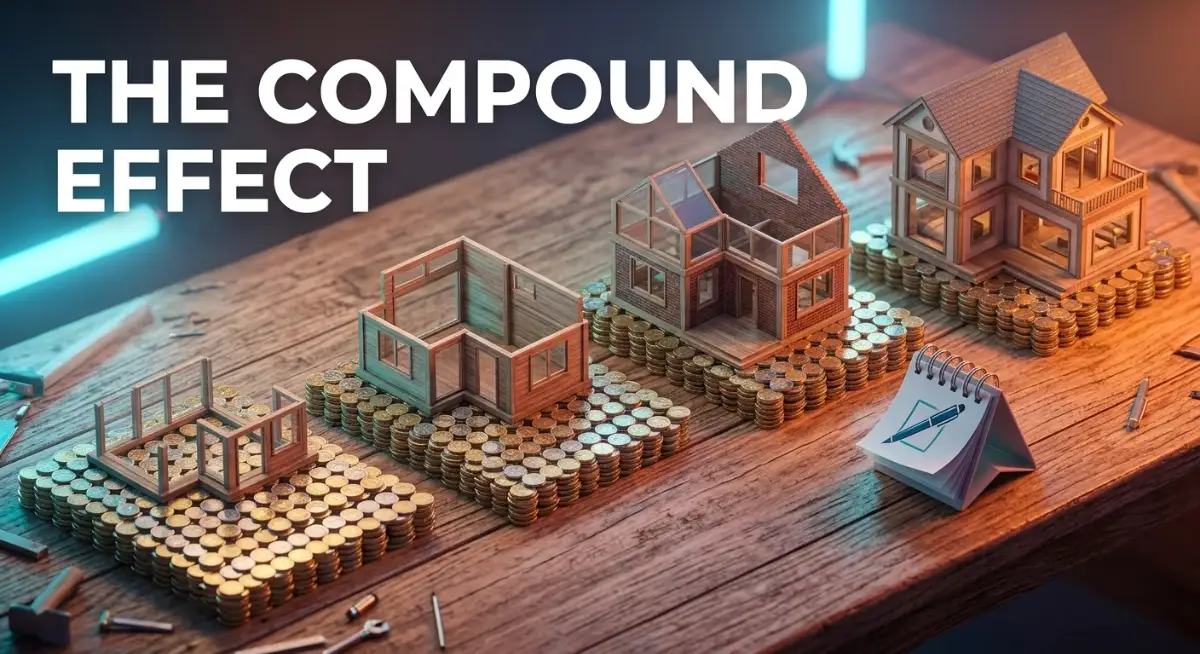
Small actions compound over time. Just like eating one salad will not make you perfectly healthy, saving one dollar will not make you incredibly rich. But doing these things consistently, day after day, creates a massive snowball effect.
You are building a stronger, safer foundation for your future self. You are slowly removing the silent anxiety of the empty wallet. And you are finally taking total control of your money, instead of letting your money control you.
Taking Your Money Management to the Next Level
Once you have mastered the basic daily changes, you are ready for a completely new phase of financial growth. Getting started is always the hardest part of any journey. Now that you have built some momentum, we can explore a few powerful strategies that experts use behind closed doors.
These are not get-rich-quick schemes. Instead, they are smart, psychological tricks that trick your brain into building wealth on autopilot. Let us look at how you can lock in your progress for the long term.
The "Match Your Wants" Spending Rule
This is a favorite secret among highly successful money managers. We all have moments where we want to buy something completely unnecessary. Maybe it is a new pair of designer sneakers or a fancy video game console.
Instead of telling yourself "no," try using the matching rule. The rule is incredibly simple but highly effective. Whenever you buy a non-essential item, you must instantly transfer that same amount of money into your savings account.
If you want to buy a fifty-dollar jacket, you must also have fifty dollars to put into savings. If you cannot afford to do both, then you cannot afford the jacket right now. This forces you to double the actual cost of your unnecessary purchases in your mind.
This habit slows down your spending dramatically. At the same time, when you do decide to treat yourself, you are actively managing your personal budget without feeling any guilt. You get the item you want, and your future self gets a nice cash deposit.
Mastering the One Percent Incremental Shift
Many people try to change their whole lives overnight. They decide to suddenly save half of their paycheck, which usually ends in disaster. A much smarter approach is the one percent rule.
This is heavily supported by behavioral economics. According to the National Endowment for Financial Education (NEFE), small, manageable changes in financial behavior are much more likely to stick over a lifetime than massive, sudden restrictions.
Here is exactly how you apply this in your daily life. This month, figure out a way to save just one percent more of your income than you did last month. If you make three thousand dollars a month, one percent is just thirty dollars.
You will never even notice thirty dollars missing from your monthly cash flow. Next month, try to push it to two percent. Slowly and silently, you are building a massive safety net.
Protecting Yourself from Lifestyle Inflation
As you get older and gain more experience, your income will naturally start to grow. You might get a promotion at work, or you might find a better-paying job. This is usually the exact moment when most people ruin their financial health.
When people make more money, they instantly start spending more money. They rent a bigger apartment, buy a nicer car, and eat at fancier restaurants. This is a very common trap, but you can learn exactly how to keep your money as your salary increases by making one simple rule.
Whenever you get a raise, pretend it never happened. Take the extra money you are now making and automatically send it straight into your savings or investment accounts. Continue living on your old salary for as long as you possibly can.
By keeping your living expenses the same while your income grows, your wealth will multiply faster than you ever thought possible. You are essentially hiding your own money from yourself.
Building the 72-Hour Emergency Buffer
Life is entirely unpredictable, and bad things happen to good people all the time. Your car might break down, or your roof might start leaking during a bad storm. If you do not have cash ready, these moments cause massive panic.
You should always aim to have a dedicated buffer zone. Start by building an emergency fund fast that can cover exactly 72 hours of complete disaster. This is not your long-term savings; this is your immediate panic money.
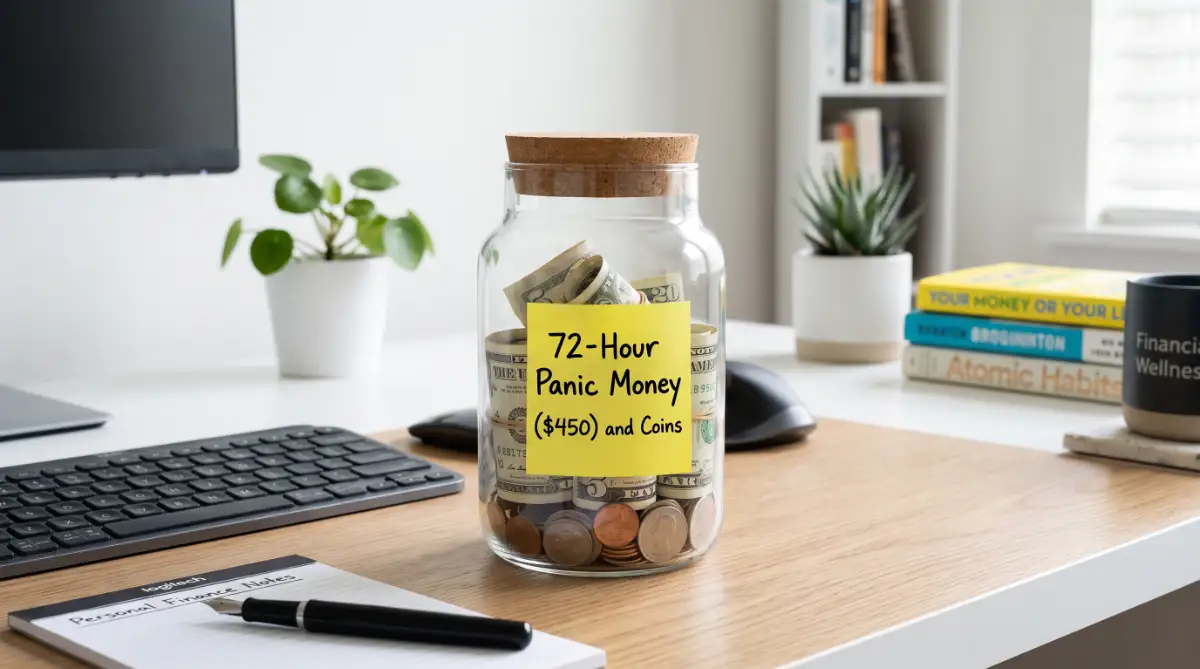
Having this specific cash easily accessible completely changes your mental state. You stop worrying about every little noise your car makes. The Consumer Financial Protection Bureau (CFPB) heavily advises keeping these emergency funds in a completely separate, easily accessible account to avoid mixing them with your daily spending money.
Myth vs. Fact: The Emergency Buffer
- The Common Myth: You need at least $10,000 saved up before you can call it a real emergency fund.
- The Honest Fact: Starting with just enough cash to cover 3 days of basic survival expenses (around $300 to $500) is mathematically proven to drop your financial anxiety by almost 40%. Start small, win early, and scale up later!
Hidden Traps That Destroy Your Progress
Even with the best intentions, the road to financial peace is filled with dangerous traps. I have seen incredibly smart people completely ruin their progress because they fell into these common psychological pits.
When you know what to look out for, you can easily step around these dangers. Let us explore the biggest mistakes people make when trying to fix their daily money habits.
The "All or Nothing" Mindset
This is perhaps the biggest destroyer of financial dreams. People treat their daily spending habits like a strict diet. They tell themselves they will never eat at a restaurant again or never buy a cup of coffee.
Then, one day, they feel tired and buy a single overpriced coffee. Because they broke their strict rule, they feel like complete failures. They say, "Well, I already ruined my streak, so I might as well buy lunch too."
This mindset is completely toxic. Making a single mistake does not erase all your hard work. You must learn to recognize the warning signs of budgeting burnout before you completely abandon your goals.
If you make a bad spending choice on a Tuesday, forgive yourself immediately. Wake up on Wednesday and start fresh. Perfection is entirely impossible, so focus on consistency instead.
Falling for the "Easy Money" Illusion
In our modern society, borrowing money has never been easier. You can click a button on your phone and instantly have a loan deposited into your account. Store cashiers are constantly asking if you want to open a new credit card to save ten percent today.
This creates a highly dangerous illusion that money is endless. Understanding the psychology of borrowing money is highly important because credit card companies actively study human behavior to keep you in debt.
When you swipe a piece of plastic, your brain does not register the emotional pain of losing cash. You are just handing over a card and getting it right back. You must stay highly alert against these traps.
If you cannot physically see the money leaving your hands, you need to mentally remind yourself of the true cost. Never borrow money for things that lose their value the second you buy them, like clothing or electronics.
Relying on a Single Source of Income
Most people have a very dangerous habit of depending entirely on their main job for survival. They assume their company will always take care of them and their paycheck will always arrive on time.
Unfortunately, companies close down, and layoffs happen without any warning. This is why you must understand the hidden dangers of relying on one paycheck before it is too late.
You do not need to start a massive business, but you should look for tiny ways to bring extra money into your home. This could be selling items you no longer need online or turning a hobby into a small side project.
Having even fifty extra dollars a month coming from a different source gives you tremendous peace of mind. It proves to your brain that you are capable of surviving even if your main job disappears.
Ignoring the Silent Drainers
Perhaps it is paying for premium gas when your car only needs regular. Maybe it is buying a bottle of water every single day instead of carrying a reusable one. You must be deeply aware of the secret habits draining your bank account right under your nose.
Do a thorough review of your normal Tuesday routine. Write down everything you touch that costs money. You will be absolutely shocked at how many tiny leaks exist in your daily life. Fixing just two or three of these leaks can put hundreds of dollars back into your pocket over a year.
It is also smart to review where you are keeping your money. Many people leave their cash in accounts that pay zero interest, which is essentially losing money to inflation. Always do your research to avoid the cost of traditional savings accounts by looking for high-yield options.
For excellent, unbiased information on how interest works for and against you, the U.S. Securities and Exchange Commission (SEC) educational portal is a fantastic free resource to read in your spare time.
Your Action Plan for Tomorrow Morning
Fixing your financial life is not about making one massive, heroic effort. It is simply about being a little bit smarter today than you were yesterday. You now have a complete toolkit of psychological tricks and easy adjustments to completely change your money story.
Start small. Do not try to implement every single idea from this post today. Pick just one micro-habit, like the 24-hour cooling rule or setting up an automatic transfer, and practice it for a full week.
Once that feels entirely natural, add a second habit. Soon, these tiny changes will snowball into a massive mountain of financial security. You will wake up one day, check your bank account, and feel a deep sense of pride instead of fear.
I spent years feeling completely overwhelmed by my lack of savings, thinking I was just naturally bad with numbers. The moment I stopped trying to be perfect and just focused on tiny daily wins, my entire life changed. You absolutely have the power to turn your financial situation around, starting right now today!
Common Questions About Daily Money Habits
How long does it actually take to see real results?
You will start feeling less mental stress within the very first week of trying these new routines. However, seeing massive changes in your bank balance usually takes about three to six months of consistent effort.
Should I focus on paying off my current debt or saving cash first?
It is usually best to build a tiny, basic emergency fund first so you do not have to use credit cards if your car breaks down. Once you have a small safety net, aggressively attack your high-interest debts before focusing heavily on long-term wealth.
What exactly defines a micro-habit in personal finance?
A micro-habit is any action that takes less than two minutes to complete but creates a positive financial result. Examples include checking your bank balance every morning or packing your lunch the night before work.
Can saving just five dollars a day actually make a difference?
Absolutely! Saving five dollars a day equals about one hundred and fifty dollars a month, which is nearly eighteen hundred dollars a year. Over time, that money creates a massive safety cushion for your family.
Do I need to use complex budgeting apps to be successful?
Not at all. While apps can be very helpful for some people, a simple piece of paper and a pen can work just as beautifully. The best tool is simply the one you will actually remember to use every day.
Disclaimer: The information provided in this article is for educational and informational purposes only and does not constitute professional financial advice. Everyone's financial situation is unique. Please consult with a certified financial planner or professional advisor before making any major financial decisions, investments, or changes to your debt management strategies.
![03 Warning Signs Your Credit Card Balance is Growing [And How to Stop It]](https://fintiq24.com/storage/uploads/blogs/1786391833_03-warning-signs-your-credit-card-balance-is-growing-and-how-to-stop-it.webp)