
The Silent Thief Emptying My Pockets While I Played It Safe
I always thought I was incredibly smart with my hard-earned money. I would skip my expensive morning coffee, pack my own lunches, and stash absolutely every extra dollar into my regular bank account. I actually loved logging into my banking app and seeing that number slowly creep up over the long months. But then, I started noticing something completely strange happening at the grocery store and the gas pump. My daily bills were skyrocketing, yet my bank balance was moving like a tired turtle. That is when it hit me incredibly hard: I was actually getting poorer while trying to play it entirely safe.
This heavy realization brought a massive wave of anxiety crashing down on my shoulders almost overnight. You work exhausting hours, you sacrifice those fun weekend trips, and you try your hardest to do everything perfectly by saving your cash. Yet, no matter how much you try to save, the basic cost of living seems to sprint far ahead of your bank balance.
Ordinary families are feeling this crushing weight every single day while standing in the checkout lines. The mental peace you are supposed to get from having a thick cash cushion completely disappears into thin air. Instead of feeling relaxed and secure about the future, you are left wide awake at night.
You find yourself staring at the ceiling, wondering why you still cannot afford the comfortable lifestyle you truly want for your family. Are you doing something completely wrong with your budget? Why does it constantly feel like you are endlessly walking up a downward escalator?
The truth is, the traditional banking system is silently punishing everyday people who are just trying to build a secure safety net.
How The Standard Banking System Quietly Drains Your Purchasing Power
We are often taught from a very young age that a regular bank is the absolute safest place on earth for our cash. Our parents told us to save our pennies, put them in a vault, and let them sit securely for a rainy day. But the financial rules of the game have completely changed right under our noses.
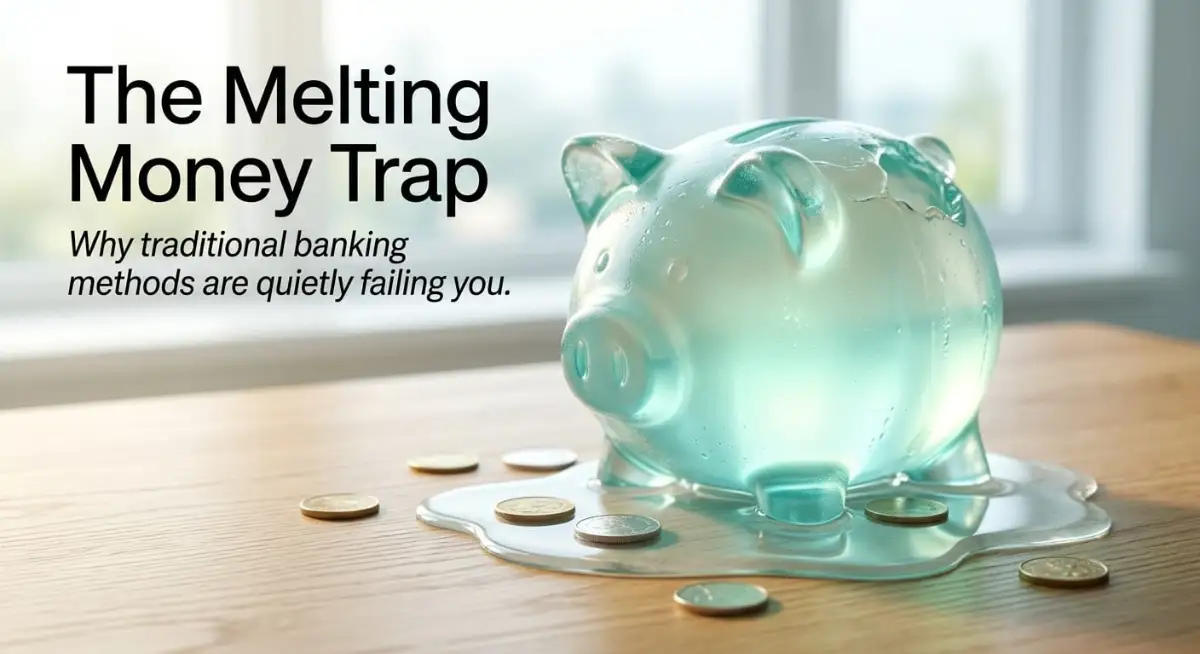
To truly fix this massive money leak, we need to completely rethink how we view safety. Keeping all your cash in a standard account is basically like putting water into a bucket that has a dozen tiny holes in the bottom. You might be filling it up at the top, but you are slowly losing your resources without even hearing a single drop fall.
The Invisible Enemy Eating Your Hard-Earned Dollars
The biggest threat to your financial security is a silent concept called inflation. You hear this word on the evening news all the time, but the real-life impact is absolutely devastating to your wallet. Inflation simply means that the cost of everyday goods and services goes up naturally over time.
Think about how much a simple gallon of milk or a loaf of bread cost just a few short seasons ago. Now, compare that same grocery list to what you are paying at the register today. The numbers have jumped up significantly, meaning your dollar simply does not stretch as far as it used to.
If your money is sitting in a standard account earning almost zero interest, it is literally losing its buying power every single morning you wake up. You might look at your bank statement and see the same amount of money you deposited. However, what that money can actually buy in the real world is shrinking right before your eyes.
The Illusion of "Safe" Bank Returns
Let us talk about those tiny little interest payments your local bank gives you every month. Most traditional checking and basic savings accounts offer returns that are so remarkably low, they are practically nonexistent.You might earn a few pennies for leaving thousands of dollars with them for an entire month.
Meanwhile, the bank takes your hard-earned money and lends it out to other people for mortgages and car loans at incredibly high rates. They make a massive profit using your money, and they toss you a tiny fraction of a penny as a thank you. This system is heavily rigged to benefit the massive institutions, not the everyday saver.
When the rate of inflation is heavily outperforming the tiny bit of interest your bank pays you, you are moving backward financially. This is the exact mathematical reason why hiding all your money under a mattress or in a basic account is highly dangerous.
Identifying the Leaks in Your Current Strategy
So, how do you know if your current money strategy is actively hurting you? You have to sit down and take a very hard look at exactly where your safety net is currently parked. Open your banking app and find the specific page that tells you your Annual Percentage Yield (APY).
If that number is completely microscopic, you are actively losing the wealth game. Every dollar you have sitting in that specific account beyond your basic monthly expenses is slowly rotting away. You must recognize that absolute safety does not mean completely avoiding all change.
Pro Tip from My Own Experience:
I used to be terrified of moving my money to unfamiliar online accounts because I thought my neighborhood brick-and-mortar bank was the only safe option. I eventually realized my loyalty was costing me hundreds of dollars in lost interest every single year. My biggest advice is to completely drop any emotional attachment you have to a bank that refuses to pay you what your money is actually worth.
Discovering the Hidden Traps of Banking Fees
Many people do not just lose money to inflation; they also get hit by ridiculous account maintenance fees. Some traditional banks will actually charge you a monthly fee simply for the privilege of holding your money. If you do not meet their strict minimum balance requirements, they slowly chip away at your hard-earned cash.
Stop Letting Banks Benefit From Your Fear
[Check out this eye-opening breakdown of how traditional banks legally use your deposits to make themselves wealthy, while leaving you with literal pennies.]
Structuring A Better Safety Net Without The Stress
Now that we fully understand the severe problem, we need a practical path forward to protect your purchasing power. You definitely need to keep a portion of your money in cash for sudden emergencies, like a broken car or an unexpected medical bill. But you do not have to settle for the terrible rates your childhood bank is currently offering you.
There are highly secure, government-backed alternative accounts designed specifically to pay you a much higher yield. High-Yield Savings Accounts (HYSAs) operate exactly like your regular account, but they often pay you significantly more money every month. These modern accounts are generally offered by online-only banks that do not have to pay for expensive physical buildings.
They pass those massive savings directly down to you in the form of higher monthly interest payouts. Moving your emergency fund into one of these accounts is one of the easiest financial upgrades you can possibly make today. It literally takes about ten minutes of your time on a Sunday afternoon, but the financial rewards last for decades.
Myth vs Reality: The Banking Truths You Need to Know
The Coffee Shop Economics Real-Life Scenario
Let us completely break this down with a very relatable, everyday scenario so the math makes perfect sense. Imagine you love buying a specific fancy coffee that costs exactly five dollars today. You decide you want to save up and buy that same coffee a few seasons from now, so you put five dollars in a jar.
Fast forward to the future, and you eagerly take your five-dollar bill out of the jar and walk to the coffee shop. But the barista looks at you and says the price of the coffee is now six dollars because of rising supply costs. Your five-dollar bill did not magically shrink, but its specific power in the real world is completely gone.
This is precisely what is happening inside your regular bank account every single second of the day. You are saving five dollars, but the price of your future life is quickly rising to six dollars. If you do not put your cash in a vehicle that grows alongside the rising prices, you will eventually be priced out of your own goals.
Overcoming the Mental Block of Moving Your Money
Change is incredibly scary, especially when it comes to the money you worked so tirelessly to collect. We humans are completely wired to stick with what feels familiar, even if it is actively causing us financial harm. You might think opening a new account sounds exhausting, or you might worry about linking accounts together.
But you have to ask yourself a very serious question right now. Are you willing to lose thousands of dollars in purchasing power simply because you want to avoid a few minutes of paperwork? The wealthy do not leave their heavy cash sitting idle in low-interest accounts, and neither should you.
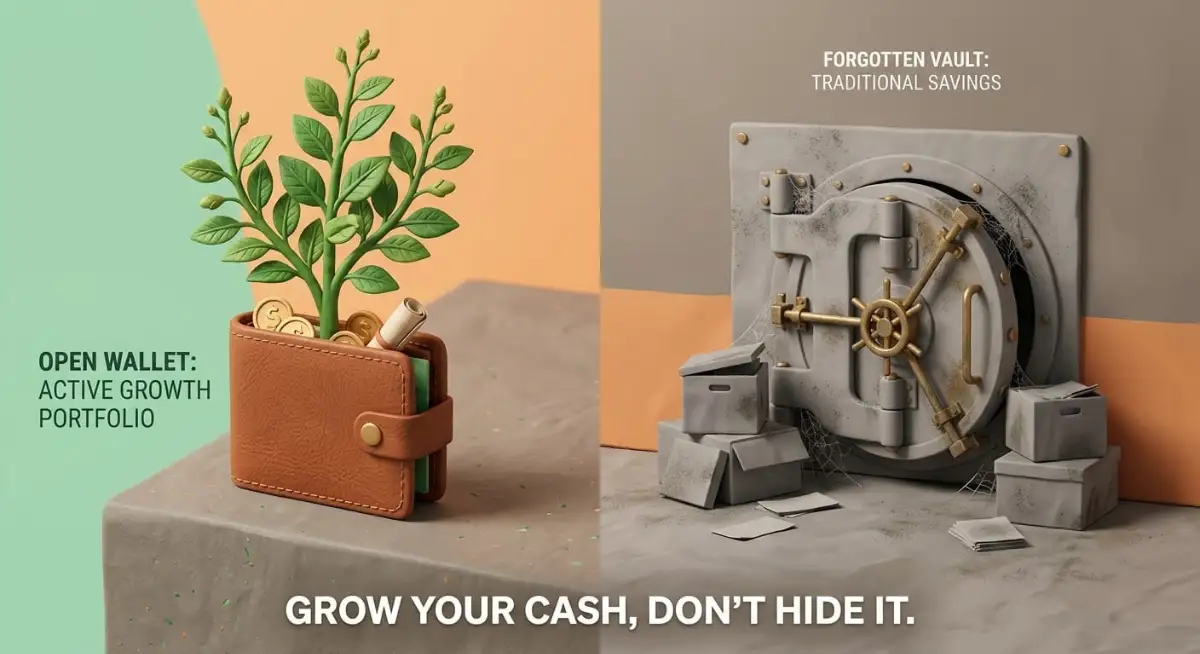
You need to completely reframe how you look at your money. Stop viewing your cash as a lazy object that just sits in a digital vault waiting for a rainy day. Start viewing every single dollar you own as a tiny employee whose specific job is to go out and recruit more dollars for you.
Actionable Habits to Stop the Financial Bleeding Today
So, what exactly should you do right now to patch the holes in your financial bucket? First, calculate exactly how much cash you genuinely need for a comfortable emergency fund. Financial experts typically recommend keeping three to six months of basic living expenses highly accessible.
Once you know that exact number, immediately transfer the bulk of it into a high-yield account that actually respects your money. Leave just enough in your traditional checking account to cover your daily expenses and your standard monthly bills. Anything beyond your emergency fund and your monthly bills should not be sitting in a savings account at all.
This simple, straightforward separation of your cash completely changes the entire trajectory of your personal finances. You keep the absolute convenience of a local checking account for buying groceries and paying the electric bill. At the same time, you force your heavy emergency cash to constantly work hard for you in the background.
Next-Level Strategies To Protect Your Hard-Earned Cash
Once you fully realize that your local neighborhood branch is quietly holding your wealth back, you have to upgrade your entire strategy. You already know that moving your cash to a better platform is a smart move. Now, let us look at some highly effective ways to organize that money so it actually works for you around the clock.
You do not need to be a Wall Street professional to execute these incredibly smart banking moves. You just need to apply a few basic rules that wealthy families have been using for decades. The secret is simply giving every single dollar a very specific job to do.
The Cash Bucket System
Most everyday people just throw all their extra income into one giant digital pile. This is highly inefficient because some of your money needs to be available today, while the rest can safely sit and grow. To fix this, you should divide your liquid assets into three separate "buckets" to maximize your returns.
Your first bucket is your standard checking account, which acts strictly as your daily operating center. You should only keep enough money here to cover your monthly bills, groceries, and a small buffer for immediate surprise expenses. Keeping any excess cash in this account is basically throwing potential earnings right out the window.
Your second bucket is your easily accessible emergency reserve, which should live in a reputable online account paying a high yield. This money is designed to rescue you when life throws a massive curveball, like a medical bill or a sudden job loss. If you want to know the exact formula for setting this up securely, learning how to build an emergency fund fast is an absolute game-changer.
Leveraging the CD Ladder Approach
If you have a solid emergency reserve already built, you might want to look into Certificates of Deposit (CDs). A standard CD requires you to lock your money away for a specific timeframe in exchange for a guaranteed, elevated interest rate. However, locking all your extra cash into a single long-term CD can be quite risky if you suddenly need the money.
This is exactly where a strategy called "CD Laddering" completely changes the game for smart savers. Instead of buying one giant CD, you divide your cash into smaller portions and buy several different CDs with varying expiration dates. For example, you might buy a three-month, a six-month, a nine-month, and a twelve-month certificate all at the same time.
As each certificate matures and opens up, you can either take the cash out or reinvest it into a new long-term cycle. This brilliant strategy ensures you constantly have a portion of your money becoming available to you on a rolling basis. If you want to fully understand how these structured accounts operate, reading up on the basics of certificate deposits directly from consumer protection agencies is incredibly helpful.
Exploring Secure Government Alternatives
Sometimes, the smartest place to park your cash is not inside a traditional bank at all. Short-term government bonds, specifically Treasury Bills (T-Bills), are an exceptionally secure way to protect your purchasing power. These are fully backed by the government, meaning the risk of actually losing your initial deposit is practically zero.
T-Bills often pay a higher interest rate than even the best online banks, and they come with a massive hidden benefit. The interest you earn on these specific government bonds is completely exempt from state and local taxes. If you live in an area with high state income taxes, this simple switch can save you hundreds of dollars when tax season arrives.
You do not need a fancy broker to buy these; everyday citizens can easily purchase secure government bonds directly through official government portals. By cutting out the middleman, you keep significantly more of the profit exactly where it belongs—in your own pocket. As you continue adopting money habits as your salary increases, utilizing these tax-friendly accounts becomes incredibly valuable.
The Power of Money Market Accounts
If you want the high interest rates of an online platform but still want the ability to write physical checks, a Money Market Account (MMA) is a beautiful hybrid solution. These accounts combine the absolute best features of both checking and savings platforms into one single package. They typically offer a debit card and check-writing privileges, giving you instant access to your funds if a major emergency strikes.
The trade-off is that MMAs usually require a much higher minimum balance to avoid monthly maintenance fees. If you accidentally dip below their required threshold, the sudden fees will quickly wipe out any interest you earned that month. They are a highly effective tool, but they require a bit more active monitoring than a simple set-and-forget account.
Before opening any MMA, you must double-check that the institution is fully insured by the government. Taking a few seconds to check the official deposit insurance guidelines ensures your hard-earned cash is completely protected against unexpected institutional failures.
The Wealth-Draining Traps You Must Stop Falling Into
Upgrading your financial strategy is incredibly exciting, but the journey is unfortunately filled with hidden traps. When people finally realize they are losing money to inflation, they sometimes panic and make highly emotional decisions. Making rushed moves with your life savings can actually do far more damage than simply leaving the cash in a low-interest account.
You have to approach this transition with a very clear, calm, and analytical mindset. Let us break down the absolute worst mistakes everyday people make when trying to protect their cash value. Avoiding these specific errors will keep your safety net intact while it quietly grows in the background.
Chasing Unrealistic Yields With Shady Platforms
The absolute fastest way to lose your entire emergency fund is by chasing interest rates that sound way too good to be true. Sometimes you will see random, unknown digital apps heavily advertising massive double-digit returns on your cash deposits. They often use very aggressive marketing tactics to make you feel like you are missing out on a golden opportunity.
These sketchy platforms are rarely federally insured, meaning if the company suddenly goes bankrupt, your money simply vanishes forever. Never trade the guaranteed safety of your principal balance just to earn a few extra dollars a month. If an online platform cannot clearly prove they hold official government banking insurance, you should run far away immediately.
Always stick to highly reputable, transparent institutions that have a proven track record of protecting consumer deposits. Your emergency cash is absolutely not the right place to take wild, speculative risks with unknown digital startups.
Locking Up Too Much Emergency Cash
We talked earlier about the benefits of using certificates to lock in higher rates, but there is a very dark side to this strategy. A massive mistake many eager savers make is locking up entirely too much of their liquid cash at once. They see a high guaranteed rate and impulsively deposit their entire safety net into a twelve-month lockup.
What happens if your car transmission suddenly blows up three months later? If you try to pull your money out of that certificate early, the bank will hit you with a massive early withdrawal penalty. You could easily end up paying the bank more in penalty fees than you actually earned in interest.
You must always maintain a completely liquid, instantly accessible cash buffer before you even think about locking money away. Failing to maintain this liquid buffer is closely related to the dangers of relying on one paycheck, as both leave you completely exposed to sudden life events.
The Illusion of "Free" Bonus Offers
Banks are incredibly smart marketing machines, and they absolutely love offering cash bonuses to attract new customers. You have probably seen ads promising you hundreds of dollars just for opening a new account and moving your money over. On the surface, this looks like incredibly easy money, but there is always a very strict catch buried in the fine print.
To actually keep that promotional bonus, the bank usually requires you to set up multiple direct deposits and maintain a huge minimum balance for several months. If you miss just one single requirement by a technicality, they will completely snatch that bonus right back. Even worse, some institutions will charge you a hefty account closing fee if you try to leave shortly after getting the bonus.
Do not let a flashy, one-time cash offer blind you to the actual long-term reality of the account. A bank offering a great, consistent interest rate with zero monthly fees is always mathematically better than a terrible bank offering a temporary upfront bribe.
Ignoring the Hidden Tax Implications
Here is a slightly painful reality that catches many new savers completely off guard during the spring season. The interest you earn on your high-yield accounts is almost always considered taxable income by the government. When you finally start making real money off your deposits, you have to report those earnings on your yearly tax return.
Some people get so excited watching their balances grow that they completely forget to budget for this extra tax burden. If you earn a substantial amount of interest, it could slightly alter your overall tax situation at the end of the year. This is absolutely not a reason to avoid earning interest, but rather a reality you must properly plan for.
Failing to understand how different financial moves impact you on a broader scale often leads to bad decision-making. Just like mastering the psychology of borrowing money, understanding exactly how your savings interact with the tax code puts you firmly in control of your wealth. To fully grasp why these hidden costs matter, you can study the long-term economic inflation trends to see how every single penny heavily impacts your future buying power.
Your Blueprint For Immediate Financial Peace
We have covered an incredible amount of ground today, and I know completely changing your banking setup can feel a bit overwhelming at first. But you now possess the exact knowledge required to stop the invisible financial bleeding happening inside your accounts. You are no longer flying completely blind when it comes to the true value of your hard-earned cash.
Protecting your purchasing power is not about making extremely complicated stock market trades or taking massive risks. It is simply about making sure your money is parked in a vehicle that actually respects its true value. You work entirely too hard for your paycheck to let a lazy banking system slowly chip away at your future security.
Your Immediate Action Checklist
- Audit Your Current Setup: Log into your everyday banking app right now and locate your exact interest rate. If it is sitting near zero, acknowledge that it is officially time for a major change.
- Calculate Your Liquid Needs: Figure out exactly how much cash you actually need in your standard checking account to survive the next month comfortably.
- Separate and Conquer: Open a secure, no-fee, high-yield digital account specifically for your broader emergency fund. Transfer the heavy lifting cash over and let it start earning money for you by tomorrow morning.
- Stay Educated: Make a firm commitment to continuously improving your financial literacy so you never fall back into lazy banking traps again.
The absolute best time to make these changes was yesterday, but the second best time is right now. Do not let the minor inconvenience of setting up a new online profile cost you thousands of dollars in lost future value. Take control of your assets, demand better returns, and watch your financial anxiety slowly fade away.
A Personal Note from My Own Journey:
I remember sitting at my kitchen table, feeling completely defeated when I realized my childhood bank was silently draining my potential. Making that first major transfer to a better platform felt incredibly scary, but it was the single most empowering financial move I ever made. I want you to feel that same incredible relief and confidence knowing your hard-earned money is finally working just as hard as you do.
Quick Answers To Your Biggest Banking Worries
Will I lose my money if an online bank completely fails?
No, as long as you confirm the online bank is officially insured by the government (like the FDIC). This insurance automatically protects your deposits up to specific limits, usually around a quarter of a million dollars per account type. Your money is just as secure digitally as it is in a physical brick-and-mortar building.
How much cash should I actually keep in my traditional checking account?
You should generally only keep enough cash to cover roughly one to two months of your standard living expenses. This provides a safe, comfortable buffer for daily purchases and sudden automated bills without leaving too much money exposed to inflation. Everything else should absolutely be moved to a platform that actually pays you a respectable yield.
Are high-yield savings accounts better than investing in the stock market?
They actually serve two completely different, equally important purposes in your financial life. A high-yield account is specifically for protecting cash you might need quickly without any risk of losing your original deposit. The stock market is designed for long-term wealth building over decades, but it comes with the heavy risk of short-term losses.
Does moving my money between different banks hurt my credit score?
Moving your own cash around between different deposit accounts has absolutely zero impact on your personal credit score. Credit scores are strictly calculated based on how you handle borrowed money, like credit cards, car loans, and mortgages. You can open and close standard savings accounts as often as you like without fearing a credit penalty.
Disclaimer: The information provided in this blog post is strictly for educational and informational purposes only and should not be considered professional financial advice. Always conduct your own independent research or consult with a certified financial advisor before making any major decisions regarding your banking, savings, or investment strategies.

![5 Secret Money Habits as Your Salary Increases[Keep Your Money]](https://fintiq24.com/storage/uploads/blogs/1785406852_5-secret-money-habits-as-your-salary-increaseskeep-your-money.webp)
![The Secret Psychology of Borrowing Money[Step-by-Step]](https://fintiq24.com/storage/uploads/blogs/1785355747_the-secret-psychology-of-borrowing-moneystep-by-step.webp)