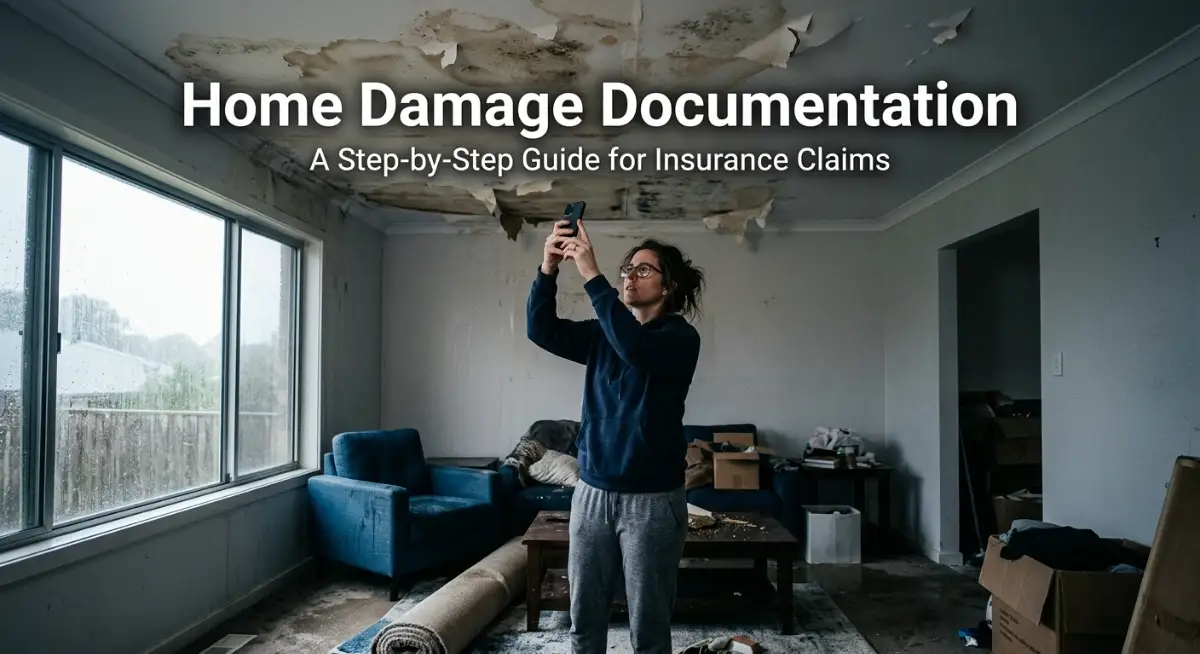
The Hidden Nightmare of Unexpected Property Loss
Picture this: your living room is underwater and panic is quickly setting in. The very last thing you want to think about right now is fighting with your insurance company. I completely get how stressful this feels. But trust me, grabbing your phone today and documenting the mess perfectly is your golden ticket to a fair payout. Let me walk you through exactly how I handle property damage records, step by step, so you do not lose a single dollar you deserve.
When disaster strikes your home, the emotional trauma is incredibly heavy and hard to process. You look around at the broken pieces of your safe space, and all you want to do is make it look normal again. But the reality of dealing with an insurance claim hits you like a brick wall very quickly. Regular people face a massive wall of anxiety because they suddenly have to prove their loss to a giant corporation. You are asked to remember the exact price, brand, and age of items that are currently buried under rubble or soaked in dirty water.
This overwhelming pressure often leads to severe sleepless nights for families already dealing with a crisis. You constantly worry that one small mistake might cause your entire claim to be denied. Spouses argue over missing receipts, and the mental peace of your household is completely shattered by endless paperwork. It feels deeply unfair that after suffering a tragic loss, the burden of proof rests entirely on your exhausted shoulders.
I know exactly how suffocating it feels when an adjuster asks for proof of something you threw in the dumpster yesterday. You feel helpless, angry, and completely lost in a maze of complicated policies. That is exactly why I decided to write this down and share my personal experience with you. You do not have to figure this out alone in the dark.
By taking a deep breath and following a clear plan, you can take back your power and protect your family financially. I want to show you exactly how to capture every single detail so nobody can question the reality of your loss. Let us walk through this process together, step by step, so you can finally get the money you deserve to rebuild your beautiful home.
The Science of Building an Undeniable Evidence File
When you are preparing to file a claim, you need to think exactly like a crime scene investigator. Your house is the scene, and every single broken item is a piece of evidence that translates into money. Insurance companies rely heavily on solid data, clear visual proof, and logical timelines to process your payout. If you provide them with a disorganized pile of blurry pictures, they will automatically delay your file.
You need a systematic approach that removes all guesswork for the person sitting behind a desk reviewing your case. By structuring your evidence scientifically, you force the company to see the undeniable truth of your situation. Here is exactly how you can document your loss perfectly, starting right now.
Secure the Area Before You Snap a Single Picture
Your physical safety is the absolute priority, and no amount of money is worth risking your life. Before you even pull out your smartphone, you must ensure that your environment is completely safe to enter. If water has flooded a room, you must turn off the main electricity switch immediately to prevent a fatal shock.
If a severe storm has damaged your roof, watch out for hanging branches or loose power lines. Taking pictures of your damaged living room is completely useless if the ceiling collapses on your head. Always wear thick protective gloves, solid boots, and a high-quality dust mask when entering a severely damaged room.
Once you are absolutely certain the area is safe, you can safely begin your documentation journey. Remember, insurance adjusters actually respect claimants who prioritize safety, as it shows you are acting responsibly. Do not rush this step; take a deep breath, assess the hazards, and then proceed with confidence.
The Macro to Micro Photography Strategy
Most people make a huge mistake by immediately taking extremely close-up photos of a damaged item. If you send an adjuster a zoomed-in picture of a broken chair leg, they have absolutely no context. They cannot tell what room the chair was in, how the damage happened, or what surrounded it. You must start by standing in the doorway of the damaged room and taking wide, sweeping photos.
After you have captured the wide shots, you can start moving in closer to individual items. For example, if your television was destroyed by a power surge, take a medium shot showing it in the living room. Then, and only then, do you take a macro, close-up shot of the cracked screen or the burned power cord. This method builds a visual story that is impossible for anyone to argue against.

Capture the Hidden Metadata for Trust
Modern smartphones are incredible tools because they do much more than just capture an image. When you take a photo with your phone, it automatically records hidden data called EXIF metadata. This data secretly logs the exact time, date, and sometimes the GPS location of where the picture was taken.
Insurance companies love metadata because it proves that you are not using old photos from a previous incident. To make sure this feature is working, go into your phone settings and turn on location services for your camera app. This simple action adds a massive layer of scientific trust to your entire evidence file.
If you want to be even more secure, you can download a free timestamp camera app. These specific applications actually stamp the date, time, and address directly onto the visible part of the picture. When an adjuster sees a perfectly timestamped photo, they immediately know they are dealing with a highly organized professional.
Watch This Quick Tip on Capturing Evidence Perfectly
If you want to visually understand exactly how to angle your camera for the best insurance photos, this short video is a must-watch. The creator breaks down the exact lighting techniques you need to make water damage highly visible on camera. Take a quick look before you start snapping your own pictures!
Do Not Throw Anything Away Prematurely
One of my biggest regrets was trying to be helpful by throwing away a soaked, ruined mattress on the very first day. I completely understand the urge to remove smelly, dirty, and destroyed items from your living space as fast as possible. However, the golden rule of insurance claims is that you must keep the evidence until the adjuster sees it in person.
If the smell of wet carpet or ruined furniture becomes absolutely unbearable, you can carefully move it outside to your yard. Place a waterproof tarp over the items to protect them from further weather damage. You need the adjuster to physically touch and inspect the ruined materials to accurately calculate their real value.
If local city laws require you to throw away hazardous materials immediately, you must over-document them first. Take dozens of photos, record a video of you explaining why it is a health hazard, and save a small physical sample if possible. For example, cut a small square of the damaged carpet and seal it inside a plastic zipper bag.
Your Quick Action Plan (Don't Skip These!)
- Film a silent walk-through: Record the whole house first before you touch, clean, or move anything.
- Follow the 3-Photo Rule: Always take a wide room shot, a medium shot, and a tight close-up for every single damaged item.
- Write it down immediately: Do not rely on your memory; start a list with brands, ages, and prices of ruined items today.
- Instant Cloud Backup: Upload every photo and video to a cloud drive instantly so you never lose your hard-earned evidence.
Start a Highly Detailed Written Inventory Log
Myth vs. Fact: What Insurance Companies Won't Tell You
- The Myth: Taking a few quick pictures of the ruined room is enough proof.
- The Fact: Adjusters actively look for photo metadata (date and time stamps) and multiple angles. I always tell homeowners to capture three specific distances for every ruined item: a wide shot of the whole room, a medium shot of the item itself, and a super close-up of the actual damage.
Pictures are amazing, but they cannot tell the adjuster how much you paid for that ruined sofa three years ago. You need to sit down with a notebook or a digital spreadsheet and start a detailed inventory list. Go through your damaged rooms logically, and write down every single item that was affected by the disaster.
Create specific columns for the item name, the brand, the approximate date of purchase, and the estimated replacement cost. Do not just write down "Kitchen Fridge" because the company will quote you for the cheapest model available. You need to write down "Samsung French Door Refrigerator, Stainless Steel, bought in summer."
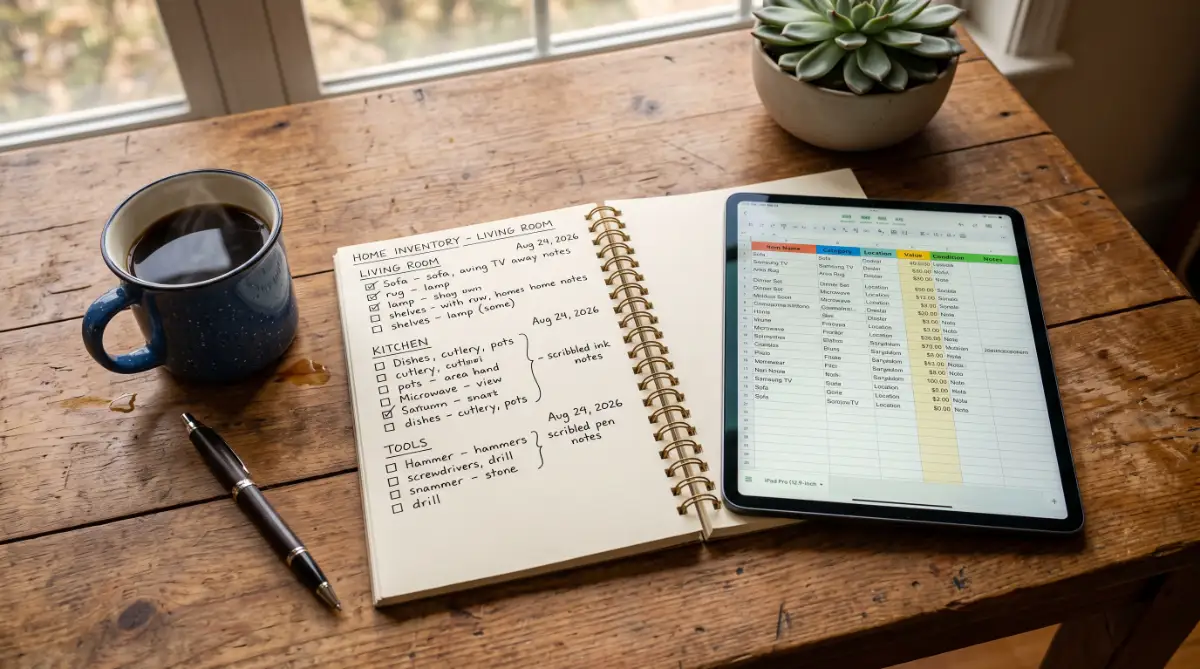
I learned this lesson the hard way when my basement flooded last spring. I completely forgot to open the bottom drawers of my damaged wooden desk to check for ruined electronics.
Pro Tip: My biggest mistake was assuming the insurance adjuster would open all my cabinets and drawers for me during their visit. I quickly realized that if I didn't personally pull out every single damaged item from hiding spaces and list them out, they simply did not get added to my payout. Always open every single drawer, closet, and storage box in the affected area, because hidden damage is still covered under your policy!
Track Down Your Financial Paper Trail
Finding receipts after a massive home disaster can feel like looking for a needle in a haystack. The good news is that you probably have a huge digital paper trail that you completely forgot about. Start by searching your email inbox for keywords like "receipt," "order confirmation," or specific store names.
If you bought expensive furniture or appliances using a credit card, you can log into your banking portal. Most major banks allow you to search through your past statements by the store name to find the exact purchase amount. You can simply download these digital statements and highlight the specific transactions related to your damaged items.
If you bought items from local electronic stores or furniture warehouses, you can actually call their customer service desk. Many large retailers keep purchase records tied to your phone number or email address for several years. Do not be afraid to ask them to email you a duplicate receipt; they deal with these requests all the time.
The Power of Video Walk-Throughs
My Personal Field Tip for Videos:
When recording your video walk-through, keep your mouth completely shut unless you are strictly naming the items you see. Never guess what caused the mess out loud. For example, do not say, "I think the old pipe finally burst." Just say, "Water is leaking from the kitchen wall." Let the experts figure out the cause later so you do not accidentally say something on camera that ruins your claim!
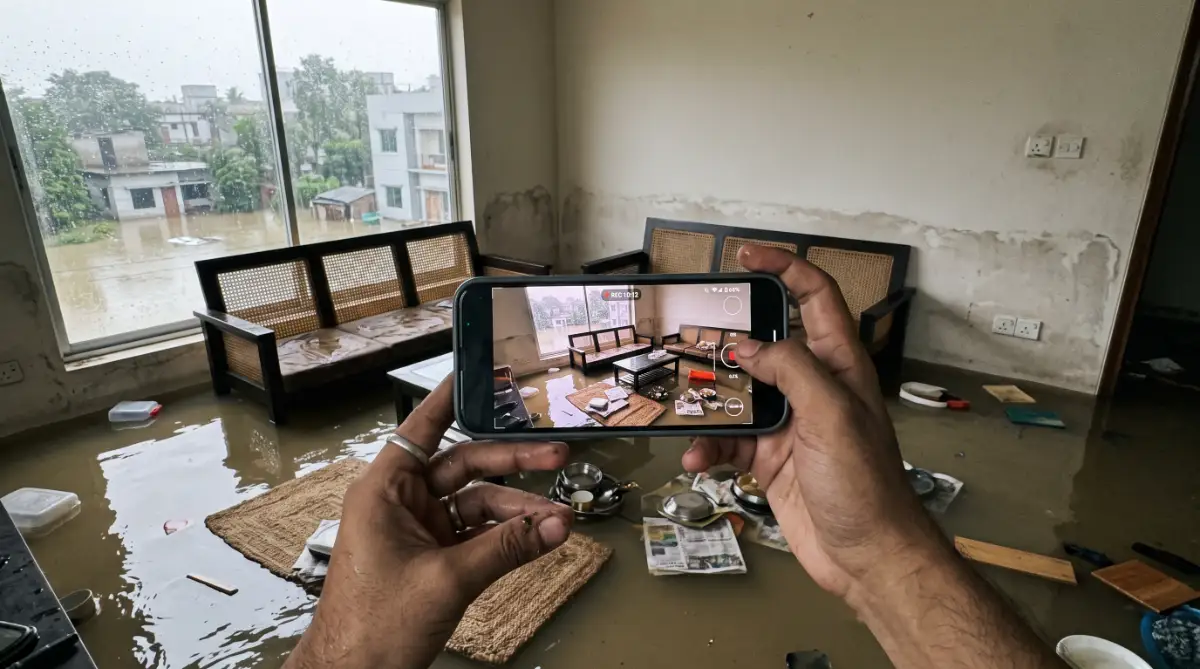
While still photos are great for details, a continuous video walk-through is an incredibly powerful storytelling tool. Start recording at the front door of your house and slowly walk through every damaged room. Keep your camera extremely steady and pan very slowly from left to right.
As you record, use your voice to clearly narrate exactly what you are seeing and smelling. You can say things like, "I am now walking into the main bathroom, and the floor is completely warped from the water." Your voice adds a highly personal, emotional, and factual layer to the evidence that a silent photo just cannot capture.
Do not worry about making the video look like a Hollywood production. The goal is raw authenticity and showing a continuous path of damage throughout the property. You can upload this large video file to a private cloud drive and easily share the link with your insurance company later.
Record the Brand Names and Serial Numbers
Every major appliance and expensive electronic device in your home has a unique identifier stamped on it. If your washing machine, television, or expensive gaming console is ruined, you must find the manufacturer's sticker. This sticker contains the exact model number and the unique serial number for your specific device.
Finding this sticker can sometimes be tricky because it is usually hidden on the back or underneath the item. Carefully pull the appliance away from the wall, wipe off any dirt or water, and take a clear, well-lit photograph of the label. This tiny piece of information proves to the insurance company exactly what tier of product you owned.
If the sticker is completely burned or washed away, you can use the user manuals as backup proof. Many people keep a drawer full of appliance manuals, and these booklets are fantastic secondary evidence. When an adjuster sees that you have provided exact model numbers, they will process your claim significantly faster.
Document Temporary Living Expenses Immediately
When your house becomes completely unlivable, you will likely have to spend money just to survive the first few days. Your insurance policy often includes coverage for something called "Additional Living Expenses" if you are forced to leave. However, they will not just hand you a blank check; you have to prove exactly what you spent.
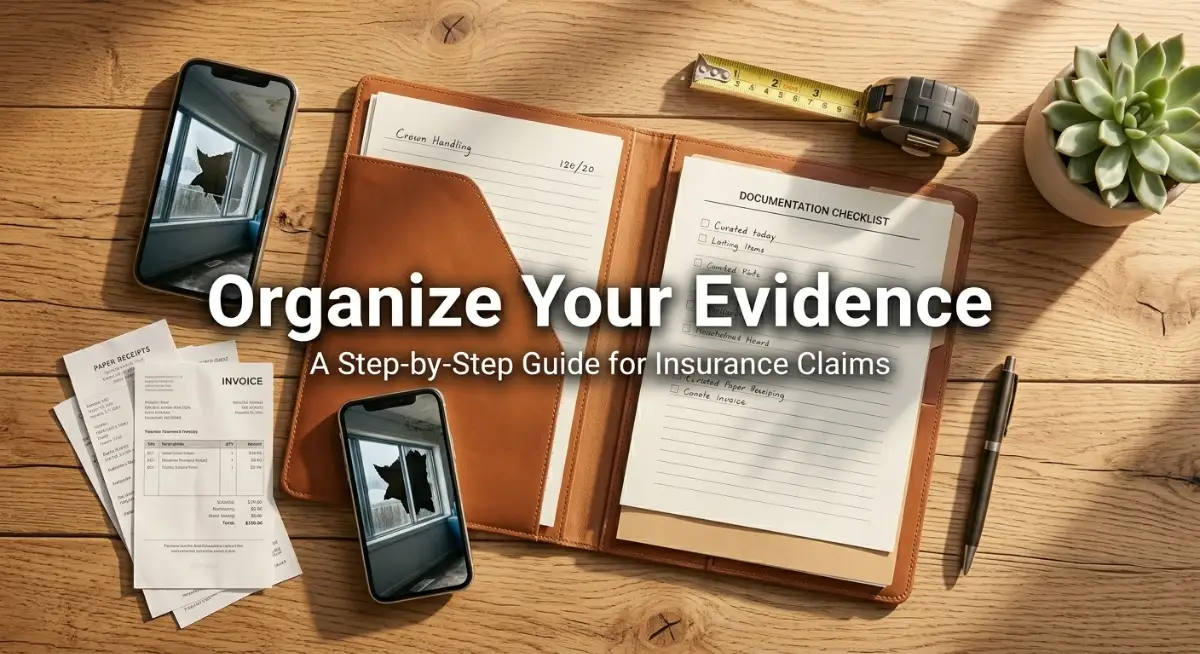
From the very first night you stay in a hotel, start keeping a highly organized folder of your physical receipts. This includes the hotel bills, the cost of eating at restaurants because you have no kitchen, and even extra gas for longer commutes. You must treat this expense folder like it is filled with actual cash.
Never mix your regular daily expenses, like buying a coffee on the way to work, with your disaster-related expenses. Buy a cheap plastic accordion folder and dedicate it solely to the extra money you are forced to spend. When you finally submit this organized file, the insurance company will reimburse you without asking dozens of frustrating questions.
Back Up Your Digital Evidence Securely
Create a dedicated folder on a free cloud service like Google Drive, Dropbox, or Apple iCloud. Name the folder something very clear, like "Home Damage Claim Evidence," and upload every single file into it. This ensures that even if you lose your physical device, your path to a financial settlement remains completely safe.
Having everything in a single cloud folder also makes your communication with the adjuster incredibly easy. Instead of trying to attach fifty heavy photos to a single email, you can just send them one secure link. This level of organization makes you look highly competent and leaves no room for the insurance company to claim they did not receive your files.
Beyond the Basics: Expert-Level Evidence Strategies
Many homeowners mistakenly believe that taking a dozen pictures on their smartphone is the final step in their journey. However, the true secret to unlocking a massive insurance payout lies in highly advanced documentation habits. Let us look exactly at how professionals secure every single penny they deserve without breaking a sweat. By adopting a slightly more technical approach, you can completely eliminate any chance of the insurance company denying your valid claim.
The Digital Twin Blueprint Technique
Have you ever heard of creating a digital twin for your house? You can use completely free real estate 3D scanning applications to walk through your home and map the entire area. This creates a highly accurate, measurable, and interactive digital copy of your entire living space. If a heavy fire completely destroys your kitchen, the insurance company cannot argue about the square footage or the layout.
They will have a perfect, undeniable 3D model of exactly how your property looked before the disaster. This level of modern proof makes it completely impossible for an adjuster to underpay you based on bad estimates. You essentially force the corporation to look at your home through a lens of absolute mathematical truth.
Mastering Written Communication Only
When you are dealing with a property loss adjuster, never rely on friendly phone calls to sort out the details. Every single time you have a verbal conversation with an insurance representative, you must immediately follow up with a written email. You can write something extremely simple like, "Just to confirm our phone chat today, we agreed the roof inspection will happen on Tuesday."
This creates an airtight legal paper trail that holds the massive company accountable for their promises. If they ever try to change their story later, you simply forward them the exact email they previously agreed to. For an in-depth understanding of how to handle tricky corporate paperwork, reviewing the secret rules of health insurance documents can give you a fantastic mindset for navigating complex property policies.
Understanding the Adjuster's Software
Most homeowners do not realize that insurance adjusters use a very specific computer program to calculate property damage costs. This software relies heavily on extremely precise measurements, material grades, and current local market prices. If you just tell the adjuster you had "wood floors," their computer will automatically select the cheapest laminate option available.
You must feed the adjuster specific, high-end keywords like "solid oak hardwood flooring with a custom stain finish." By using exact industry terminology, you force their estimating software to generate a significantly higher payout number. Gaining a solid understanding of this process is incredibly helpful, and resources from the National Association of Insurance Commissioners offer excellent guidance on how these specific property claims are formally processed.
Involving Independent Expert Eyes
Sometimes the insurance company’s appointed representative will drastically undervalue your expensive custom cabinets or imported tile work. This is exactly when you should strongly consider hiring an independent public adjuster or a private contractor. These professionals work strictly for you, not the giant financial corporation, and they know how to properly calculate severe damage.
They will walk through your home and write a competing, highly detailed estimate to challenge the insurance company's lowball offer. Having an expert in your corner completely shifts the balance of power back into your hands. This is very similar to how learning proven strategies to win your auto settlement requires strong negotiation tactics and refusing to accept the very first offer.
 Dangerous Traps That Will Ruin Your Insurance Payout
When your daily life is completely turned upside down by a disaster, making simple mistakes is incredibly easy. Unfortunately, massive insurance companies are highly trained to look for these exact slip-ups to reduce your final check. Let me walk you through the most dangerous pitfalls you absolutely must avoid.
The Quick Settlement Check Trap
Imagine a friendly adjuster visiting your flooded house and eagerly handing you a check on the very first afternoon. They might tell you this money is for "immediate emergency relief" and ask you to sign a basic release document. Do not let your emotional guard down and sign anything without reading the fine print extremely carefully.
If you sign a final release form too early, you completely give up your right to claim any hidden mold or structural damage discovered weeks later. This mistake is incredibly common because people are desperate for quick cash to fix their immediate problems. This situation mirrors the exact mindset needed when managing the psychology of borrowing money, where rushing into fast financial agreements always leads to long-term disaster.
Throwing Away the Smelly Evidence
I completely understand how disgusting a soaked, muddy living room rug smells after a heavy storm. Your first natural instinct is to toss it directly into the neighborhood garbage truck to clean up your living space. However, throwing away severely damaged items before the adjuster officially records them is a massive financial error.
If your evidence goes to the city landfill, the insurance company will simply pretend it never existed in your home. Just like learning to avoid secret money habits draining your bank account, you must stop throwing away physical items that represent thousands of dollars in real value. Always move the smelly, ruined items outside under a heavy tarp until the official inspection is fully completed.
Failing Your Duty to Mitigate Damage
Almost every standard insurance policy contains a hidden clause that requires you to prevent further damage from happening. If a heavy tree branch breaks your living room window, you cannot just leave it wide open for a week. If rain pours through that broken window and ruins your carpet, the company will deny the carpet claim entirely.
They will boldly argue that you failed your duty to board up the window and protect the property. You must buy some cheap plywood, cover the hole immediately, and keep the receipt for reimbursement. Understanding your exact responsibilities is essential, and reading advice from the United Policyholders disaster recovery guide will teach you exactly how to protect your home from these tricky denial tactics.
Depending Entirely on Your Raw Memory
Under extreme emotional stress, the human brain simply cannot remember every single item packed away in your dark closets. You might think you will naturally remember all your expensive winter coats, branded shoes, and expensive sports gear. Once the initial shock settles, you will be amazed at how many valuable items slip your mind completely.
Creating a solid physical or digital inventory list is your only real defense against this natural memory loss. Write everything down immediately while you are standing in the room, even if the item seems insignificant. If you want to protect your overall financial health during this stressful time, checking out the warning signs your credit card balance is growing is a smart move, as unexpected claim denials often push people into heavy debt.
Ignoring Your Temporary Living Needs
Waiting for a massive property payout can sometimes take several frustrating months of back-and-forth arguments. During this long waiting period, you still have to pay for expensive takeout food, temporary hotel housing, and extra daily gas. Many people quietly absorb these heavy costs because they do not realize their policy covers additional living expenses.
You must keep an organized folder of every single extra dollar you spend while your house is unlivable. This is precisely why having personal savings is a lifesaver when disasters strike completely out of nowhere. If you want to build a safety net for these exact moments, discovering the easiest way to build an emergency fund fast will keep your family perfectly secure while waiting for the insurance check.
Your Next Moves to Reclaim Your Beautiful Home
Navigating a massive property loss feels like climbing a steep mountain with absolutely no clear path in sight. But by simply using the exact documentation strategies we discussed today, you are already miles ahead of the average homeowner. You have completely transformed yourself from a helpless victim into a highly organized, prepared advocate for your family's future.
The giant insurance corporation has entire teams of professionals working very hard to protect their own bottom line. Now, you have the specialized knowledge and the undeniable evidence file to fight back and demand incredibly fair treatment. Every single macro photo, store receipt, and written email you send is a powerful brick in rebuilding your safe space.
Take this entire overwhelming process one small step at a time, and do not let the heavy paperwork crush your spirit. Just like the financial discipline required to stop budgeting guilt and enjoy your cash, handling an insurance claim requires patience, clear rules, and a highly positive mindset. You hold the power to dictate exactly how this recovery story ends.
I know exactly how dark and mentally exhausting those first few weeks of living in a damaged house can feel. My biggest piece of advice to you is to stay incredibly patient, keep your head high, and never stop taking those detailed pictures. I promise you that the endless hours you spend organizing this evidence today will pay off beautifully when you finally sleep peacefully in your fully restored home.
Top Questions Homeowners Ask After a Disaster
How long do I actually have to file my property claim?
Most standard policies require you to report the damage to your provider as quickly as humanly possible. However, the exact legal deadline to file your complete paperwork usually ranges from one to two years depending on your local state laws. Always call your agent immediately after the event to officially open the file and freeze your timeline.
Can I hire my own contractor instead of using the insurance company's people?
You have the absolute right to choose whatever professional contractor you want to rebuild your home. The insurance company might strongly suggest their preferred network, but you are never legally forced to use them. Always get at least three independent quotes to ensure the company is offering you a fair market rate.
What should I do if the adjuster completely denies a heavily damaged item?
If an adjuster denies a specific item, immediately ask them to show you the exact policy language they are using for the denial. Do not accept a simple verbal "no" without firm, written proof from your specific contract. If you believe they are wrong, you can safely escalate the issue to their supervisor or hire an independent appraiser.
Are my damaged landscaping and outdoor fences covered?
Yes, most standard homeowner policies provide a specific percentage of coverage for detached structures and expensive landscaping. Fences, tool sheds, and even large expensive trees ruined by a storm generally have their own separate payout limits. You should always document your ruined backyard just as carefully as your indoor living room.
Where can I find emergency help if my home is completely destroyed?
If a major natural disaster has completely leveled your neighborhood, you should look beyond your private insurance. You can apply for federal disaster assistance to cover temporary housing and immediate survival needs. Reading the official FEMA disaster recovery guidelines will show you exactly how to access these free government resources while your private claim is processing.
Disclaimer: The information provided in this blog post is for general educational and informational purposes only and does not constitute official legal, financial, or certified insurance advice. Policy terms, local laws, and claim procedures vary widely depending on your specific provider and geographic location. Always review your official policy documents carefully and consult directly with a licensed insurance professional or public adjuster regarding your personal situation.
![07 Hidden Reasons Your Health Insurance Denied You[Step-by-Step Appeal Guide]](https://fintiq24.com/storage/uploads/blogs/1787599657_07-hidden-reasons-your-health-insurance-denied-youstep-by-step-appeal-guide.webp)
![07 Hidden Myths About Term Life Approvals[Step-by-Step]](https://fintiq24.com/storage/uploads/blogs/1786617667_07-hidden-myths-about-term-life-approvalsstep-by-step.webp)
![Secret Rules of Health Insurance Documents Nobody Tells You[Step-by-Step]](https://fintiq24.com/storage/uploads/blogs/1786608043_secret-rules-of-health-insurance-documents-nobody-tells-youstep-by-step.webp)